Stucco vs. Siding: Which Is Right for You?
If your exterior walls need work, the real decision comes down to stucco or siding. The short answer in the stucco vs siding debate: stucco wins in hot, dry climates like Scottsdale where its masonry shell handles sun and heat for decades, while siding wins when you want a lower upfront price and a faster install. Both can protect your home well, but they age differently and cost you differently over time. Here in the desert, the climate does a lot of the deciding for you. This page walks through the trade-offs so you can spend your money once and spend it right.
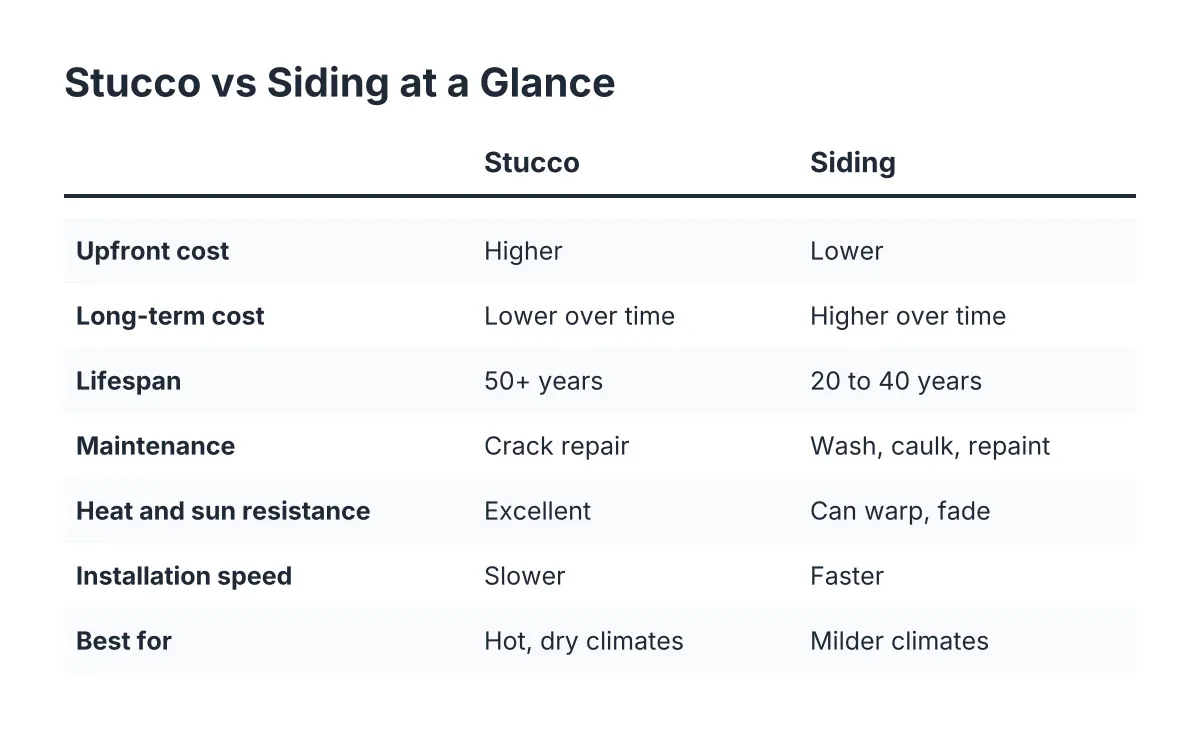
| Criteria | Stucco | Siding |
|---|---|---|
| Upfront cost | Higher upfront, labor-intensive install | Lower upfront in most cases |
| Long-term cost | Lower over time; repairs are localized patches | Higher over time; panels fade, warp, or need replacing |
| Lifespan | Typically 50+ years with maintenance | Typically 20 to 40 years depending on material |
| Maintenance | Occasional crack repair and patching | Washing, repainting or panel replacement, caulking |
| Heat and sun | Excellent; masonry resists UV and heat | Vinyl can warp and fade in intense sun |
| Best for | Hot, dry climates; long-term owners | Milder climates; tighter upfront budgets |
Stucco: Strengths and Trade-offs
Stucco is a cement-based coating applied in layers over your home's exterior walls. Once it cures, it forms a hard, continuous shell with no seams, panels, or joints. That matters in Scottsdale, where the sun beats on your walls most of the year. Stucco does not fade the way painted panels do, it does not warp in the heat, and it shrugs off UV exposure that destroys other materials. It also adds thermal mass, which helps keep interior temperatures steadier through a desert summer.
The trade-off is upfront cost and the reality of cracks. Stucco installation takes skilled labor and multiple coats, so you pay more on day one than you would for most siding. And stucco cracks. Homes settle, temperatures swing between hot days and cool nights, and hairline cracks show up. The good news: crack repair is a localized fix, not a full-wall project. A good stucco patching job, with proper color matching and texture matching, disappears into the wall. You fix the spot, not the house.
Water is the other thing to watch. Stucco handles Scottsdale's dry climate well, but if a crack or hole goes ignored through monsoon season, water can get behind the shell and cause exterior wall damage you cannot see from the street. Water damage stucco repair is common work for a reason. The rule is simple: fix cracks and holes when you spot them, and stucco will outlast most other exteriors.
Siding: Strengths and Trade-offs
Siding covers your walls with overlapping panels or boards, most often vinyl, fiber cement, or wood. Its biggest advantage is upfront price. Vinyl siding in particular usually costs less to buy and less to install than stucco, and a crew can hang it faster because there is no curing time between coats. If your budget is tight right now, siding gets your walls covered for less money this year.
Siding also makes single-panel replacement straightforward. If a panel cracks or a section gets damaged, you swap it. Fiber cement siding holds up better than vinyl and resists fire and pests, though it costs more and narrows the price gap with stucco.
The trade-offs show up over time, and they show up faster in the desert. Intense sun fades vinyl and can warp it. Seams between panels give wind-driven rain and dust a way in. Wood siding needs regular repainting and sealing, and it is a poor match for extreme heat. Most siding lasts 20 to 40 years in typical conditions, and Scottsdale sun sits at the harsh end of typical. You save money upfront and pay some of it back in maintenance and earlier replacement.
Stucco vs Siding: The Deciding Factors
Cost drivers
Stucco costs more upfront; siding costs more over the life of the house in a climate like this. Stucco pricing is driven by labor, the number of coats, wall prep, and whether you are doing new stucco installation or stucco replacement over an existing surface. Siding pricing is driven mostly by material choice, with vinyl at the low end and fiber cement higher. If you want a fuller picture of what drives Stucco Costs for repair versus full installation, our guide to stucco pricing breaks it down.
Lifespan
Stucco outlasts siding in most homes, often by decades. A well-installed and maintained stucco exterior typically lasts 50 years or more. Vinyl and wood siding typically run 20 to 40 years, with desert sun pushing toward the shorter end. If you plan to stay in your home long term, lifespan alone can settle the question.
Installation
Siding installs faster; stucco takes longer but produces a seamless shell. Siding panels go up in days with no cure time. Stucco is applied in coats that each need time to set, so the job runs longer and demands more skill from the crew. That labor is part of why stucco costs more upfront, and it is also why the finished product performs the way it does.
Maintenance
Stucco needs occasional crack repair; siding needs ongoing washing, caulking, and eventual panel or paint work. With stucco, the maintenance job is watching for hairline cracks or holes in a wall and getting them patched before water finds them. Those are small, targeted repairs. Siding maintenance is more routine: cleaning, re-caulking seams, repainting wood, and replacing panels that fade or warp. Neither material is maintenance-free, but stucco maintenance is reactive and small, while siding maintenance is recurring.
Situational fit
In Scottsdale and the surrounding desert, stucco is the better match; in wet or cold climates, siding often makes more sense. There is a reason most homes here already wear stucco. It suits the heat, the sun, and the dry air. Siding earns its place in milder, wetter regions where its ventilation gaps help walls dry out and the sun is less punishing. Match the material to the climate you actually live in, not to a national average.
Which Should You Choose?
Choose Stucco if:
- You live in Scottsdale or a similar hot, dry climate
- You plan to own the home for 10 or more years and want the lower lifetime cost
- Your home already has stucco; matching it beats mixing materials
- You want an exterior that resists sun, heat, and fire
- You prefer occasional small repairs over routine upkeep
Choose Siding if:
- Your upfront budget is the deciding factor and financing a stucco job is not an option
- You live in a wet or cold climate where siding's drainage design helps
- You expect to sell within a few years and want the cheaper install now
- Your neighborhood is predominantly sided and you want the house to match
For most Scottsdale homeowners, stucco is the right call. The climate favors it, most local homes already have it, and repairing or resurfacing existing stucco almost always costs less than tearing it off for siding.
Common Questions
Is it worth replacing stucco with siding?
In Scottsdale, usually not. Tearing off stucco to install siding means paying for demolition plus a full siding job, and you end up with a material less suited to desert sun. If your stucco is cracked or damaged, stucco repair, patching, or resurfacing typically costs far less and restores the wall you already have.
Which is cheaper, stucco or siding?
Siding is usually cheaper upfront, and stucco is usually cheaper over the life of the home in a hot climate. When you weigh stucco vs siding on cost, look past the install quote. Factor in repainting, panel replacement, and earlier full replacement on the siding side, and localized crack repair on the stucco side.
Can you repair damaged stucco instead of replacing the whole wall?
Yes, in most cases. Cracks, holes, and water damage can be handled with targeted stucco crack repair, hole repair, and patching, followed by color matching and texture matching so the fix blends into the existing wall. Full stucco replacement is only needed when damage is widespread or the base layers have failed.
Does stucco crack more than siding?
Stucco shows hairline cracks as homes settle and temperatures swing, so yes, cracking is its most common issue. The difference is what a crack means. A stucco crack is a small, inexpensive patch job when caught early. Siding failure usually means fading, warping, or loose panels, which spreads across a wall rather than staying in one spot.
If you need stucco repair, Scottsdale Stucco Repair can help.
Prefer to talk it through? Call (480) 637-3464 — a quick call is usually the fastest way to get a straight answer for your situation.