7 Signs Water Damage Reached the Wall Behind Your Scottsdale Stucco
Stucco hides problems well. By the time you see a stain or a soft spot on the surface, water may have been working behind the wall for months. This list covers the signs water damage behind the layers beneath your stucco, not just the finish coat, and how Scottsdale's monsoon storms and irrigation systems cause most of it. That distinction matters because surface damage is a patch job, while damage behind the wall means removing material, drying the substrate, and rebuilding the layers.
Stucco is common here for good reason. According to the National Association of Home Builders, stucco was the most-used exterior wall material in the Mountain division, which includes Arizona, on 48% of new single-family homes started in 2024. That means a lot of Scottsdale walls share the same weak points: parapet tops, wall bases near irrigation lines, and corners where monsoon rain hits hardest.
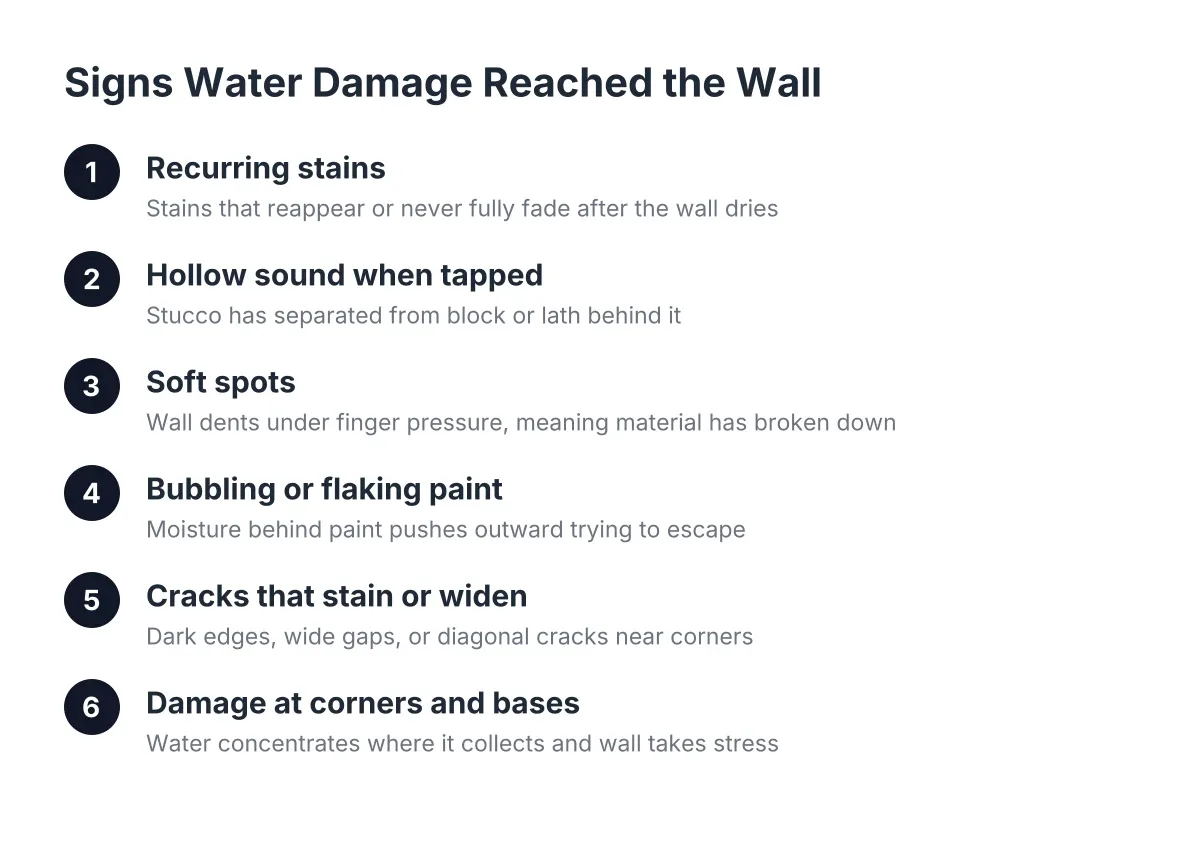
Here are seven signs, roughly in order from early warning to serious problem.
Early Signs Water Damage Behind the Stucco Appears
1. Stains That Come Back After the Wall Dries
A one-time water mark after a monsoon storm is normal. Stucco is porous, it absorbs rain, and it dries out within a day or two in Arizona heat. The sign that matters is a stain that reappears in the same spot, or one that never fully fades.
A recurring stain usually means water has a path behind the finish coat and is wicking back to the surface each time it gets wet. On Scottsdale homes, the most common culprits are drip emitters and sprinkler heads spraying the base of a wall daily. Sprinkler damage to stucco shows up as a tide line, a horizontal band of discoloration one to two feet off the ground, often with white mineral deposits from our hard water.
Also worth knowing: discoloration on stucco is often not just dirt sitting on the surface. Growth can embed itself in the pores of the material, which is why a stained area that will not wash off deserves a closer look, not just a rinse.
2. A Hollow Sound When You Tap the Wall
This is the test a stucco contractor runs first, and you can do it yourself. Knock on the wall with your knuckles in the suspect area, then knock a few feet away on a section you trust. Solid stucco sounds dense and dull. Stucco that has separated from the block or the lath behind it sounds hollow, like knocking on a drum.
That hollow sound means the bond between the stucco and the substrate has failed, and trapped moisture is the usual reason. Once stucco detaches, water moves freely in the gap and spreads the failure outward. Map the hollow area with a few more taps; if it is larger than a dinner plate, the damage has moved past what a surface patch can fix.
3. Soft Spots You Can Dent With Finger Pressure
Sound stucco is hard. If you can push a dent into the wall with a finger or the toe of your shoe, water has broken down the material itself, not just stained it. Soft stucco wall repair always means removing the failed material; there is no coating or sealer that restores strength to stucco that has gone soft.
However, a soft spot does not always mean the original wall failed. Suppose a homeowner bought a Scottsdale house where a previous owner patched a hole with a quick skim coat and no bonding agent. That patch can sound hollow, dent under light pressure, and let water in around its edges. A weak patch like that needs to be broken out and redone correctly, not patched over a second time. This is also where DIY products meet their limit; a bag of quikrete stucco patch handles a small cosmetic ding fine, but it cannot fix a wall that is soft because the layers behind it are wet.
4. Bubbling, Blistering, or Flaking Paint on the Stucco
Paint bubbles when moisture behind it pushes outward trying to escape. On a stucco wall, blistering paint is one of the clearer signs water damage has reached the layer under the finish, because the water is coming from inside the wall, not from rain hitting the surface.
In Scottsdale, this shows up in two predictable places. First, along the bottom two feet of walls near turf or planter irrigation, where daily watering keeps the base of the wall damp. Second, below parapet caps and roof-to-wall transitions after monsoon season, where wind-driven rain forces water into joints that a gentle rain would never reach. If the blistering sits directly below a parapet or a scupper, check the roofing detail above before blaming the stucco.
5. Cracks That Stain, Widen, or Show Dark Edges
Hairline cracks are normal in the desert. Stucco expands and contracts through our 40-degree daily temperature swings, and fine surface cracks are part of the material's life. The cracks that signal water intrusion look different:
- Cracks with dark or rust-colored staining along their edges, meaning water is moving through them regularly
- Cracks wider than a credit card's thickness, which let in wind-driven monsoon rain
- Diagonal cracks running from window or door corners, a common entry point for water
- Cracks near ground level combined with pooling water after storms, which can point to slight settling
That last one deserves attention. Repeated heavy rain that gathers against a foundation can cause minor settling, which then cracks stucco at corners and bases. Fixing the crack without fixing the drainage means the crack comes back. There is also a time factor most homeowners do not know: behind older stucco sits building paper, the water barrier protecting the framing. Leave a structural crack open for years and that paper turns brittle; normal wall flexing can then tear it, and at that point water reaches the framing directly.
6. Damage Concentrated at Corners and Wall Bases
Water damage rarely spreads evenly across a wall. It concentrates where water collects and where the wall takes stress. If your stucco is crumbling or cracking at an outside corner near the AC unit, two forces are often working together: the unit's vibration transmitting into the wall, and poor drainage pooling water against the foundation at that same spot. These are signs water damage behind the wall often appears together at corners and bases, where debris and pooling make problems worse.
Homes without gutters, which describes most of Scottsdale, dump every monsoon downpour straight off the roof edge onto the ground beside the wall. That splash zone soaks the bottom of the stucco storm after storm. A patch at the base of that wall will fail again unless the water is redirected, whether with a gutter section, a splash block, or regrading the soil to slope away from the house.
7. Signs Inside the House That Water Damage Reached the Framing
The most serious warning signs show up indoors. A musty smell in one room, bubbling drywall or baseboards on an exterior wall, or a stain on the ceiling near an exterior wall all mean water passed completely through the stucco assembly. Stucco mold behind a wall often announces itself by smell before anything is visible.
Ceiling stains near exterior walls in Scottsdale often trace back to parapet or roof-edge stucco failures, where monsoon rain enters high on the wall and travels down and inward. At that stage the job is bigger than stucco: water damage on ceiling repair inside, plus opening the exterior wall to find and fix the entry point. Indoor signs are the point where you stop diagnosing and bring in a professional, because the moisture path behind a wall is rarely visible without opening it, and a moisture meter reading beats guesswork.
What Repair Looks Like Once Water Gets Behind the Wall
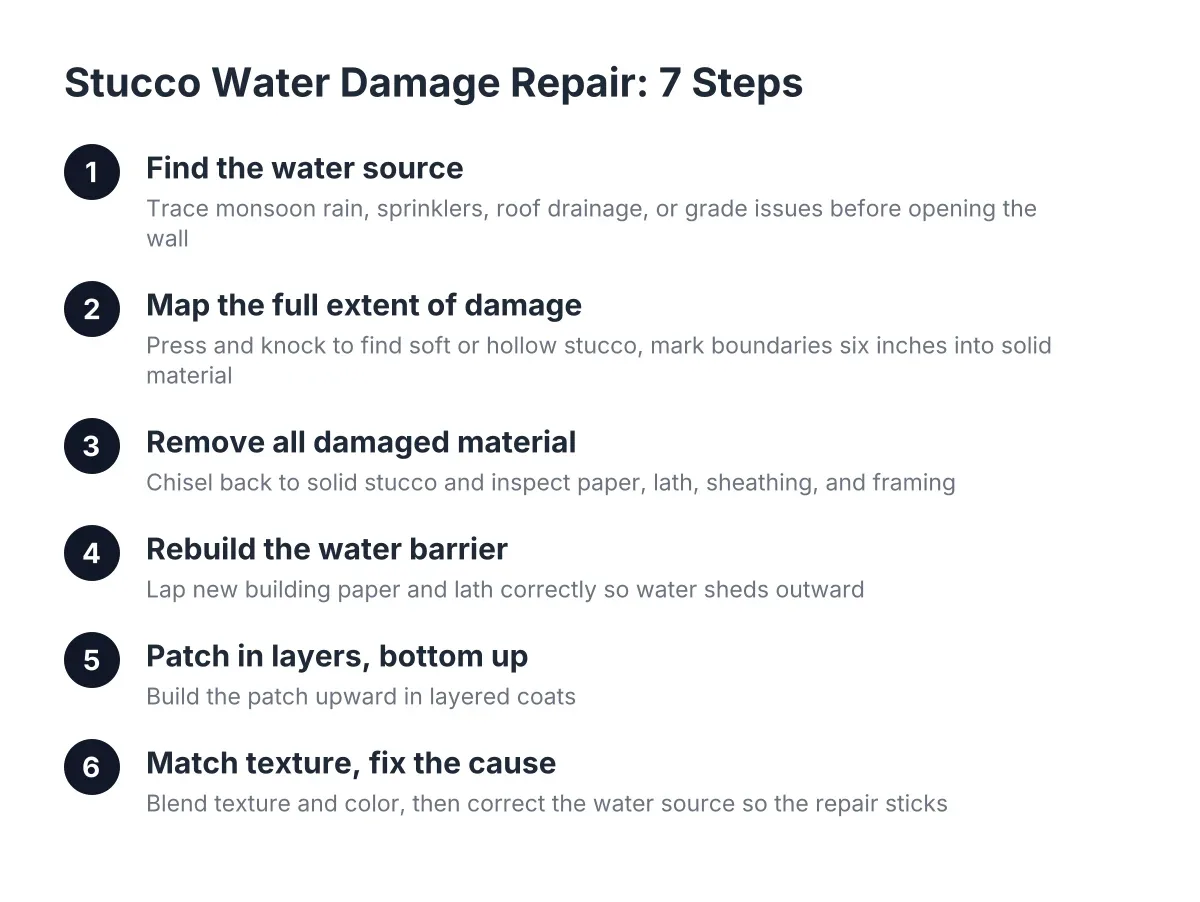
Water damage stucco repair follows a sequence, and the sequence matters more than the materials. First, all loose, soft, or buckling stucco comes off. Leaving compromised material in place lets every rain keep expanding the damage behind it, which is why painting over a soft spot is money spent making the problem harder to find later. Next, the substrate gets inspected and dried; torn building paper or damaged lath gets replaced. Only then do the new stucco coats go on, applied from the bottom of the repair upward, followed by color and texture matching so the patch does not read as a patch.
Cost depends on how deep the water went. According to Fixr.com, the national average to repair stucco runs $900 to $3,000, averaging about $1,700 for a buckled 10×10-foot section of three-coat stucco. A hairline crack repair lands well below that range; a wall base with rotted lath and torn paper can land above it.
One trade-off worth naming: pressure washing is a poor way to prep or clean damaged stucco. Because stucco is layered, high-pressure water forced behind the finish coat can create the exact intrusion problem you were trying to diagnose. Low pressure and a gentle detergent are the safer route on any wall you suspect.
A Note for Homeowners Finishing a Block Wall or Addition
If you are having stucco installed on a new block wall, fence, or room addition, these signs are your quality checklist for the existing house before the new work starts. It makes little sense to install fresh stucco on an addition while the original wall it ties into has soft spots or a recurring stain at the base; the two assemblies share water paths at the joint.
For example, say a homeowner in North Scottsdale finishes a bedroom addition and wants the new block stuccoed to match the house. During the walkthrough, tapping reveals a hollow patch on the original wall right where the addition ties in. In that scenario, the right sequence is to break out and repair the failed section first, then run the new stucco across both so the color, texture, and water barrier are continuous. Handled together, the joint disappears; handled separately, it becomes the next leak.
The Short Version
Watch for stains that return, hollow sounds, soft spots, blistering paint, staining cracks, corner and base damage, and any indoor moisture signs. The first two or three are early warnings you can catch with a walk around the house after the next monsoon storm. The later ones are signs water damage gets behind the substrate or framing, where the fix involves removal and rebuilding, not patching. Either way, the pattern in Scottsdale is consistent: monsoon rain from above, irrigation from below, and drainage problems at the corners. Find which one is feeding your wall, fix that source, and the stucco repair will hold.
If you need stucco repair, Scottsdale Stucco Repair can help.
Prefer to talk it through? Call (480) 637-3464 — a quick call is usually the fastest way to get a straight answer for your situation.