Stucco Costs Terms Explained: A Plain-English Glossary
If you're a Scottsdale homeowner comparing quotes for stucco repair or a full stucco installation, the paperwork can read like a foreign language. This stucco costs glossary translates the terms contractors use into plain English, so you can read a quote line by line, ask better questions, and spot problems before they cost you money. Each entry starts with a one-sentence definition you can understand without any background. Skim the index below, then jump to whatever word tripped you up.
- Scratch Coat: the first rough layer
- Brown Coat: the middle leveling layer
- Finish Coat: the visible outer layer
- Lath: the wire or wood backing stucco grips
- Weep Screed: the drainage strip at the wall's base
- Control Joint: a planned break that manages cracking
- Hairline Crack: a thin surface crack
- Efflorescence: white powdery salt deposits
- Delamination: stucco separating from its backing
- Stucco Patching: repairing a small damaged area
- Stucco Resurfacing: a new finish over existing stucco
- Stucco Replacement: tearing off and redoing stucco
- Texture Matching: blending a repair into the old finish
- Color Matching: blending repair color into the old wall
- Square Footage Pricing: cost figured by wall area
- Mobilization Fee: a minimum charge for small jobs
- Scope of Work: the written list of what gets done
- Change Order: a written mid-job price or scope change
The Layers of a Stucco Wall
Stucco is built up in layers, and quotes often price each layer separately. Knowing the names helps you see exactly what you're paying for.
Understanding the Costs of Stucco Layers: Scratch Coat
A scratch coat is the first rough layer of stucco, scored with grooves so the next layer can grip it. If a repair quote includes a scratch coat, the damage goes deeper than the surface and the contractor plans to rebuild the wall from the base up. That means more material and more labor than a surface fix. A patch that skips a needed scratch coat is a patch that fails early.
Brown Coat
A brown coat is the second stucco layer, applied over the scratch coat to level and strengthen the wall. It gives the wall its flat, even shape before the finish goes on. When both a scratch coat and a brown coat appear on your quote, you're looking at a full-depth repair, not a cosmetic one. That's normal for holes in a wall or serious exterior wall damage.
Finish Coat
A finish coat is the thin outer layer of stucco that carries the color and texture you actually see. Some small repairs only need a new finish coat, which keeps the cost down. It's also the layer where texture matching and color matching happen, so a sloppy finish coat is what makes a repair stand out from across the street.
Lath
Lath is the wire mesh or wood strips attached to the wall so wet stucco has something to grab onto. If your lath is rusted or torn, the contractor has to replace it before any stucco goes on, which adds a line to the quote. Water damage behind the wall often shows up first as failing lath. A quote that mentions lath replacement is telling you the problem reached the wall's skeleton.
Weep Screed
A weep screed is a metal strip at the bottom of a stucco wall that lets trapped moisture drain out. Without a working weep screed, water sits behind the stucco and causes rot, staining, and cracks. If a contractor points out a buried or missing weep screed, take it seriously; fixing it now prevents repeat water damage stucco repair later. Soil or concrete piled against the base of the wall often blocks it.
Control Joint
A control joint is a planned groove or metal strip that gives stucco a place to crack on purpose instead of at random. Stucco shrinks as it cures and moves with temperature swings, and control joints absorb that movement. On a stucco installation quote, control joints are a sign the contractor is planning for the long term. Walls without them tend to develop wandering cracks within a few years.
Damage Terms You'll Hear on an Inspection
When a contractor walks your wall, these are the words they'll use to describe what they find.
Hairline Crack
A hairline crack is a thin surface crack, about the width of a credit card edge or less, in the finish coat of stucco. Most hairline cracks are cosmetic and come from normal settling or the desert's heat swings. They matter because they let water in over time, so crack repair is worth doing before monsoon season. A crack you can fit a coin into is a different, more serious conversation.
Efflorescence
Efflorescence is a white, powdery deposit on stucco left behind when water moves through the wall and evaporates, carrying salts to the surface. The powder itself wipes off, but it's a symptom, not the problem. It tells you moisture is getting into or behind the stucco. A contractor who mentions efflorescence should also talk about where the water is coming from, not just repainting over the stain.
Delamination
Delamination means a layer of stucco has separated from the layer or backing beneath it, even if the surface still looks intact. Contractors find it by tapping the wall and listening for a hollow sound. Delaminated stucco can't be patched over; the loose material has to come off first. If your quote jumps after an inspection, delamination is often the reason, because it turns a small patch into a larger tear-out.
Repair, Patch, or Replace: Key Stucco Costs Glossary Terms
These three words appear on nearly every quote, and they describe very different amounts of work. This section saves you the most confusion, because the price gap between a patch and a replacement is the biggest one on the page.
Stucco Patching
Stucco patching is repairing one damaged area, like a hole or a cracked section, without touching the rest of the wall. It's the right call for isolated damage: a doorknob hole, woodpecker holes, or a spot hit by a ladder. Patching is priced by the size and depth of the damage, so a clear photo or measurement helps you get an accurate quote. The skill is in the blending, which is where texture and color matching earn their keep.
Stucco Resurfacing
Stucco resurfacing means applying a new finish coat over existing stucco that is structurally sound but looks worn, faded, or patchy. It refreshes the whole wall's appearance without the cost of tearing anything off. Resurfacing only works if the layers underneath are solid, so expect the contractor to check for delamination first. It's the middle option between spot patching and full replacement.
Stucco Replacement
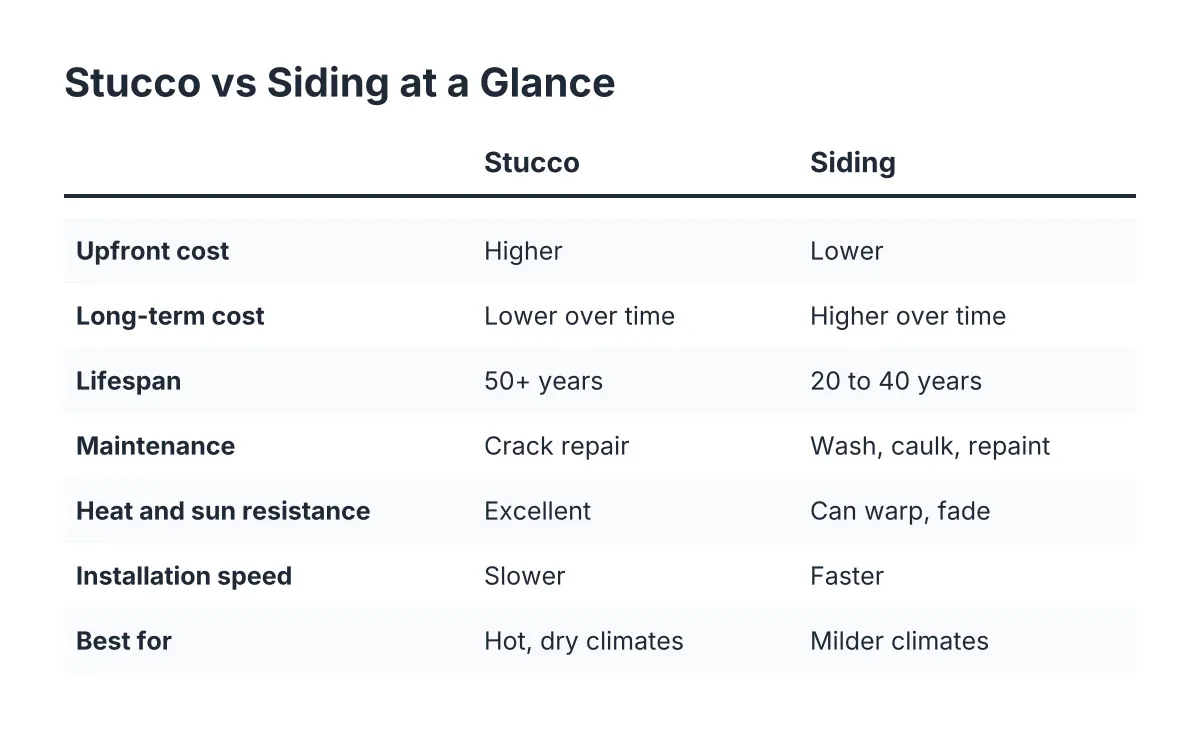
Stucco replacement means removing the old stucco down to the lath or the wall sheathing and installing new stucco from scratch. It's the most expensive path, reserved for walls with widespread cracking, delamination, or hidden water damage. If more than one contractor recommends replacement for the same wall, believe them; patching failing stucco just delays the tear-out. For ballpark numbers on what different levels of work run, see how much stucco costs. And if you're weighing stucco against other exterior options entirely, stucco vs. siding walks through the trade-offs.
Texture Matching
Texture matching is the process of shaping a repair's finish coat so it blends into the pattern of the surrounding wall. Stucco finishes range from smooth to heavily textured, and Scottsdale homes use many of them. A patch with the wrong texture is visible from the curb even if the color is right. When a quote lists texture matching as its own line, the contractor is budgeting real time for blending, which is a good sign.
Color Matching
Color matching means tinting the repair's finish or paint so it blends with the existing wall color, including years of sun fade. Desert sun bleaches stucco unevenly, so matching the original factory color often looks wrong on an aged wall. A careful contractor matches the wall as it is today. Ask how the color match will be handled; sometimes the honest answer is that the whole wall needs a coat to look uniform.
Pricing and Paperwork Terms
These terms live on the quote itself. Understanding them keeps surprises off your final bill.
Square Footage Pricing
Square footage pricing means the cost is calculated from the area of wall being repaired or installed, measured in square feet. It's the standard way stucco installation and resurfacing are priced, while small repairs are more often flat-priced by the job. Knowing your wall's rough dimensions before you call lets you sanity-check any number you're given. Stucco costs vary with wall height, access, and the depth of the damage, so two walls of the same size can price differently.
Mobilization Fee
A mobilization fee is a minimum charge that covers getting a crew, tools, and materials to your home, regardless of job size. It's why a tiny patch can cost more per square foot than a large wall. It isn't padding; mixing stucco for one small hole takes nearly the same setup as mixing it for ten. If you have several small problem spots, ask to bundle them into one visit so you pay the fee once.
Scope of Work
A scope of work is the written section of a quote that lists exactly what the contractor will do, where, and with what materials. It's the single most important part of any stucco quote. If the scope doesn't mention texture matching, lath repair, or paint, assume those items aren't included and ask. A vague scope is where disputes start; a specific one protects both sides.
Change Order
A change order is a written agreement to change the price or the work after the job has started, usually because hidden damage turned up. Stucco hides its problems, so change orders happen, especially with water damage behind the wall. The protection is the word written: never accept a verbal price change. A fair contractor will show you the hidden damage before asking you to approve the added cost.
Using These Terms
That's what this stucco costs glossary gives you: the vocabulary to read a stucco quote line by line instead of just looking at the total. You can now ask whether a repair includes a scratch coat, how the color match will handle sun fade, and what happens if the crew finds delamination. Those three questions alone will tell you more about a contractor than any sales pitch.
If you need stucco repair, Scottsdale Stucco Repair can help.
Prefer to talk it through? Call (480) 637-3464 — a quick call is usually the fastest way to get a straight answer for your situation.