Stucco Wall Assessment Terms Explained: A Plain-English Glossary
If you're a Scottsdale homeowner getting quotes for stucco repair, you'll run into words that contractors use every day but nobody explains. This stucco wall assessment glossary breaks down the terms you'll see in inspection reports, repair quotes, and conversations with providers. Each entry gives you a plain definition first, then tells you why the term matters when someone is looking at your walls. Read it once and you'll understand what a contractor means before they finish the sentence.
- Hairline Crack: thin surface crack, common and usually minor
- Spider Cracking: web pattern of fine cracks
- Stair-Step Crack: crack following a zigzag path, worth attention
- Delamination: stucco layers separating from each other
- Efflorescence: white chalky residue from moisture
- Spalling: stucco flaking or breaking off in chunks
- Substrate: the wall structure under the stucco
- Lath: the mesh or wire the stucco grips
- Weep Screed: metal strip at the wall base that drains water
- Moisture Meter: tool that reads dampness inside a wall
- Sounding: tapping the wall to find hollow spots
- Scratch Coat, Brown Coat, Finish Coat: the three layers of traditional stucco
- Stucco Patching: repairing a damaged section without redoing the wall
- Stucco Resurfacing: new finish layer over the whole wall
- Color Matching: blending a repair's color into the existing wall
- Texture Matching: blending a repair's surface pattern into the existing wall
- Scope of Work: the written list of what a repair covers
- Remediation: fixing the cause of damage, not just the surface
Cracks and Damage Types
These are the words a contractor uses to describe what's wrong with your wall. Knowing them helps you understand whether a problem is cosmetic or a sign of something deeper.
Hairline Crack
A hairline crack is a thin surface crack in stucco, usually narrower than the edge of a credit card. Most hairline cracks come from normal settling or the daily temperature swings Scottsdale walls go through, and they rarely mean structural trouble. They still matter because they let water in over time, and water is what turns a small crack repair into a bigger job. If a quote lists hairline crack repair, expect a modest scope focused on sealing and blending.
Spider Cracking
Spider cracking means a web of fine cracks spreading out from a central point, like a cracked windshield. It often points to a problem underneath the surface, such as a stucco coat that was applied too thin or cured too fast. A provider who spots spider cracking will usually check whether the layer beneath is still solid before quoting a fix. That check protects you from paying for a patch that fails in a year.
Stair-Step Crack
A stair-step crack is a crack that follows a zigzag path, often tracking along the lines of the blocks or framing behind the stucco. This pattern can signal foundation movement or settling, which makes it more serious than a random surface crack. If a contractor points one out, ask whether they think the movement has stopped. The answer changes whether you need a simple crack repair or a closer look at the structure first. The warning signs that call for an inspection usually start with cracks like these.
Delamination
Delamination means the layers of stucco have separated from each other or from the wall behind them. The surface may look fine while a whole section is loose underneath, which is why contractors tap walls during an inspection. Delaminated stucco cannot be sealed or painted back into place; it has to come off and be replaced. When a quote mentions delamination, expect the scope to include removing the loose material, not just coating over it.
Efflorescence
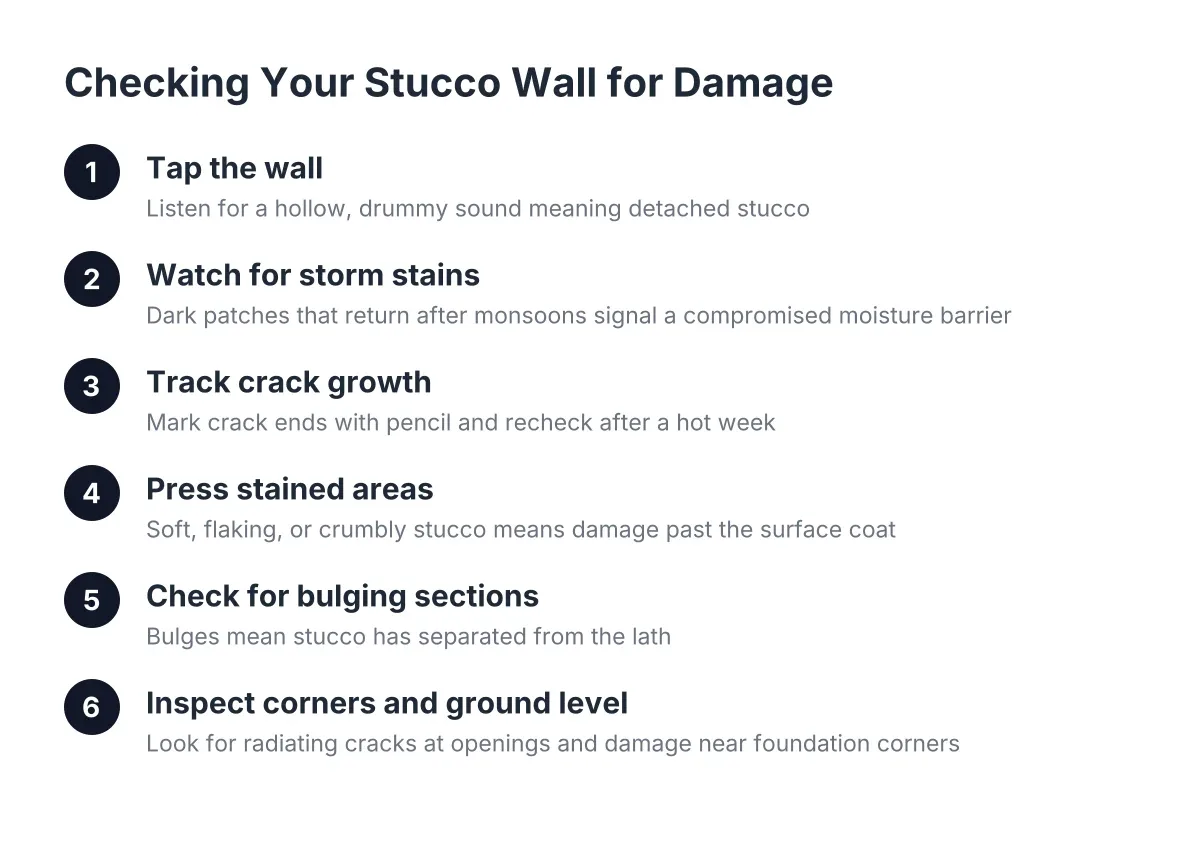
Efflorescence is a white, chalky residue that shows up on stucco when water moves through the wall and leaves minerals behind as it dries. It is not mold and it wipes off, but it is evidence that moisture is getting into the wall somewhere. A good assessor treats efflorescence as a clue and traces where the water is coming from. Cleaning the residue without finding the source means it comes back.
Spalling
Spalling means stucco is flaking, crumbling, or breaking off in chunks, usually because water got in and weakened the material from inside. In a dry climate like Scottsdale's, spalling often traces back to irrigation spray, roof runoff, or a leak rather than rain. Spalled areas need patching or replacement, since the damaged material has lost its strength. A quote for spalling repair should say how far beyond the visible damage the contractor plans to cut back.
Behind the Wall: Structure and Layers
An assessment isn't just about the surface. During a stucco wall assessment and glossary review, a contractor is reading what the wall tells them about the layers underneath, and these are the parts they're talking about.
Substrate
The substrate is the wall structure that stucco is attached to, usually wood framing with sheathing or concrete block. When a contractor talks about substrate damage, they mean the problem has gone past the stucco into the wall itself. That distinction matters for cost: fixing stucco is one job, fixing the wall under it is another. Water damage stucco repair often involves both.
Lath
Lath is the wire mesh or metal grid fastened to the wall that gives stucco something to grip. If lath rusts or pulls loose, the stucco above it cracks or sags no matter how good the finish looks. Repairs that expose the lath cost more than surface patching because the contractor is rebuilding the wall's grip, not just its face. Ask whether a patch quote includes new lath if the old section comes off.
Weep Screed
A weep screed is a metal strip installed at the bottom edge of a stucco wall that lets trapped water drain out. If soil, gravel, or a concrete patio buries the weep screed, water has nowhere to go and wicks up into the wall instead. Inspectors check the base of every wall for this, and it is one of the cheapest problems to catch early. A blocked weep screed is a common root cause behind water damage higher up the wall.
Scratch Coat, Brown Coat, Finish Coat
The scratch coat, brown coat, and finish coat are the three layers of traditional stucco, applied in that order from the wall out. The scratch coat grips the lath, the brown coat builds thickness and flatness, and the finish coat carries the color and texture you see. When a contractor says a crack only reaches the finish coat, that is good news; damage into the brown or scratch coat means a deeper repair. Knowing the layers helps you understand why two cracks that look alike can carry different price tags.
Assessment Tools and Process
This part of a stucco wall assessment glossary covers what actually happens during an inspection, so a report reads like plain English instead of shorthand.
Moisture Meter
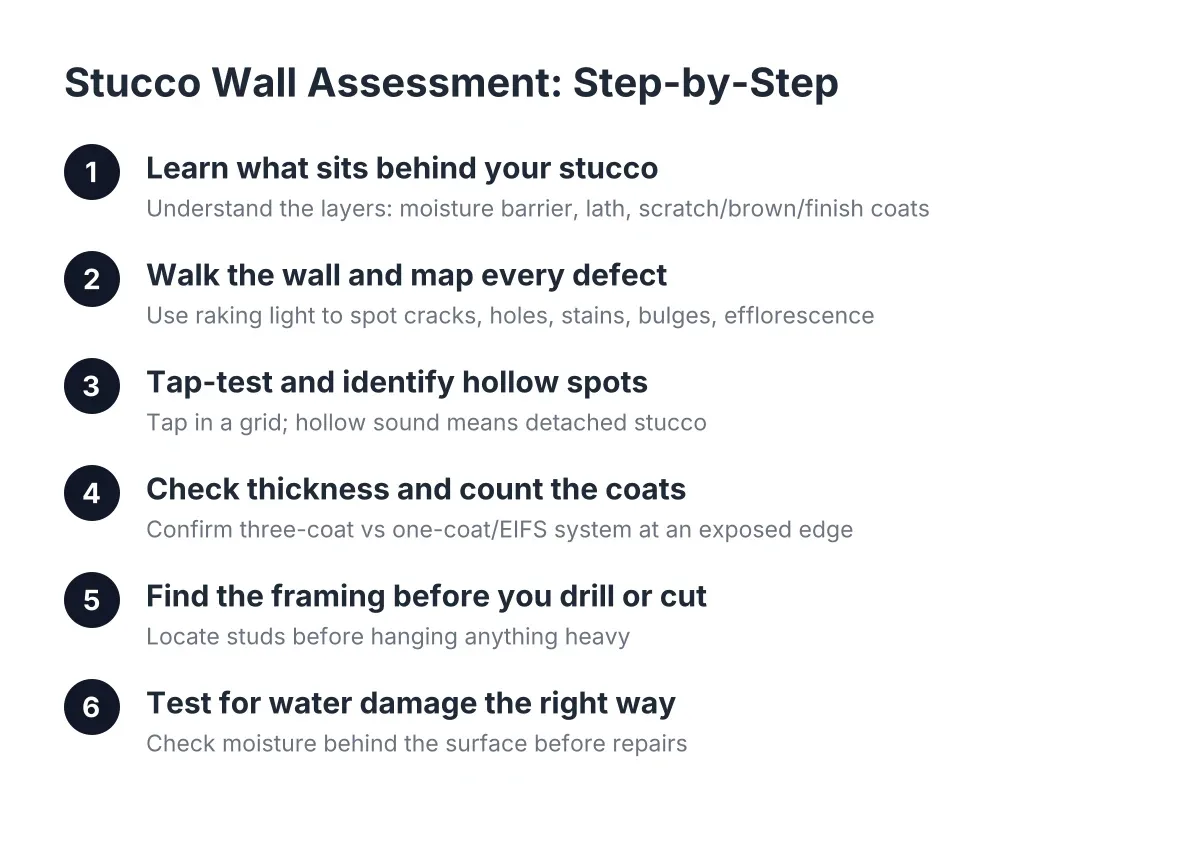
A moisture meter is a handheld tool that measures how much dampness is inside a wall without cutting into it. High readings behind stucco point to a leak or trapped water even when the surface looks dry. If an assessor uses one, ask for the readings and where they were taken; that record is useful if you repair now and check again later. For the full sequence of what an inspector does, see this step-by-step inspection guide.
Sounding
Sounding means tapping the stucco surface and listening for hollow spots that signal loose or delaminated material. Solid stucco sounds dull and tight; separated stucco sounds hollow, like knocking on a door. It is a low-tech test, but it finds problems the eye misses. A contractor who sounds your walls during an assessment is mapping how far a repair needs to go before they quote it.
Repairs, Quotes, and Paperwork
These are the terms that show up once the assessment is done and you're holding a written quote.
Stucco Patching
Stucco patching means repairing a damaged section of wall, such as a hole or a spalled area, without redoing the whole surface. A good patch is cut back to solid material, rebuilt in layers, and blended into the wall around it. Patching is the right call when damage is contained; if damage is widespread, a contractor may recommend resurfacing or replacement instead. The line between the two is exactly what an assessment settles, and it drives most of the cost of a stucco wall assessment and repair.
Stucco Resurfacing
Stucco resurfacing means applying a new finish layer over an entire wall or house to renew its look and seal minor surface flaws. It sits between patching and full replacement: bigger than a spot fix, smaller than tearing off the old stucco. Resurfacing only works if the layers underneath are sound, which is why an honest contractor checks for delamination first. If someone quotes resurfacing without sounding the walls, ask why.
Color Matching
Color matching means mixing a repair's finish so its color blends into the surrounding wall instead of standing out as a patch. Stucco color shifts with sun exposure and age, so matching a twenty-year-old Scottsdale wall takes more than reading the original color off a chart. A quote that includes color matching tells you the contractor plans for the repair to disappear, not just hold. It is worth confirming on any visible wall.
Texture Matching
Texture matching means recreating the surface pattern of the existing stucco, such as smooth, sand, or lace finishes, so the repaired area feels and looks like the rest of the wall. Texture is often what gives a patch away, even when the color is right. Ask a provider how they'll match your texture; a confident, specific answer is a good sign. On older homes, expect them to test a small area first.
Scope of Work
A scope of work is the written list of exactly what a repair job includes: which walls, what materials, what gets removed, and what gets rebuilt. It is the single most useful document for comparing quotes, because two prices mean nothing until you know what each one covers. If a quote lacks a clear scope, ask for one before you sign. A vague scope is where surprise charges live.
Remediation
Remediation means fixing the cause of stucco damage, not just the visible symptom. Patching a water-stained wall without stopping the leak is repair; finding and fixing the leak first is remediation. When a contractor uses this word, they are telling you the job includes root-cause work, which usually costs more up front and saves you a repeat repair later. For a home with recurring damage, remediation is the word you want to see.
Using These Terms
What this stucco wall assessment glossary gives you is the ability to read a quote line by line and know what each item means for your wall and your wallet. You can now ask whether a crack reaches past the finish coat, whether a patch includes new lath, and whether the scope covers the cause or just the symptom. Those questions get you straighter answers and better repairs.
If you need stucco repair, Scottsdale Stucco Repair can help.
Related guide: Stucco Wall Assessment — Complete Guide
Prefer to talk it through? Call (480) 637-3464 — a quick call is usually the fastest way to get a straight answer for your situation.