8 Signs of Stucco Problems Caused by Hidden Water Damage in Scottsdale
Most signs of stucco problems that come from water damage show up long after the moisture got in. By the time you see a stain or a soft patch, water may have been working behind the wall for months. That matters in Scottsdale, where a handful of hard monsoon storms each year can push water through a hairline crack that looked harmless in June.
This list covers eight signs that point specifically to moisture behind the stucco, not just surface wear. Each one tells you something about what is happening under the finish coat. If you are trying to decide between a patch, a resurface, or a full stucco replacement, these signs are the evidence that should drive that decision.
Why Water Damage Hides So Well Behind Stucco
Stucco is a layered system, and water damage starts in the layers you cannot see. A traditional three-coat stucco wall has a scratch coat, a brown coat, and a finish coat over a water-resistive barrier, usually building paper, attached to lath over the framing. The finish coat is the only part you see. Water that gets past it travels down the paper, soaks the lath, and can reach the framing before the surface shows anything.
That is why stucco is common across the region; according to the National Association of Home Builders, stucco went on 48% of new single-family homes started in the Mountain division in 2024. It handles Arizona sun well. However, the same layered construction that makes it durable also makes water intrusion slow to reveal itself.
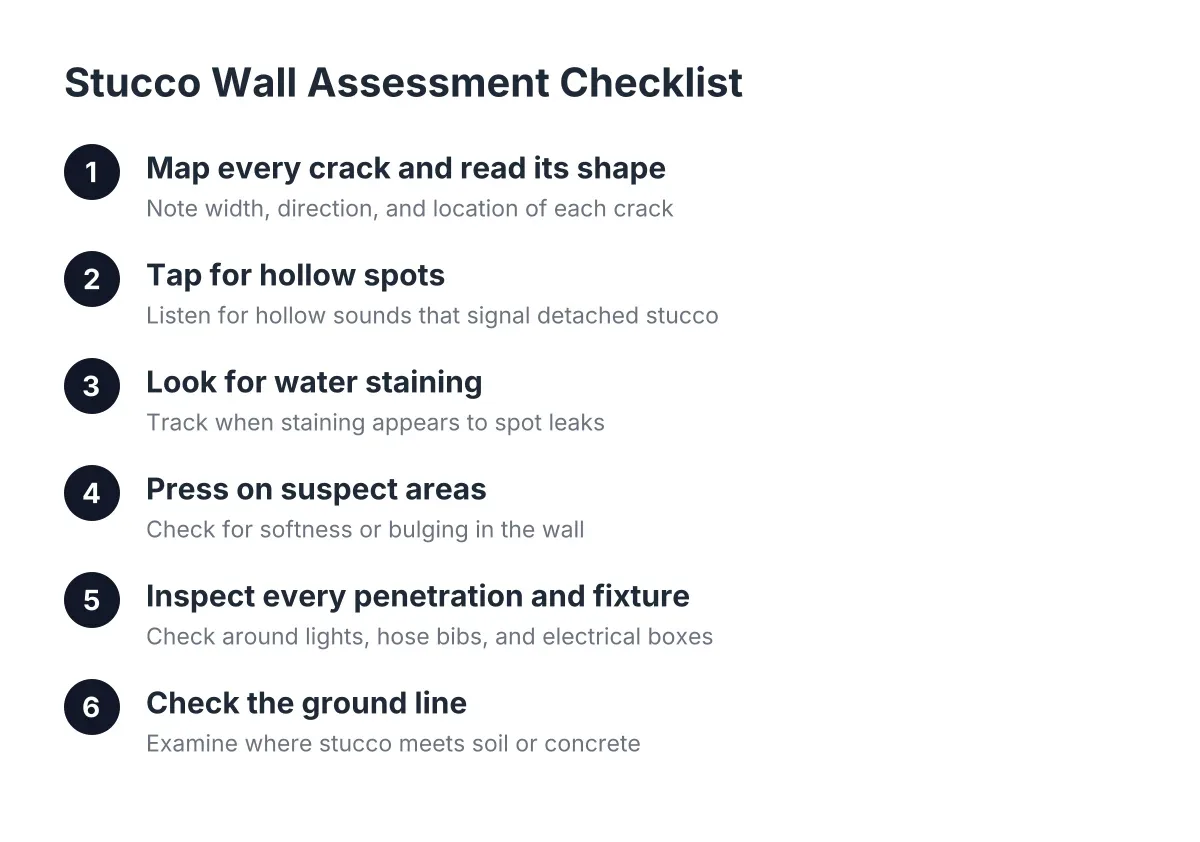
So the goal of a moisture-focused Stucco Wall Assessment is simple: find the signs on the surface that tell you what the hidden layers are doing. The eight signs below are ordered roughly from least to most serious.
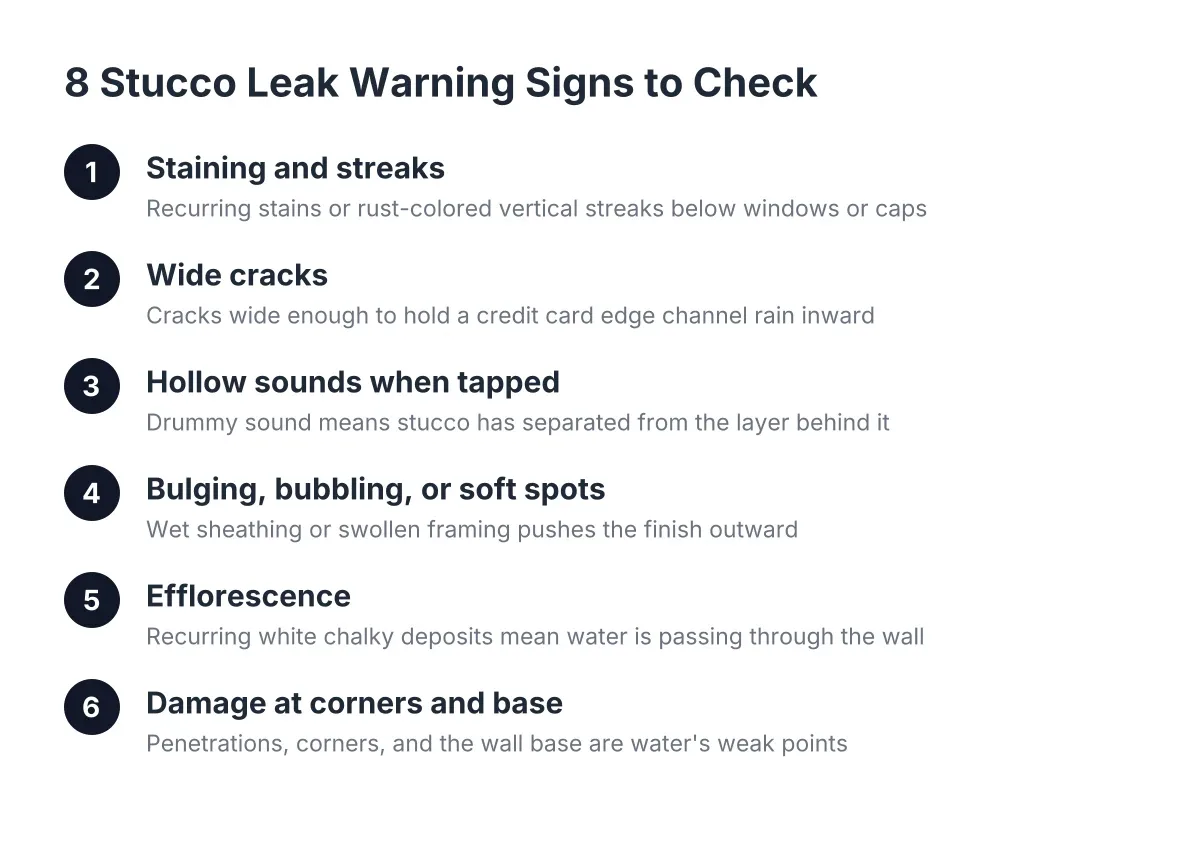
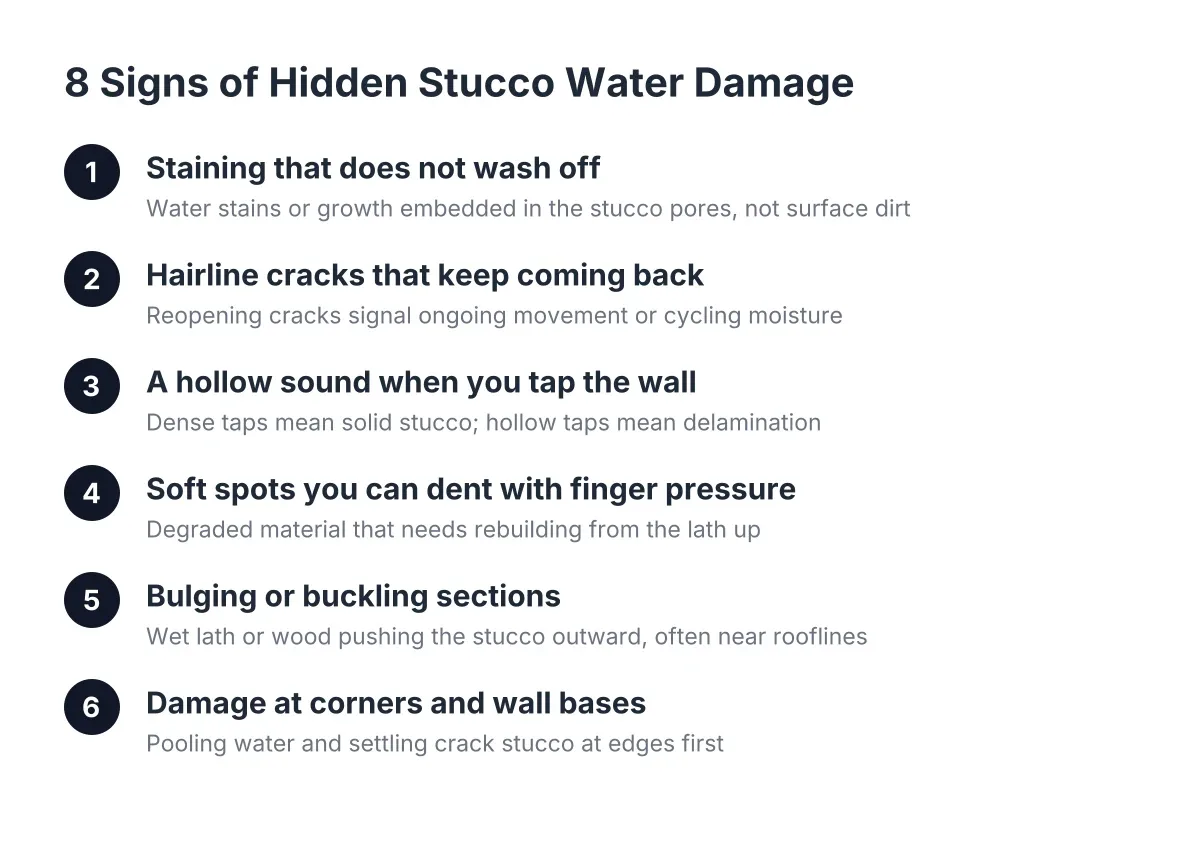
1. Staining That Does Not Wash Off
A stain that survives a gentle rinse is one of the earliest signs of stucco problems tied to moisture. Dirt washes off. Water stains, mineral streaks, and embedded growth do not, because they come from inside the material, not on top of it. Discoloration on a shaded or chronically damp wall is often growth that has worked into the pores of the stucco itself, which is why one cleaning rarely removes it.
Pay attention to where the stain sits. Streaks below windows, under scuppers, or along the bottom two feet of a wall usually trace back to a specific water path. A stain with no obvious source above it can mean water is moving behind the stucco and surfacing where it finds a weak spot.
One caution: do not reach for a pressure washer. High-pressure water forced into a layered wall can push moisture behind the finish coat and create the exact problem you are trying to diagnose.
2. Hairline Cracks That Keep Coming Back
A hairline crack that reappears after being filled is telling you the wall is still moving, or that moisture behind it is cycling the material. In Scottsdale, a crack that stays dry ten months a year can take in serious water during monsoon season. Each wet cycle expands the damage slightly, so the crack reopens wider than before.
The bigger risk is time. Leave a moving crack alone for years and the building paper behind it grows brittle. Eventually normal wall flexing tears the paper, and at that point water has a direct path to the lath and framing. A crack repair done early protects a layer you cannot see or easily replace.
3. A Hollow Sound When You Tap the Wall
Tapping the wall with a knuckle and comparing sounds is the single most useful test a homeowner can do. Solid stucco sounds dense and flat. Stucco that has separated from the layers behind it sounds hollow, like knocking on a drum. Delamination like this often starts with moisture breaking the bond between coats or between the brown coat and the lath.
Work in a grid. Tap every foot or so across a suspect wall and mark hollow zones with painter's tape. The size of the hollow area is one of the main things that separates a stucco patching job from a resurfacing or replacement conversation, so this map is worth making before anyone quotes you.
4. Soft Spots You Can Dent With Finger Pressure
If light finger pressure dents or punctures the surface, the stucco at that spot has failed. Healthy stucco is hard; you should not be able to mark it with your thumb. A soft spot means moisture has degraded the material, or a previous patch was mixed or applied badly and never cured to strength.
Here is the hard truth about soft patches: they cannot be fixed by skimming new material over the top. A weak, hollow-sounding patch needs to be broken out completely and rebuilt from the lath up. Surface-coating over failed material buries the problem and guarantees a second repair later.
5. Bulging or Buckling Sections
Bulging is the wall physically pushing away from its backing, and it is almost always a water story. Wet lath rusts, wet wood swells, and the stucco attached to both gets shoved outward. A bulge the size of a dinner plate near a roofline or window usually traces to a flashing failure above it.
Act on this one quickly. All loose and buckling material has to come off before any repair, because leaving it in place lets each rain keep expanding the wet wood behind it. For example, suppose a homeowner near McCormick Ranch notices a bulge below a second-story window in August and waits until spring to deal with it. In that scenario, two more monsoon seasons of water feeding the same spot can turn a few hundred dollars of stucco hole repair into framing work.
6. Damage Concentrated at Corners and the Base of Walls
Corners and the bottom edge of a wall fail first when water pools near the foundation. Repeated heavy rain that gathers against the slab can cause slight settling, and settling shows up as cracked, crumbling stucco at corners and along the base. Poor drainage, grading that slopes toward the house, or a patio that sheds water at the wall all feed this pattern.
Mechanical equipment makes it worse. An air conditioning condenser sitting close to a corner transmits vibration into the wall for years. Combine that vibration with damp soil at the foundation and the corner stucco cracks and sheds faster than any other part of the house. If your worst damage is at a corner near the AC unit, look at drainage and equipment placement, not just the stucco.
7. Peeling Paint or a Chalky, Crumbling Surface
Paint does not peel off dry stucco in sheets; it peels because moisture behind the film is pushing it off. Likewise, a finish coat that rubs off as powder or crumbles at the touch has lost its binder, often from long-term water exposure. Both are surface symptoms of a wall that is wetter than it should be.
Check these areas after a rain. A wall section that stays visibly damp hours after everything else has dried is holding water, and where it holds water is where the lath and paper are degrading.
8. Signs of Stucco Problems Inside the House
Interior clues are the most serious entries on this list, because water that reaches your drywall has already crossed every exterior layer. Walk the interior side of any exterior wall you suspect and look for:
- Water stains or rings on drywall or ceilings near exterior walls
- Bubbling or peeling interior paint below windows
- A musty smell in one room that will not air out
- Baseboards pulling away or swelling at an exterior wall
- Window sills that feel soft or show dark staining at the corners
Any one of these, paired with exterior symptoms on the same wall, means the moisture problem is established, not starting. At that stage a cosmetic patch on the outside solves nothing; the wet material behind the stucco has to be opened up, dried, and rebuilt.
What These Signs Mean for Your Repair Budget
The pattern of signs, more than any single symptom, tells you whether you are looking at a repair, a resurface, or a replacement. One cracked corner with dry interior walls is a repair. Hollow zones and soft spots scattered across one elevation push toward resurfacing that wall. Bulging, interior staining, and base-of-wall failure on multiple sides is a replacement conversation.
This is also why quotes for the same house can vary by three times. A contractor who taps the walls and finds delamination is pricing tear-out and rebuild; one who only looks at the finish coat is pricing a skim. For scale, Fixr.com puts the national average cost to repair stucco between $900 and $3,000, averaging about $1,700 for buckled three-coat stucco in a 10×10-foot area. Widespread hidden water damage is what moves a project from that range into full replacement territory.
Therefore, in 2026, before you collect quotes, walk the house with this list and note which signs appear on which walls. Hand every estimator the same notes and ask each one to price against them. That gets you comparable, itemized numbers instead of three bids measuring three different scopes.
One honest limit: surface inspection and tap-testing cannot confirm what is happening inside the wall. If you find interior staining, widespread hollow areas, or soft framing at a window, bring in a professional who can open a test section or run moisture readings before you commit to a repair path. Catching the signs of stucco problems early is your job as the homeowner; confirming how deep the water went is theirs.
If you need stucco repair, Scottsdale Stucco Repair can help.
Prefer to talk it through? Call (480) 637-3464 — a quick call is usually the fastest way to get a straight answer for your situation.