Stucco Texture Durability: Which Finishes Hold Up in Arizona Heat
If you are pricing a full re-stucco in Scottsdale, or you own a few rentals with walls that look worse every monsoon season, you have probably noticed something. Everyone talks about stucco color. Almost nobody talks about texture, and texture is where the real differences in stucco texture durability finishes show up. The finish on your walls decides how fast cracks appear, how visible they are once they do, and how hard it is to patch the damage without leaving a scar the whole street can see. Understanding stucco finish durability in Arizona is essential because local conditions accelerate wear faster than most climates.
That matters more in Arizona than almost anywhere else. Scottsdale walls take 110-degree summer afternoons, 40-degree winter nights, direct UV all year, and a monsoon season that drives rain sideways into every hairline crack. Some textures shrug that off for decades. Others start telegraphing every flaw within a few years. Before you sign a contract for stucco replacement or resurfacing, you should know which is which.
Why Texture, Not Color, Decides How Long Your Stucco Lasts in Arizona
Texture controls three things that decide the working life of a stucco wall: how the surface handles thermal movement, how it sheds water, and how easy it is to repair invisibly when something does go wrong.
Start with movement. Stucco is a cement-based coating, and cement expands and contracts with temperature. In Scottsdale, a west-facing wall can swing 60 degrees or more between a July afternoon and that same night. Every one of those cycles puts stress on the finish coat. A textured surface with ridges and valleys distributes that stress unevenly but hides the result; a dead-flat surface distributes it evenly but shows every hairline the moment it forms.
Next, water. The textured surface of stucco, with its small ridges and pores, gives wind-driven monsoon rain more places to sit. Heavier textures can hold moisture in their valleys longer after a storm, which matters on shaded north walls where staining and mildew settle into the pores. Smoother finishes shed water faster but depend on a near-perfect surface to do it.
Finally, repairability. This is the part most people skip when comparing quotes, and it is the part that costs you the most over ten years. A texture that conceals a patch means a $600 repair stays a $600 repair. A texture that exposes every patch means small repairs keep escalating into resurfacing conversations.
Stucco is not going anywhere in this region either. According to National Association of Home Builders, stucco was used on 48% of new single-family homes started in the Mountain division, which includes Arizona, in 2024. Whatever finish you choose, you will be living next to it, comparing against it, and matching to it for a long time.
Ranking Stucco Finish Durability in Arizona for Scottsdale Walls
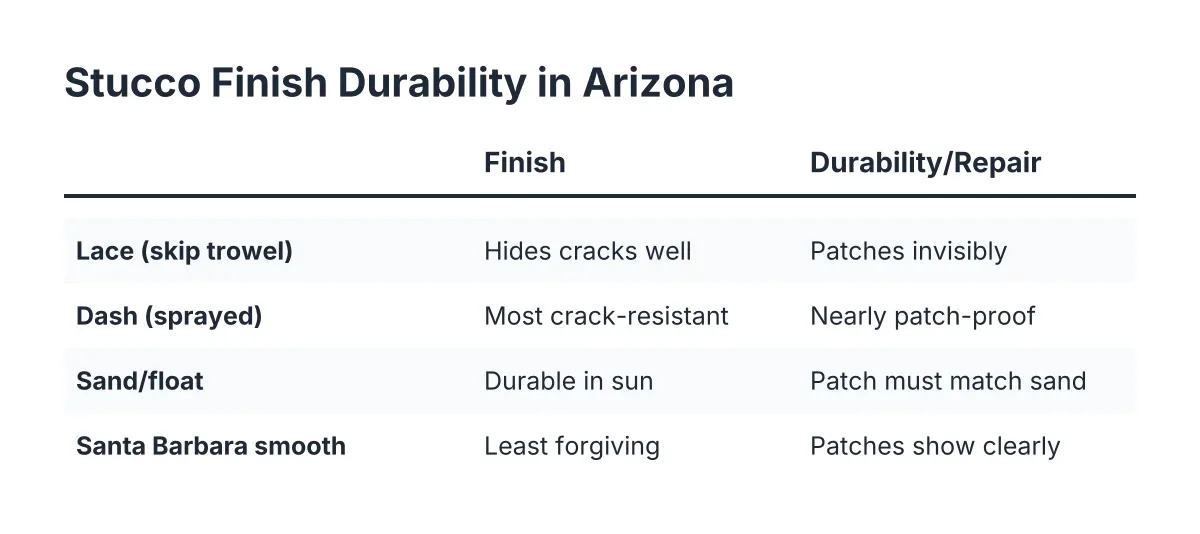
For Arizona sun and monsoon exposure, heavier and mid-weight textures outlast smooth ones in practical terms. Lace and dash finishes hide thermal cracking and patch nearly invisibly. Sand finishes sit in the middle. Santa Barbara smooth looks the best on day one and demands the most skill, maintenance, and money to keep looking that way.
Here is how the four finishes you will actually see on Scottsdale homes compare, from most forgiving to least.
Lace finish: the Scottsdale workhorse
Lace, sometimes called skip trowel, is the knocked-down, mottled texture on most Scottsdale homes built from the 1970s through the 2000s. The crew applies the finish coat, lets it set briefly, then flattens the high spots with a trowel. The result is an irregular pattern of raised islands and shallow valleys.
That irregularity is exactly why it lasts. Hairline cracks from thermal movement follow the valleys and disappear into the pattern. A flattened, textured finish like lace is also the easiest to patch invisibly, because small imperfections in the repair blend into a surface that was never uniform to begin with. For a landlord handling exterior wall damage across several rental properties, lace is the finish that keeps repair invoices small and HOA letters rare.
Dash finish: rough, tough, and nearly patch-proof
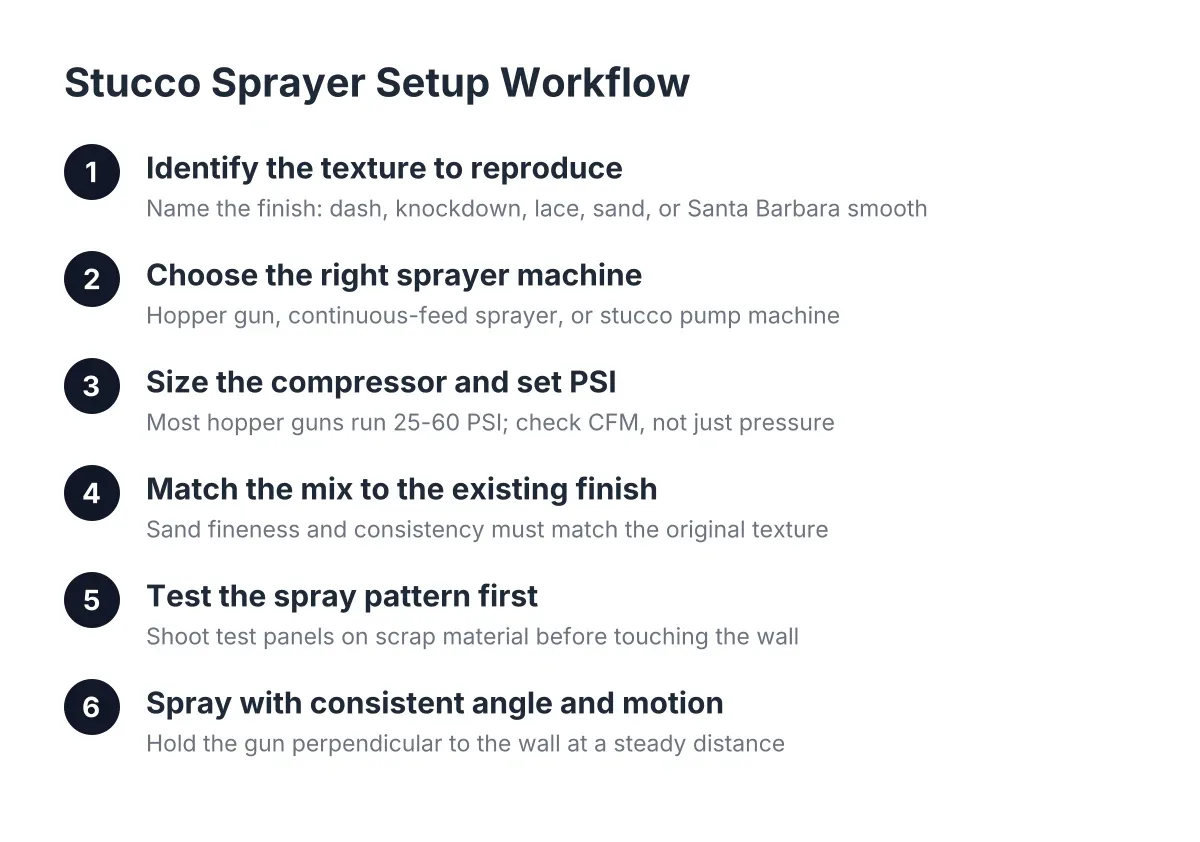
Dash is a sprayed or flung texture with a coarse, pebbled look, common on older homes, garden walls, and parapets around the East Valley. Spray stucco texture equipment makes it fast to apply and fast to match.
Durability-wise, dash is hard to beat in this climate. Its depth hides cracking better than any other finish, and a sprayed patch disappears into the surrounding roughness. The trade-off is appearance and cleaning. Dash reads as dated to some buyers, and its deep pores collect dust and hold stains longer after monsoon rain. If you are re-stuccoing before a sale, dash may hurt curb appeal even though it would outlast the alternatives.
Sand finish: the middle ground
A sand or float finish uses fine aggregate worked in circular motions to produce a uniform, lightly gritty surface. It is cleaner-looking than lace and far more forgiving than smooth.
However, uniformity cuts both ways. Because the surface is consistent, a patch with the wrong sand gradation stands out immediately. The fineness of the sand in the repair mix has to match the original, which is why sand finish vs smooth stucco is not the simple comparison it looks like; sand is more durable, but it is less forgiving of careless repairs than lace or dash. Done right, it holds up well in full sun and sheds water cleanly.
Santa Barbara smooth: beautiful, and the least forgiving
The Santa Barbara stucco finish is the flat, softly mottled, hand-troweled look on newer high-end Scottsdale builds. It is the most expensive finish to apply and the least tolerant of Arizona's thermal cycling.
On a smooth wall, there is no texture to hide anything. Every hairline crack from a 60-degree daily temperature swing reads as a dark line at twenty feet. Every smooth stucco patch has to be feathered out well beyond the damaged area, often across an entire wall section, to avoid a visible halo where new material meets old. The finish itself is not weaker as a material; it simply shows its age honestly, and in this climate, walls age fast. Budget for that honesty before you fall in love with the look.
What Arizona Heat Actually Does to Each Finish
Arizona heat damages stucco through three mechanisms: daily expansion and contraction, UV breakdown of the color coat, and monsoon moisture finding its way into cracks the heat created. Each finish responds to these forces differently, and the differences compound over years.
Thermal cycling is the big one. Suppose a homeowner in north Scottsdale has a west-facing wall with no shade. In July, that surface can approach 160 degrees by late afternoon, then drop below 90 overnight. The finish coat expands and contracts through that swing every single day. On lace or dash, the resulting micro-cracks vanish into the pattern for years before anyone notices. On Santa Barbara smooth, the same cracks are visible the first season they appear.
UV exposure fades integral color and chalks painted surfaces on every finish equally. The difference is what fading reveals. On a textured wall, uneven fading blends in. On a smooth wall, it shows as blotches, and any previous repair that was a shade off becomes obvious as the surrounding color shifts.
Then monsoon season arrives and exploits everything the heat opened up. Wind-driven rain pushes into hairline cracks, and on walls with deeper texture, water sits in the valleys longer. Water damage behind stucco rarely announces itself until you see staining, bubbling, or a soft spot. Any finish can hide a moisture problem; no finish prevents one once cracks go unsealed.
The practical takeaway: in 2026, if you are choosing a finish for a full stucco replacement in Scottsdale, you are choosing how your walls will fail, not whether they will. Textured finishes fail quietly and cheaply. Smooth finishes fail visibly and expensively.
The Durability Factor Nobody Puts in the Quote: Repairability
A wall is only as durable as its ugliest patch. You can pick the toughest finish coat available, and one bad repair after a woodpecker hole or a water leak will define how that wall looks for the next decade. This is where texture stops being a style decision and becomes a maintenance budget decision.
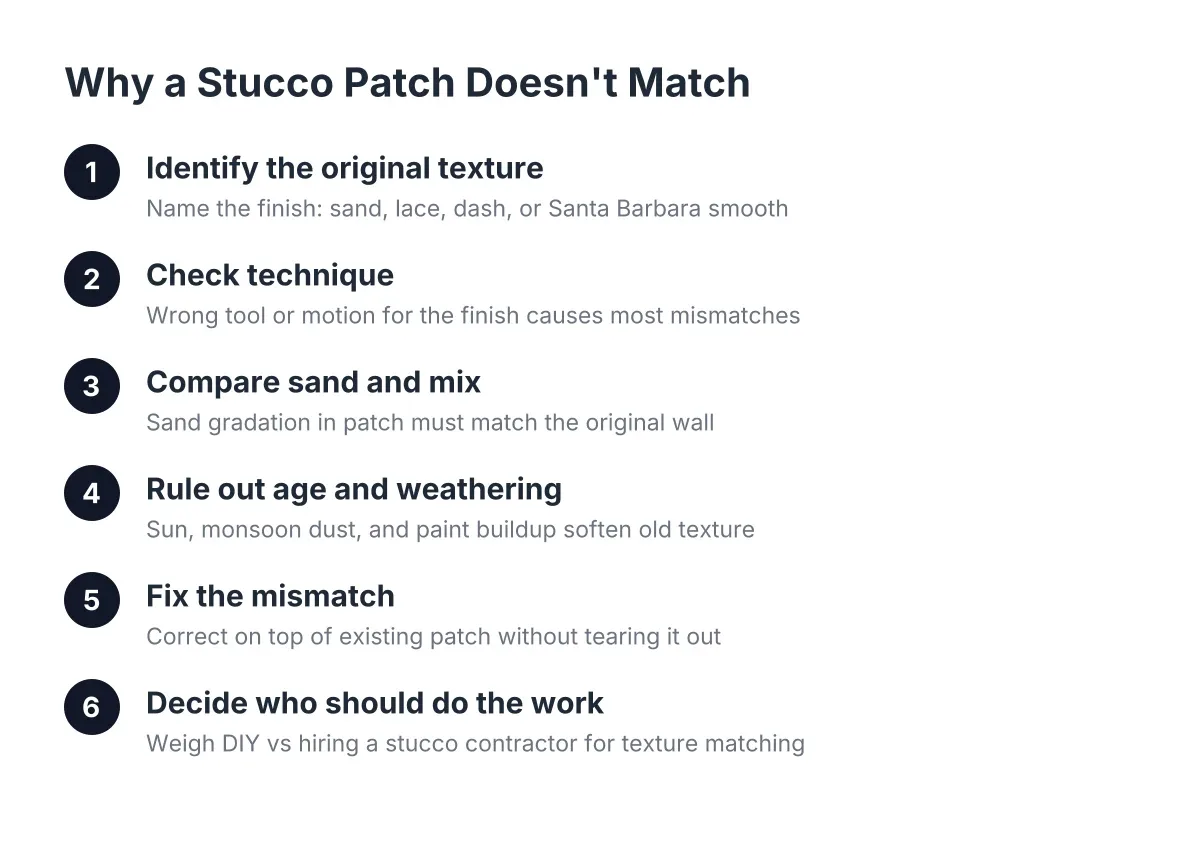
Texture mismatch is cosmetic, not structural. A patch that stands out does not mean the wall is failing underneath. But cosmetic problems on stucco do not paint away; if the texture of the patch does not blend with the surrounding surface, the patch stays visible after painting, every time. A poor texture match usually means whoever did the repair never identified the original finish or did not have the technique to reproduce it.
This is why Stucco Texture Matching deserves a line of its own in any repair or resurfacing conversation. Reproducing a lace pattern means matching the application, the set time, and the knock-down pressure of the original crew. Reproducing a sand finish means matching the aggregate gradation. Additionally, Reproducing dash means matching the spray equipment and consistency. None of this is exotic, but all of it gets skipped when a repair is treated as a line item instead of a craft. The stucco finish durability you achieve depends partly on original workmanship and partly on how well repairs preserve the original pattern.
For example, say a landlord owns a duplex near Via Linda with a lace finish and a tenant backs a trailer into the corner, leaving a two-foot hole in the wall. As an illustrative estimate, a proper stucco hole repair with the lace texture matched might run a few hundred to around a thousand dollars, and the patch disappears. The same hole in a Santa Barbara smooth wall could require refinishing a much larger area to hide the blend lines, pushing the illustrative cost several times higher. Same hole, same structural fix, wildly different finish cost. That gap is texture, not materials.
For context on repair budgets generally, the national average cost to repair stucco runs $900 to $3,000, averaging around $1,700 for a buckled three-coat section about 10 by 10 feet, according to Fixr.com. Scottsdale pricing varies with access, finish, and damage type, but the pattern holds: the finish coat drives more of the repair cost than most homeowners expect.
Choosing a Finish When Durability Drives the Decision
If you are budgeting a full stucco replacement or resurfacing and long-term cost matters more than a magazine look, work through the decision in this order:
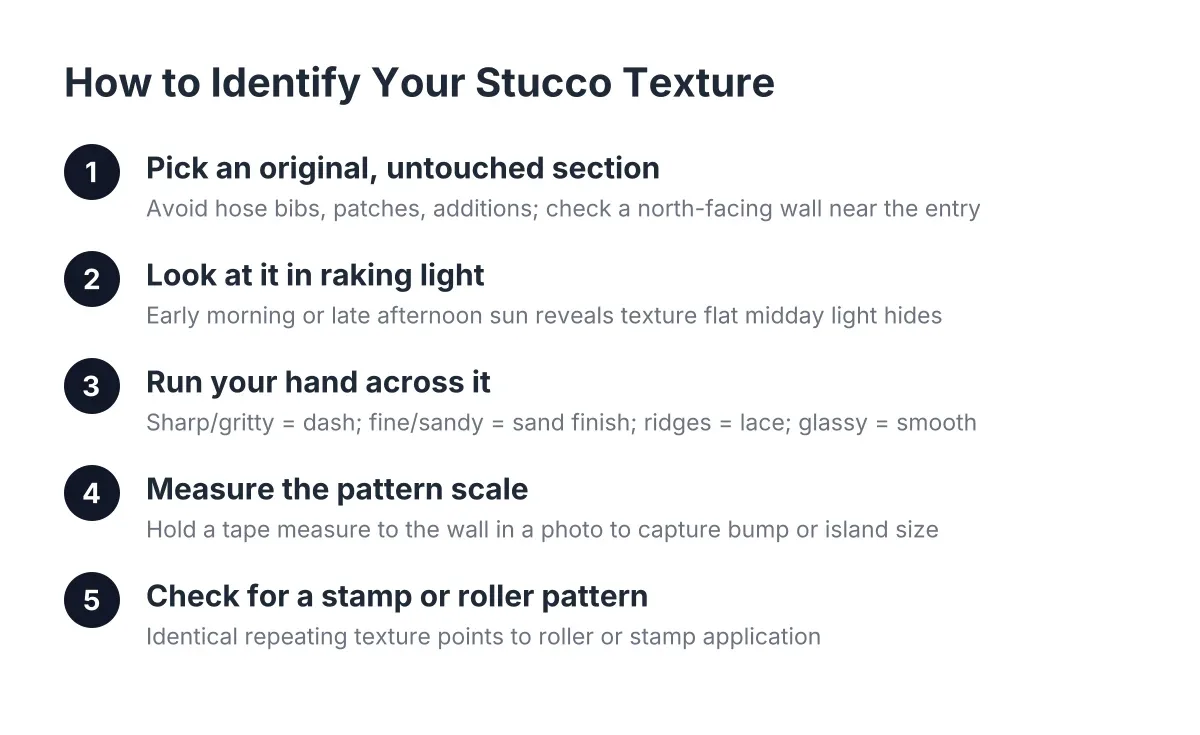
- Identify what you have now. If most of your walls are lace and only some sections need work, resurfacing in a different texture guarantees visible seams at every transition. Matching the existing finish is usually the durable and economical path.
- Map your sun exposure. South and west walls take the worst thermal cycling. If those elevations are smooth, expect more frequent crack repair there regardless of workmanship.
- Decide who maintains it. If you self-manage rentals and want patches to vanish without a specialist every time, lace or dash is the forgiving choice. If you live in the home and will notice every flaw, weigh whether smooth is worth the upkeep.
- Price the repair, not just the install. Ask any contractor quoting a re-stucco what a typical crack repair or smooth stucco patch costs on the finish they are proposing. The answers will separate finishes fast.
- Factor in resale. Smooth finishes carry a premium look that can matter if you are selling into Scottsdale's higher-end market. Durability is not the only variable; it is just the one quotes rarely explain.
There are honest trade-offs here. The most durable textures are not the most fashionable ones, and a dash wall that patches invisibly may still cost you at the appraisal if the neighborhood has moved on to smoother looks. In addition, no finish choice substitutes for diagnosis; widespread cracking, bulging, or staining across multiple walls can signal a moisture or substrate problem underneath the finish coat, and that calls for a professional assessment before any texture decision gets made.
What This Means for Your Replacement or Resurfacing Budget
Here is the budgeting logic that ties stucco finish durability in Arizona back to the numbers you are actually trying to pin down. When one full re-stucco quote comes in at three times another, the finish coat is often a hidden reason. A Santa Barbara smooth finish takes more coats, more skilled trowel work, and more time than a sprayed dash, and that labor difference compounds across an entire house.
Therefore, when you compare quotes, make the finish explicit. Ask each contractor to name the exact texture they are pricing, confirm it matches what is on the house now or what you have deliberately chosen to change to, and get the finish coat as its own line so you are comparing apples to apples. A quote that just says "stucco finish" is not comparable to anything.
Also ask the question that predicts your next ten years of costs: if this wall cracks or takes a hit after year two, what does the repair look like, and will the patch match? A contractor who can explain how they match stucco pattern and texture on their own work, not just on new installs, is telling you something about how your walls will age.
The finish on your walls is a durability decision disguised as a style decision. In Scottsdale's heat, the textures that hide their scars, lace and dash especially, cost less to own even when they cost the same to install. Choose with that in mind, and the budget you set this year has a much better chance of still being accurate in year ten.
If you need stucco repair, Scottsdale Stucco Repair can help.
Prefer to talk it through? Call (480) 637-3464 — a quick call is usually the fastest way to get a straight answer for your situation.