Why Your Stucco Texture Doesn’t Match After Repair: Causes and Fixes in Scottsdale, AZ
You can match the color perfectly and still see the patch from the street. When stucco texture doesn't match the surrounding wall, the repair catches light differently, and your eye finds it every time. For Scottsdale, AZ homeowners getting a house ready to list, or anyone who just had a block wall or addition stuccoed, a visible patch raises buyer questions it should not have to. This guide walks through why texture mismatches happen, step by step, and what to do about each cause.
One point of reassurance before we start: a texture mismatch is a cosmetic problem, not a structural one. A patch that stands out does not mean the repair underneath failed. It means the finish coat was applied with a different technique, a different mix, or a different tool than the original wall. Each of those is fixable.
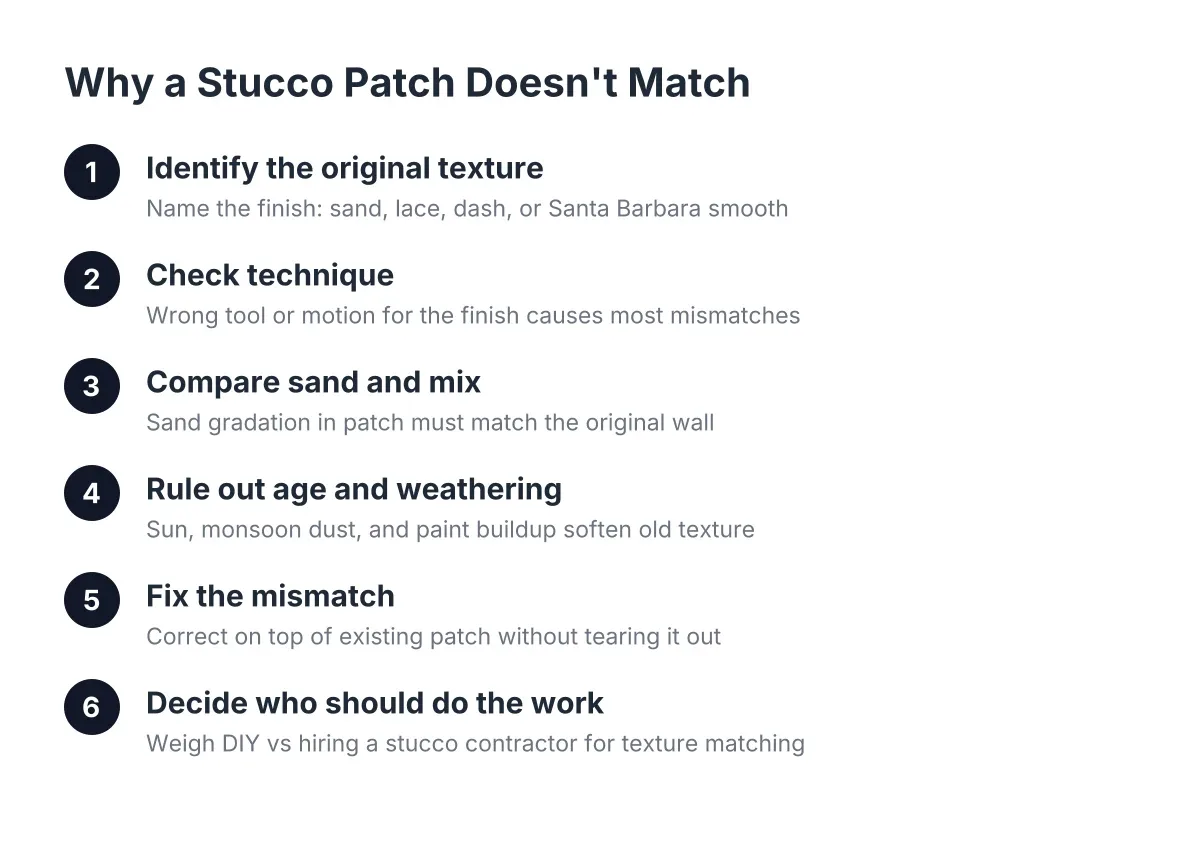
Step 1: Identify the Original Texture Before Blaming the Patch
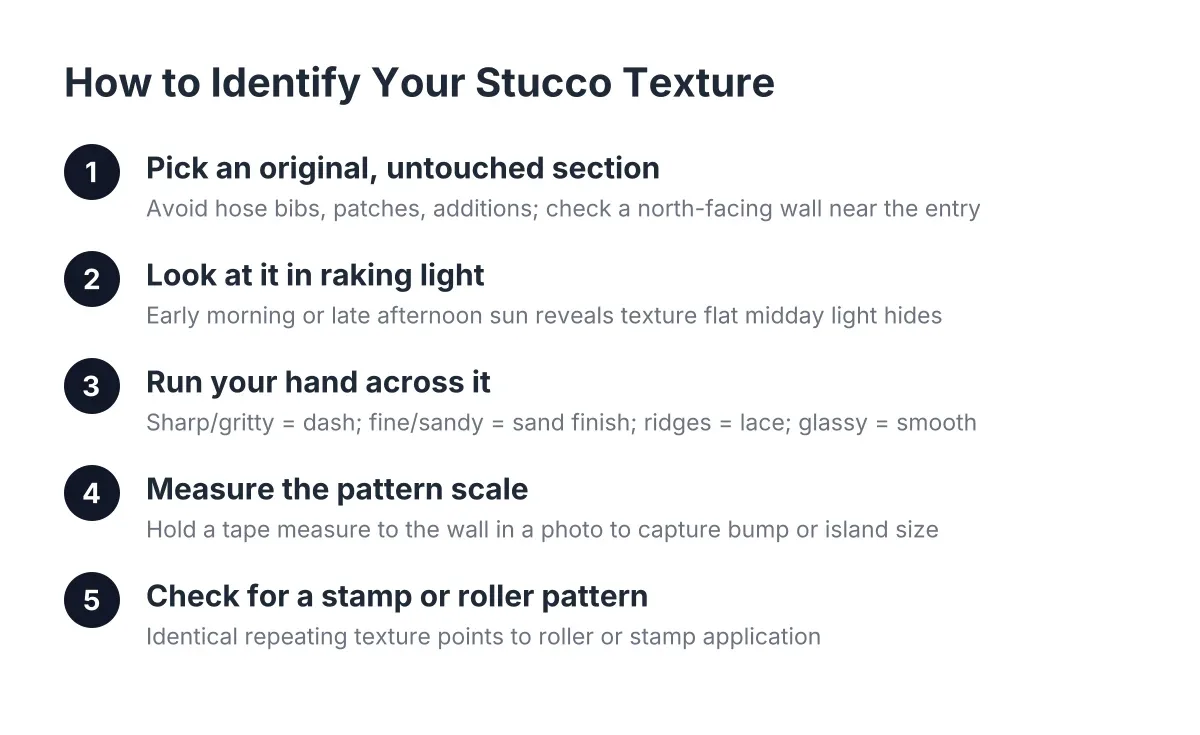
Start by naming the texture on the rest of the wall, because every fix depends on it. Scottsdale homes mostly use four finishes: sand (also called float), lace (skip trowel), dash (sprayed), and Santa Barbara smooth. Each one requires a different application method, and using the wrong method is the single most common reason a stucco patch doesn't match the surrounding surface.
Stand back ten feet and look at the wall in morning or late afternoon light, when shadows exaggerate the pattern:
- Sand finish: uniform, fine, gritty surface with no raised blobs. The most common finish on Scottsdale tract homes.
- Lace (skip trowel): raised, flattened islands of material with smoother valleys between them. Random but consistent.
- Dash: small, sharp bumps sprayed on and left alone, or lightly knocked down with a trowel.
- Santa Barbara smooth: a mottled, soft, nearly flat surface with subtle trowel marks. Common on higher-end Scottsdale homes and the hardest to patch invisibly.
If you cannot tell which one you have, take photos from two feet and ten feet and show them to a stucco contractor. Misidentifying lace as dash, or sand as smooth, guarantees the next repair will not blend either.
Step 2: How Technique Affects Why a Stucco Patch Doesn't Match
A mismatched texture usually traces back to technique, not materials. Suppose a handyman patched a crack on a lace-finish wall with a putty knife and a tub of premixed stucco patch. The material may be fine, but lace is created by troweling on globs and then skipping a clean trowel across them at a specific angle and timing. A putty knife cannot reproduce that, so the patch reads as a flat scar on a textured wall.
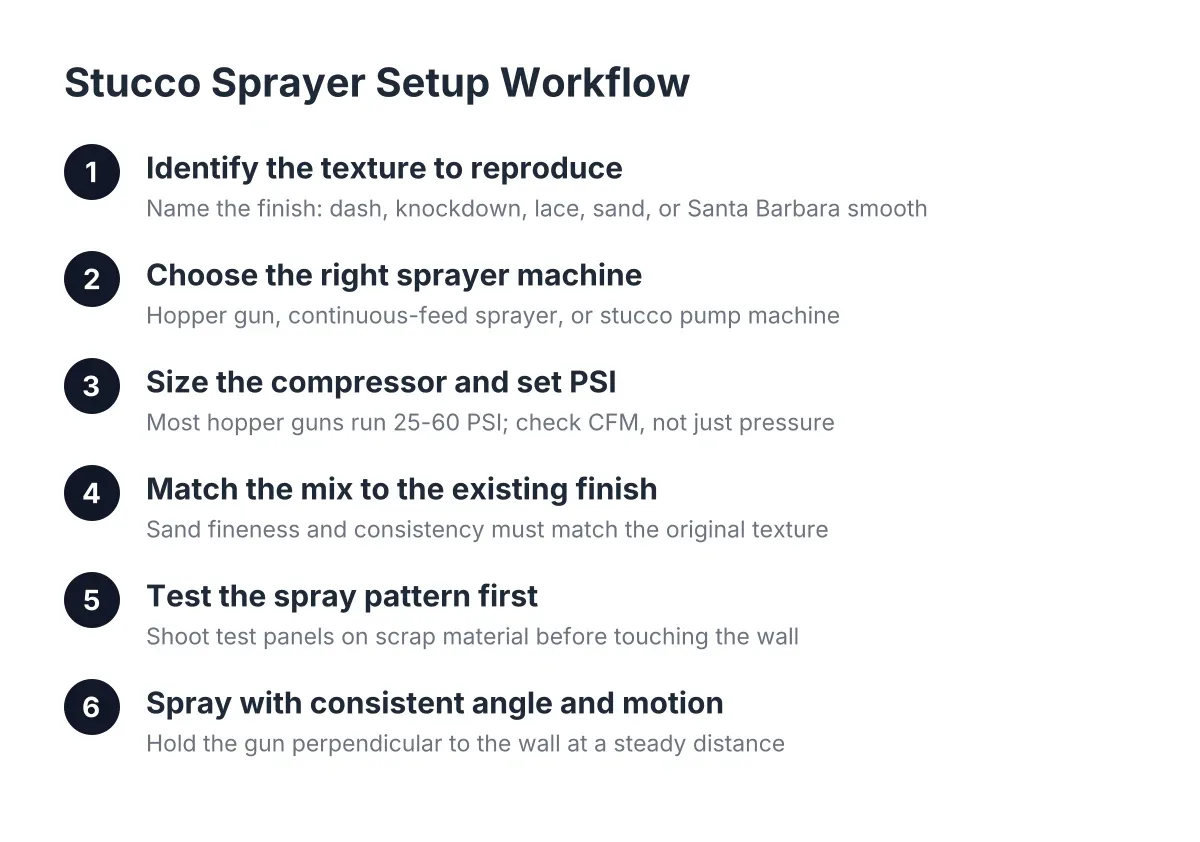
Each finish has its own motion. Dash is sprayed from a hopper gun at a set air pressure and distance; a knockdown dash gets one light trowel pass after the spray starts to set. Sand finish is floated in circles with a rubber or foam float at the right moisture window. Santa Barbara smooth takes multiple thin passes with a steel trowel. When a patch shows the wrong tool marks, the texture doesn't match no matter how good the color is.
Therefore, if your patch is flat where the wall is lacy, or bumpy where the wall is smooth, you are looking at a technique problem. The good news: in many cases the fix is a new finish coat over the patch, not a full tear-out.
Step 3: Compare the Sand and Mix in the Patch to the Wall
Next, run your hand over the patch and the original wall. If one feels coarser than the other, the sand gradation in the mix is wrong. The fineness of the sand in a finish coat has to match the existing surface; coarse sand on a wall finished with fine sand will look grainy and rough even if the trowel work is right.
Premixed patch products are a frequent culprit here. Many are formulated for general concrete repair, and fiber-reinforced patch coatings in particular tend to stand up thick and stiff, so they hold their own texture instead of taking yours. On a low-visibility spot like the back of a parapet wall, that trade-off may be acceptable. On the front elevation of a house going on the market, it is not.
For a proper match, the finish coat should be site-mixed with sand screened to match the original, or a factory finish in the correct gradation. This is one reason stucco crack repair done by a stucco contractor blends better than the same crack filled from a tube.
Step 4: Rule Out Age, Weathering, and Paint Buildup
Sometimes the technique and mix are both correct, and the patch still stands out. Arizona sun is usually the reason. A 20-year-old sand finish in Scottsdale has been baked, sandblasted by monsoon dust, and often painted two or three times. Decades of paint soften the texture, filling the valleys and rounding the peaks. Fresh stucco next to that weathered surface looks sharper and crisper even when the pattern is identical.
This matters most for the block-wall situation. Say a homeowner in Scottsdale just had a cinder block wall built off the back patio, and the builder left it bare. Stuccoing that new block wall is an installation job, not a repair, and the new finish will be crisper than the 15-year-old lace on the house for the first year or two. A contractor can close the gap by slightly softening the new texture and matching the paint, but brand-new stucco beside weathered stucco will never be atom-for-atom identical on day one. Sun exposure narrows the difference over time.
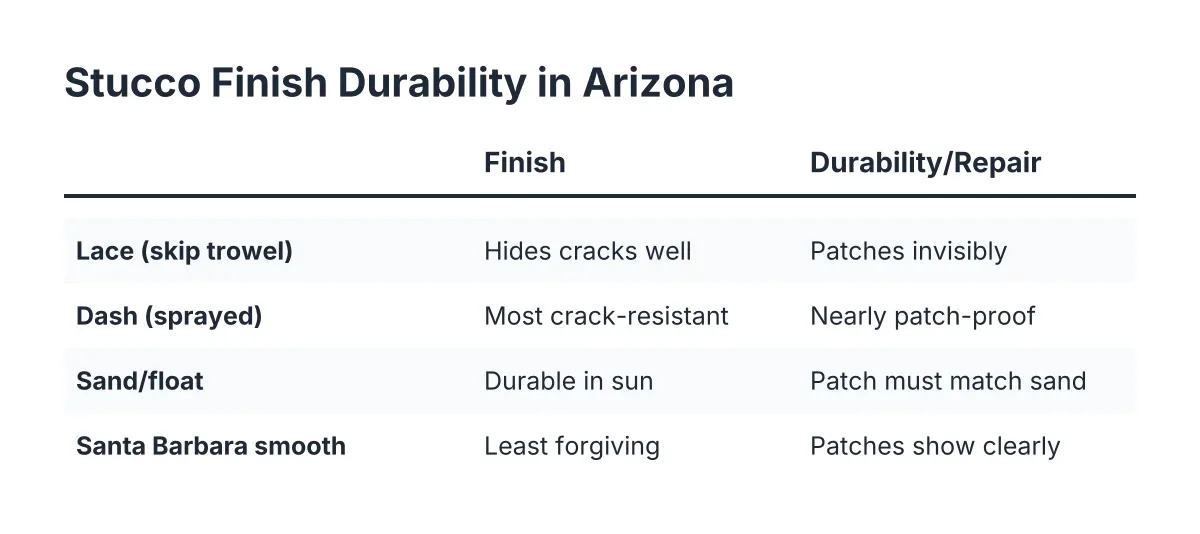
There is also a texture hierarchy worth knowing. Heavier, flattened textures like lace and knockdown dash hide patch edges well. Santa Barbara smooth hides nothing; every trowel line telegraphs. If your home has a smooth finish, budget for a larger blend area or a full-wall refinish from the start.
Step 5: Fix the Mismatch Without Tearing Out the Patch
In most cases a bad texture match can be corrected on top of the existing repair. A sound patch with the wrong surface does not need to come out. Here is the usual sequence, roughly in order of cost:
- Knock down high spots. If the patch stands proud of the wall, a contractor scrapes and sands the raised material flush before retexturing. This alone fixes many ugly patches.
- Retexture the patch area. A new finish coat gets applied over the patch using the correct technique: hopper-sprayed for dash, skip-troweled for lace, floated for sand. For knockdown dash, the finish is sprayed on and then lightly troweled to blend with the surrounding wall.
- Feather beyond the patch edges. The new texture should extend 6 to 12 inches past the repair and taper off, so there is no hard line where new meets old.
- Blend to a natural break. On tough matches, the retexture runs to a corner, a control joint, or a window edge, because the eye accepts a slight change at a natural boundary and rejects it mid-wall.
- Paint the full wall section. When texture or color cannot be matched perfectly, painting the entire wall plane, not just the patch, is the fallback that delivers a uniform look. A correctly textured and painted patch becomes hard to find even up close.
For budgeting, Fixr.com puts the national average cost to repair stucco at $900 to $3,000, about $1,700 on average for a buckled three-coat section in a 10×10-foot area. A texture-only correction over a sound patch typically lands below that range, while a Santa Barbara smooth blend or full-wall refinish can push toward the top of it. Get the texture scope in writing on the estimate, not just the crack repair.
Step 6: Deciding Who Should Perform Stucco Patch Texture Matching Work
Be honest about the skill involved. A visible patch often means the first repair was done by someone who does not work in stucco finishes daily; general handymen and painters can fill a crack, but reproducing a lace or dash pattern by hand takes repetition. Ask any contractor you are considering which finish your wall has and how they will replicate it. If they cannot name the texture on sight, keep looking.
Stucco texture matching is its own line of work for a reason, separate from basic patching, and it is worth asking for it by name when you call. For a pre-listing seller on a closing deadline, this question matters doubly: an inspector or buyer's agent who spots an obvious patch may ask what it covers, and a clean blend removes the question entirely. A clear invoice describing the crack repair and texture match also gives you simple language for disclosure paperwork.
Stucco is not a niche material here. According to the National Association of Home Builders, stucco was the most-used exterior wall material in the Mountain division, which includes Arizona, at 48% of new single-family homes started in 2024. Buyers in Scottsdale see stucco walls every day, which means they notice when a stucco patch doesn't match the surrounding texture or appearance.
When the Texture Can Be Matched, and When to Adjust Expectations
A skilled retexture blends most patches to the point where you have to hunt for them, but a few situations call for tempered expectations. Santa Barbara smooth and other steel-troweled finishes may need the whole wall plane refinished for a true match. Brand-new stucco on a block wall or addition will read slightly crisper than 20-year-old stucco until the sun evens them out. In addition, any patch over active water damage will fail again regardless of texture, so fix the moisture source first.
If your wall shows wide cracks, soft spots, or staining along with the bad patch, have a stucco contractor look at the base coat and moisture condition before spending money on cosmetics. Texture matching assumes the repair underneath is sound. When it is, a mismatched stucco patch doesn't match only until the finish and blend are done properly—then the patch disappears into the wall where it belongs in Scottsdale, AZ. Identify the finish, apply it with the right tool and the right sand, feather past the edges, and paint to a natural break, and the work follows a proven sequence.
If you need stucco repair, Scottsdale Stucco Repair can help.
Prefer to talk it through? Call (480) 637-3464 — a quick call is usually the fastest way to get a straight answer for your situation.