Stucco Hole Causes: Impact Damage, Settling, and Moisture Explained
A hole in your stucco is a symptom before it is a repair job. Whether the stucco hole causes trace back to impact damage, foundation settling, or slow moisture intrusion changes what a proper fix looks like, what it costs, and whether the patch lasts ten years or ten months. This guide walks through how to diagnose the cause first, then repair the hole so the finished wall looks like nothing ever happened. If you are budgeting for bigger stucco work, this matters even more; a wall full of small holes tells a different story than one bad ding from a ladder.
Stucco is not a niche material here. According to the National Association of Home Builders, stucco remained the most-used exterior wall material in the Mountain division, which includes Arizona, at 48% of new single-family homes started in 2024. In Scottsdale, almost every homeowner deals with this at some point.
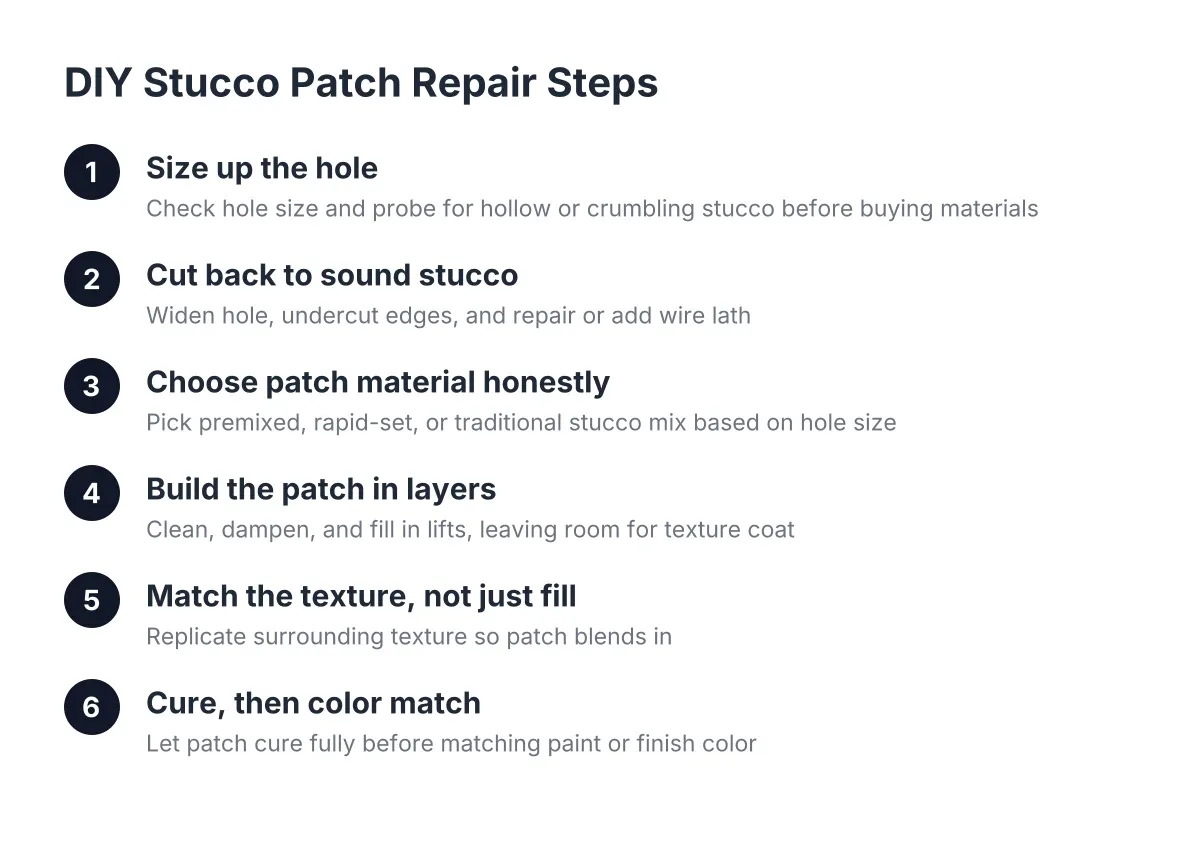
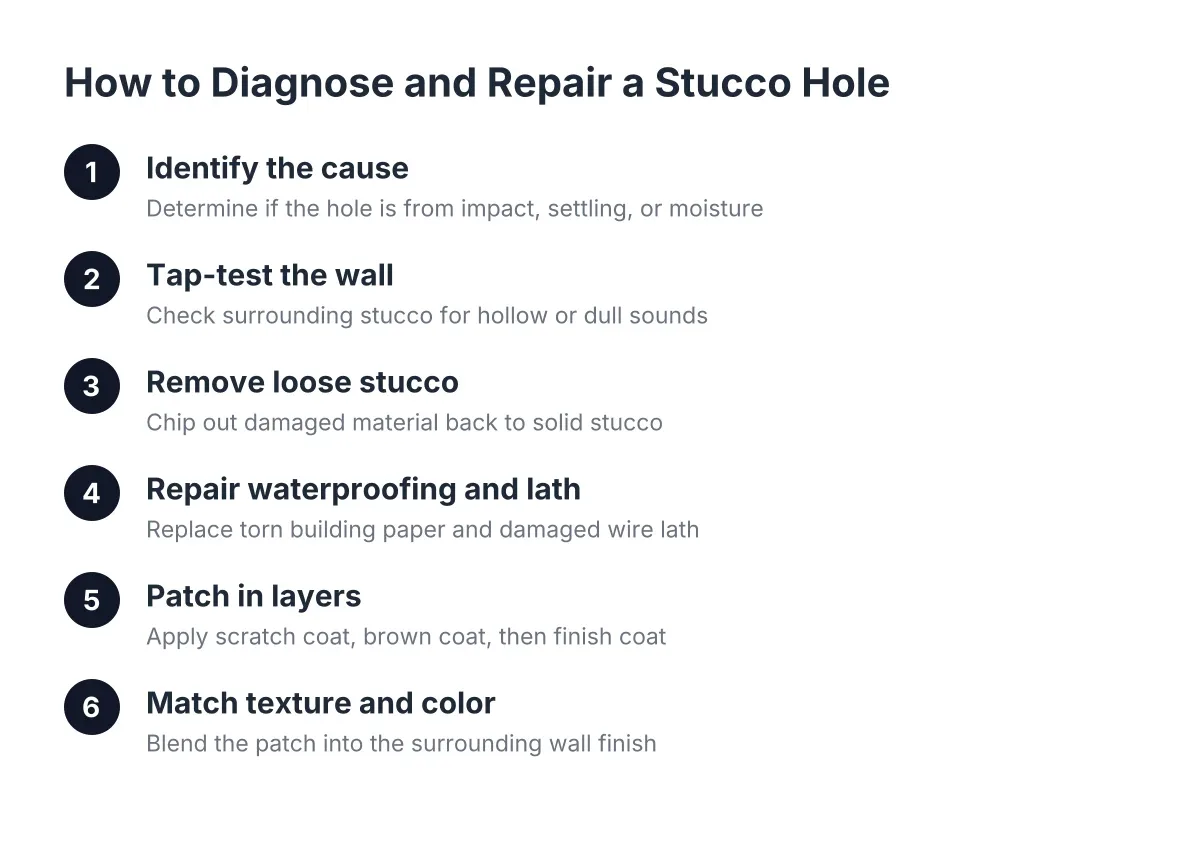
Step 1: Identify What Caused the Hole Before You Touch It
Before you buy a stucco patch kit or call anyone, figure out why the hole exists. The three most common causes of stucco holes are impact, settling, and moisture, and each one leaves a different signature.
Impact damage is the easiest to read. A ladder tip, a thrown rock, a golf ball, a car door, or a removed satellite dish leaves a localized hole with clean or slightly crushed edges. The surrounding stucco sounds solid when you tap it. Woodpeckers and other animals also punch holes, usually higher on the wall, and animal damage stucco repair often means several holes in a row rather than one.
Settling damage looks different. The hole or gap sits near a corner, a window frame, or where the stucco meets the foundation, and cracks radiate from it. Corner damage where stucco sits on a concrete foundation is common because the harder concrete and the softer stucco expand and contract at different rates. Vibration from a nearby air conditioning unit can make it worse, especially when poor drainage lets water pool against the foundation after heavy rain and the soil settles slightly.
Moisture damage is the one that hides. The visible hole is small, but the stucco around it feels soft, sounds hollow when tapped, or crumbles under light finger pressure. Stucco is a layered system, so once water gets behind it, the damage spreads wider than what you see on the surface.
Step 2: Tap-Test the Wall Around the Hole
Take a screwdriver handle or your knuckles and tap the stucco in a grid pattern, starting at the hole and working outward about two feet in every direction. Solid stucco sounds sharp and dense. Compromised stucco sounds hollow or dull.
Mark the hollow zone with painter's tape. This tells you the true size of the repair, which is rarely the size of the visible hole. A quarter-sized puncture from a rock can sit inside a dinner-plate-sized area of loose material.
In addition, press lightly on any previous patches near the hole. A patch you can dent with finger pressure failed underneath and needs to be broken out and redone, not skim-coated over. Surface-repairing a bad patch just buys you the same problem next year.
Step 3: Remove All Loose and Damaged Stucco
Chip out every piece of loose, hollow, or crumbling stucco back to solid material. Use a cold chisel and hammer, working from the hole outward, and angle the edges of the opening slightly so the new patch keys into the old wall.
Do not leave marginal material in place to keep the patch small. Loose stucco left around a hole lets rain keep reaching whatever sits behind it, and if that is wood framing or sheathing, the wood keeps swelling and the damage keeps growing. A slightly bigger, honest patch beats a tidy-looking one that fails.
While the wall is open, look at the black building paper or house wrap behind the stucco. This layer is your actual waterproofing; the stucco is armor over it. On older Scottsdale homes where damage sat for years, that paper can turn brittle enough that normal wall flexing tears it, which opens the door to serious water intrusion.
Step 4: Repair the Waterproof Layer and Lath
If the building paper is torn, punctured, or brittle, replace or overlay it before any patching. Slip new paper under the existing paper at the top of the opening and lap it over at the bottom, so water always sheds outward. Skipping this step is the single most common reason a hole repair leaks later.
Next, check the wire lath. Impact holes often bend or sever the metal mesh that holds stucco to the wall. Cut out mangled sections and fasten new lath with galvanized nails or screws into framing, overlapping the old lath by an inch or two. Without sound lath, the new stucco has nothing to grip and will crack out.
Step 5: Patch in Layers, Not One Thick Pass
Here is how to repair stucco holes so the patch holds:
- Dampen the edges of the opening so the old stucco does not suck moisture out of the new mix too fast, which weakens the bond in dry Scottsdale air.
- Apply a scratch coat of stucco base mix, pressing it firmly into the lath, and score horizontal grooves in the surface before it sets.
- Let it cure, then apply a brown coat that brings the patch to just below the finished wall plane. Small cracks often appear as this coat cures; that is normal shrinkage during curing, not a failed patch.
- Apply the finish coat last, matched to the texture of the surrounding wall.
Rushing this with one thick pass is why so many DIY patches on holes bigger than a fist sink, crack, or pop loose. Fixing large holes in stucco is a layering job by nature.
Step 6: Match Texture and Color So the Patch Disappears
A structurally sound patch that shows is still a failed repair to most homeowners, especially anyone doing stucco repair before selling a house. Texture matching is the hard part. Scottsdale walls run from smooth santa fe finishes to heavy lace and sand textures, and each one requires a different tool and technique to replicate, from sponge floats to flicked dash coats knocked down with a trowel.
Color is the second half. New stucco cures lighter or darker than weathered stucco, so a color-matched finish coat or a full-wall paint blend is usually what makes a stucco hole invisible rather than merely solid. If an exact match matters for resale photos, this is the step where a professional with texture matching experience earns their fee.
Step 7: Common Causes of Stucco Holes and How to Address Them
The patch is only half the job when impact or settling creates stucco holes. Address the source or plan to repair the same spot again:
- Move ladders, grills, and trash bins that repeatedly hit the same wall section.
- Add vibration pads under an AC unit sitting close to a damaged corner.
- Regrade soil or extend downspouts so water stops pooling against the foundation.
- Install deterrents where woodpeckers or pack rats opened the wall.
For example, suppose a homeowner patches a corner hole near their condenser unit twice in three years. In that scenario, the patch was never the problem; the vibration and pooled irrigation water were, and a third patch without fixing drainage just resets the clock.
Step 8: Decide Whether This Is a Patch or a Bigger Project
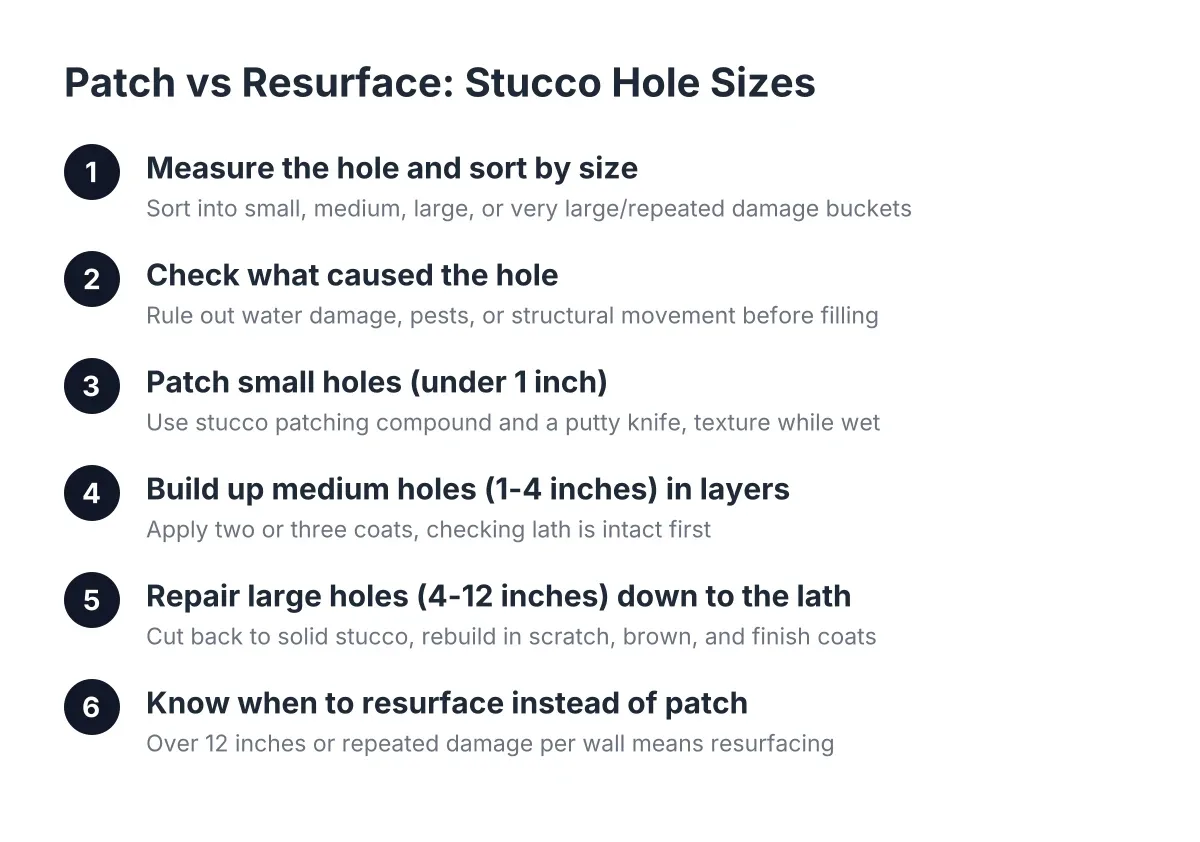
One clean impact hole is a patch. A wall showing holes plus spider-web cracking, soft spots, and staining is telling you the system is aging, and this is where budgeting gets real. According to Fixr.com, the national average cost to repair stucco runs $900 to $3,000, averaging about $1,700 for repairing buckled three-coat stucco in a 10×10-foot area. If you are collecting multiple repair quotes in that range across different walls, pricing out resurfacing or full stucco replacement as a comparison starts to make sense.
A fair rule of thumb: when damage is isolated and the cause is fixable, patch it. When moisture-driven damage keeps appearing in new places, get a professional assessment of the whole wall before spending more on spot repairs. Wide, deep structural cracks near a hole also warrant a pro; those need backer rod and sealant rather than surface treatment alone, since backer rod gives the sealant a proper foundation inside the crack, according to Sika.
The Bottom Line on Stucco Hole Causes and Impact Repairs
Diagnose first, patch second. Impact holes are usually straightforward once the loose material is out and the paper and lath are sound. Settling and moisture holes demand that you fix the cause, not just the cosmetics. Do the layers right, match the texture honestly, and the repair should be invisible from the curb. If it is not, or if the wall keeps producing new damage, treat that as data for your bigger stucco budget rather than a reason to keep patching.
If you need stucco repair, Scottsdale Stucco Repair can help.
Related guide: Stucco Hole Repair — Complete Guide
Prefer to talk it through? Call (480) 637-3464 — a quick call is usually the fastest way to get a straight answer for your situation.