What Should Water Damage Stucco Repair Include? 8 Scope-of-Work Items for Scottsdale, AZ
If you are getting bids right now, the real question is what should water damage stucco repair actually cover before you sign off. Understanding the stucco repair scope is essential in Scottsdale, AZ, where most water damage comes from two local sources: monsoon rain driving against walls for weeks every summer, and irrigation heads soaking the same patch of stucco twice a day, year round. A contractor who only scrapes off the stain and skims new material over it has not fixed either problem. The damage comes back, often right before your photos or your tenant's walk-through.
This matters whether you are prepping a house for listing or managing a handful of rentals in the East Valley. Stucco is the dominant exterior here; the National Association of Home Builders reports stucco was the most-used exterior wall material in the Mountain division, which includes Arizona, at 48% of new single-family homes started in 2024. That is a lot of walls taking monsoon hits. Below are the eight items a complete scope of work should include, in the order a competent crew handles them.
1. Defining Your Stucco Repair Scope: Find the Water Source Before Any Patching Starts
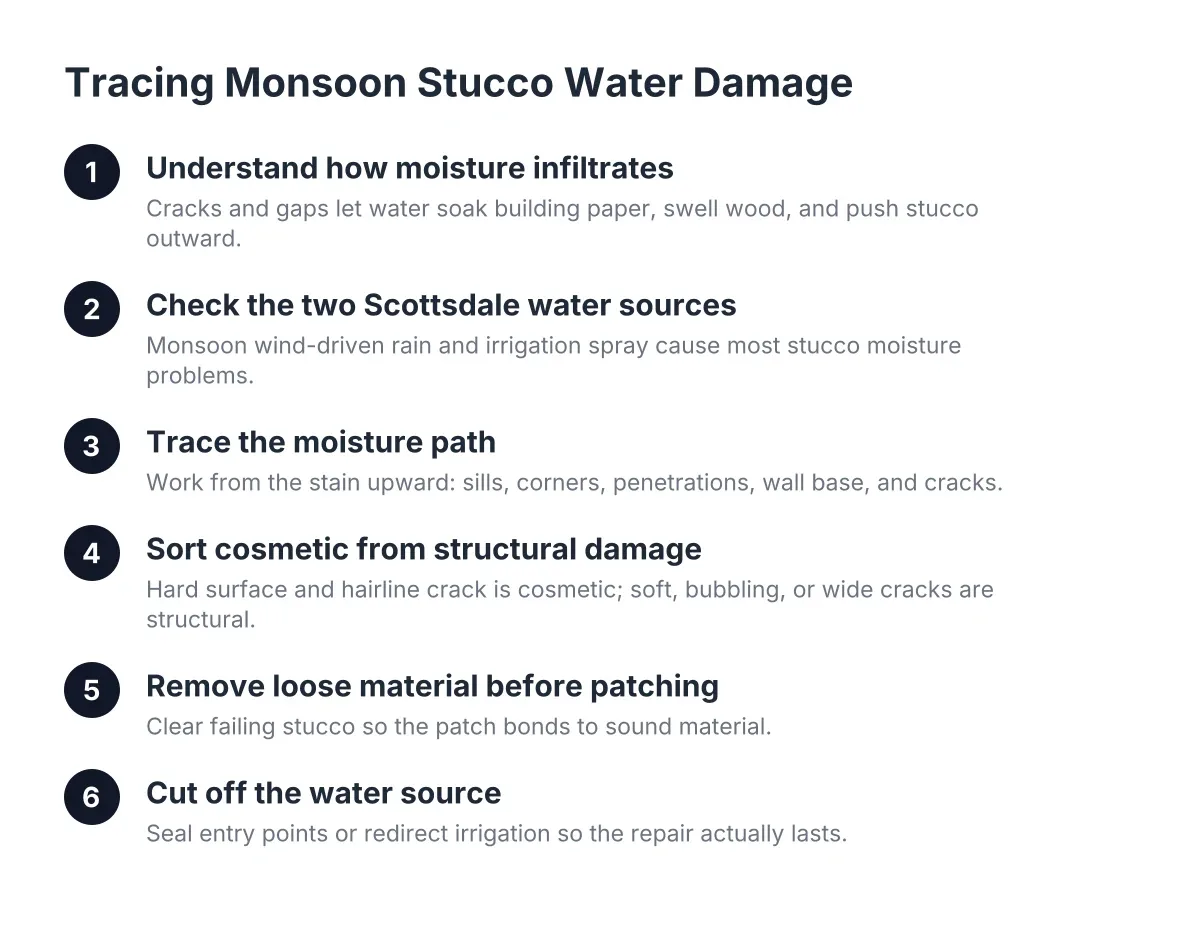
A proper scope of work names the water source in writing, not just the visible damage. In Scottsdale, the usual suspects are a sprinkler head spraying the wall, a drip emitter pooling water against the foundation, a clogged scupper or canale dumping monsoon runoff down one wall face, or a failed sealant joint around a window.
This step decides everything else. If the bid says "patch stucco at northeast corner" with no mention of why that corner got wet, the repair is a cosmetic reset, not a fix. Sprinkler damage to stucco is the most common repeat offender on rental properties; the irrigation runs on a timer, so the wall gets re-soaked on schedule after the repair.
For a landlord, this is the line item that keeps you from paying for the same repair again at the next turnover. Ask the contractor to state the cause and whether fixing it is in their scope, your scope, or your irrigation company's.
2. Remove All Loose and Soft Stucco, Not Just the Stained Area
Every solid bid includes demolition back to sound material. Soft stucco, bubbling, and anything that flexes under hand pressure has to come off. Leaving loose or buckling material in place lets the next rain keep expanding the wet framing behind it, so the damaged zone grows under a fresh-looking surface.
Expect the removal area to be larger than the visible stain. Water travels behind stucco, so a stain the size of a dinner plate often means removal the size of a card table. A scope that commits to "remove to sound substrate" protects you; a scope that specifies an exact square footage before opening the wall is guessing.
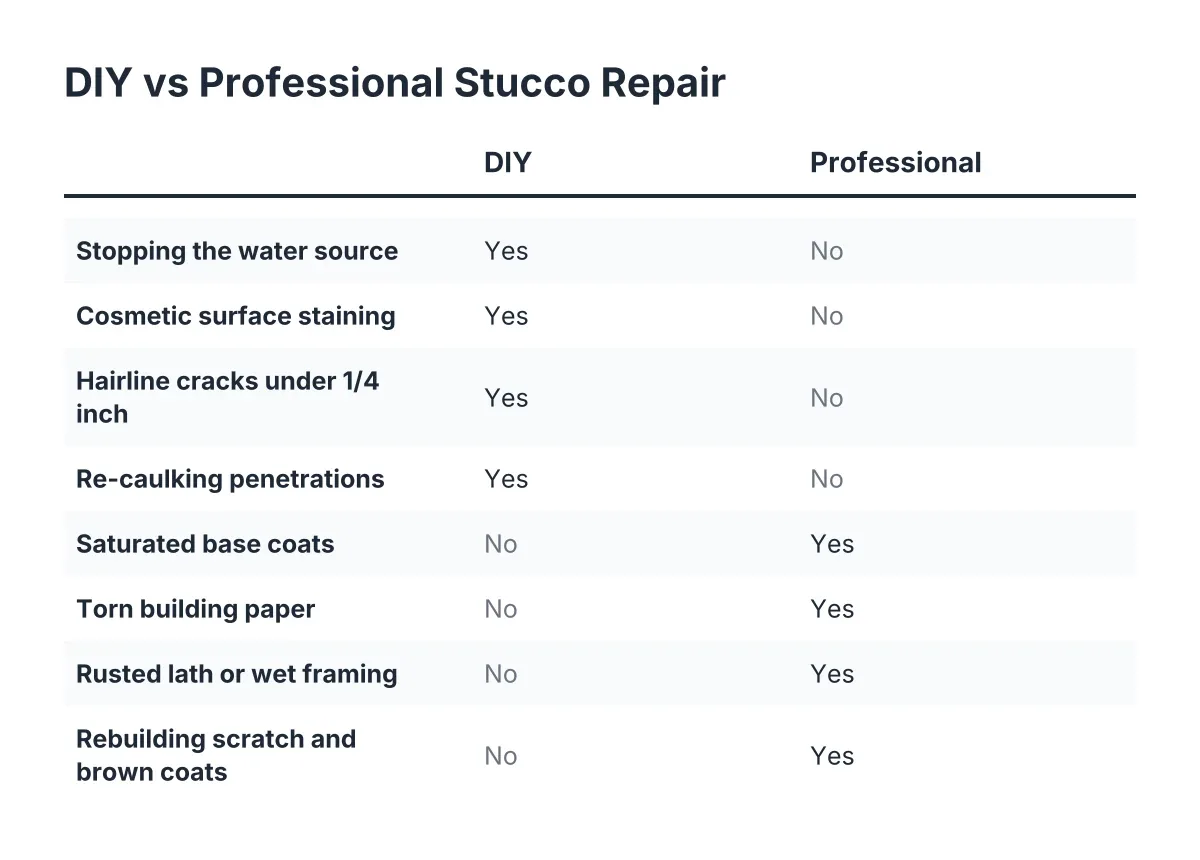
3. Inspect and Replace the Moisture Barrier and Lath
This is the item most cheap bids skip, and it is the one that answers whether water damage behind stucco has reached the structure. Behind the stucco sits building paper or a weather-resistive barrier, then wire lath, then sheathing or framing. Water that got through the stucco almost always compromised the paper.
Old, sun-baked building paper turns brittle over the years. Once a crack has been open through a few monsoon seasons, normal wall flexing can tear that brittle paper, and at that point water intrusion gets serious fast. The scope should state that torn or deteriorated paper gets replaced and lapped correctly so water drains down and out, and that rusted lath gets cut out and re-tied.
If the crew opens the wall and finds rotted sheathing or mold, that is where the job can shift from stucco repair toward water damage restoration, which may involve other trades. A good contractor tells you that at the wall, not after the invoice.
4. Address Wet or Damaged Framing Before Closing the Wall
The scope should spell out what happens if the wood behind the wall is wet, soft, or moldy. At minimum, wet framing needs to dry before anyone closes it in; sealing moisture inside the wall is how a stucco mold problem starts behind a surface that looks fine in listing photos.
For sellers, this is the difference between passing inspection and getting flagged. An inspector's moisture meter does not care how good the new texture looks. If sheathing replacement or mold remediation is needed, expect the scope to list it as a contingency with its own pricing, since nobody can see it until the stucco is off.
Here is where a limitation is worth naming: a stucco contractor repairs the stucco system. If the wall shows widespread rot or active mold, bring in a remediation or framing professional before the stucco work continues. A scope that quietly closes over that is a scope to walk away from.
5. Rebuild the Stucco in Proper Coats, Bottom Up
What happens when stucco gets wet and fails is that the layered system loses its bond, so the rebuild has to restore the layers, not just the surface. A complete scope lists a scratch coat, a brown coat, and a finish coat for three-coat systems, with cure time between coats. One-day, one-coat patches over a large water-damaged area rarely hold.
The details signal whether the crew knows the trade. Surfaces should be cleaned of dust and loose debris before patching, because contaminants stop the new material from bonding to the old. The existing edges should be dampened so the dry old stucco does not pull moisture out of the fresh patch too fast. On multi-section repairs, work runs from the bottom of the wall upward.
For a corner that has deteriorated badly, the technically correct repair removes the stucco across the full wall section and repatches corner to corner. A spot patch on a corner is cheaper and faster, and it can be a reasonable call on a rental, but the scope should say which one you are buying and why.
6. Match the Color and Texture, and Say How in Writing
For the pre-sale fixer, this is the item that decides whether the repair helps or hurts the photos. A patch that is structurally perfect but two shades off reads as "something happened here" to every buyer walking the house. The scope should name the approach: a custom color-matched finish coat, a sample patch approved before full application, or repainting the full wall plane so there is no visible seam.
Texture matters as much as color. Scottsdale homes run from smooth santa-fe finishes to heavy lace, and a mismatched texture shows in afternoon light even when the color is close. Honest trade-off: a fresh patch on a 15-year-old sun-faded wall will never be invisible on day one with color matching alone. If the listing photos are three weeks out, painting the entire affected elevation is often the safer call, and the scope should price both options.
7. Seal Penetrations and Correct the Conditions That Let Water In
A complete scope closes the entry points, because water can get through stucco anywhere the system is interrupted. When patching around vents, electrical boxes, hose bibs, and window perimeters, keeping water out is the single most important goal of the detail work. For wider gaps and joints, backer rod, a closed-cell foam cord, is set inside the gap to create a proper foundation before sealant goes on, according to Sika.
On the site side, the scope or its notes should cover the conditions that caused the soaking:
- Redirect or cap sprinkler heads that spray the wall, and move drip emitters off the foundation line.
- Regrade or extend downspouts and scuppers so monsoon runoff drains away from the wall base.
- Keep finished stucco clear of soil contact at the bottom of the wall.
That last point connects to a slower failure mode. Repeated heavy rain pooling near a foundation can cause slight settling, which then cracks stucco at the corners. Fix the patch without fixing the drainage and the crack returns next summer.
8. Put Price, Timeline, and Paperwork in the Bid
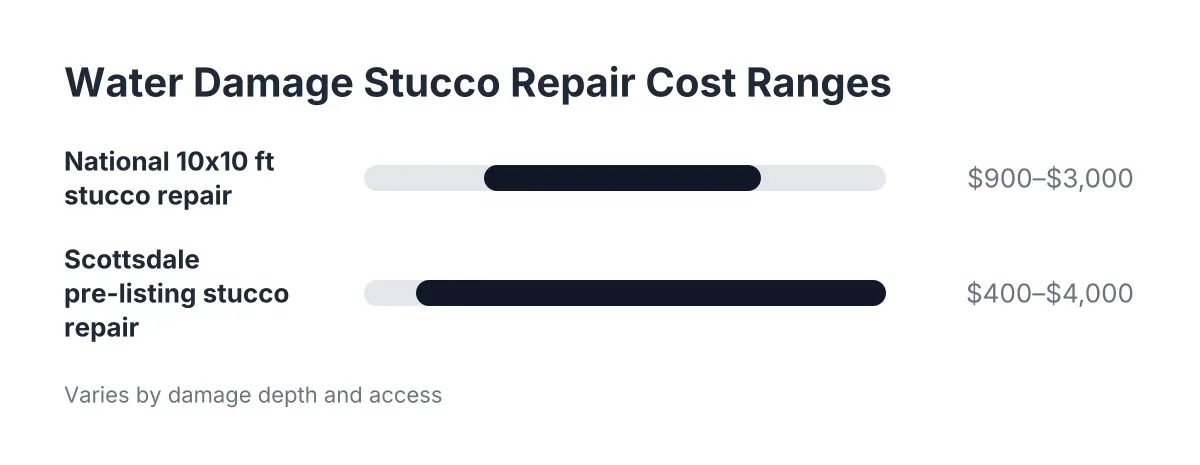
A decision-ready bid states the number, the schedule, and what you get for your file. As a national reference point, Fixr.com puts the average cost to repair stucco at $900 to $3,000, averaging about $1,700 for a buckled three-coat section in a 10×10-foot area. Water damage work in Scottsdale lands across a similar spread depending on how far the moisture traveled; as an illustrative range, a contained sprinkler-damage patch with color matching might run $600 to $1,500, while an opened wall with barrier and lath replacement can push past $3,000.
Timeline matters when the listing date or lease start is fixed. Three-coat repairs need cure time between coats, so a realistic schedule for a moderate repair in 2026 is several days to a week, not one afternoon. If a monsoon cell blew a section loose and water is actively getting behind the wall, emergency stucco repair to open, dry, and temporarily protect the area can be scoped as a first phase, with the finish work scheduled after.
For landlords, ask for an itemized invoice that names the property address, the cause of damage, and the corrective work. That paperwork settles HOA violation letters, supports insurance conversations, and documents the repair for the next pre-lease inspection.
How Should Water Damage Stucco Repair Bids Be Compared?
Compare water damage stucco repair bids by scope, not by price alone. The complete bid names the water source, includes removal to sound material, covers the moisture barrier and lath, specifies the coat system, and commits to a color and texture match. The cheapest bid usually skips items two through four, which is exactly where the repair fails.
Suppose a landlord in Scottsdale gets two bids on a duplex with soft, stained stucco behind a sprinkler zone. Bid one is $700: clean, patch, paint the spot. Bid two is $1,900: redirect the sprinkler head, cut back to sound stucco, replace torn paper and rusted lath, three coats, then repaint the wall plane. In that scenario, bid one gets repeated at every turnover; bid two ends the cycle.
The same logic protects a seller. Water damage stucco repair done to a full scope passes the inspector's moisture meter and disappears in photos. Done to a thin scope, it becomes the line item in the inspection report that gives the buyer leverage.
The Short Checklist Before You Sign
The question of what should water damage stucco repair include comes down to eight commitments you can check against any bid:
- Water source identified and named in writing.
- All loose and soft stucco removed to sound material.
- Moisture barrier and lath inspected, replaced where damaged.
- Wet framing dried; rot or mold handled before closing the wall.
- Proper coat system rebuilt, bottom up, with cure times.
- Color and texture match method stated, with a paint option priced.
- Penetrations sealed and irrigation or drainage causes corrected.
- Itemized price, realistic timeline, and clean paperwork.
If a bid covers all eight, you are buying a repair. If it covers two or three, you are buying a delay, and in Scottsdale the next monsoon season sets the deadline on that delay.
If you need stucco repair, Scottsdale Stucco Repair can help.
Prefer to talk it through? Call (480) 637-3464 — a quick call is usually the fastest way to get a straight answer for your situation.