How Moisture Infiltrates Stucco Causing Cracks, Holes, and Damage in Scottsdale
Stucco fails from the inside out. By the time you see a stain, a soft spot, or a bubble on your exterior wall, moisture infiltrates stucco causing damage you cannot see: soaked building paper, swollen wood, and sometimes mold behind the wall. Monsoon stucco water damage in Scottsdale typically stems from two major sources: monsoon storms that drive rain sideways into every crack and irrigation systems that spray the same patch of wall twice a day, all year long. This guide walks through how that water gets in, how to trace it, and what to do before a cosmetic blemish becomes a structural repair.
This matters most if you are prepping a house to sell or finishing an addition. A water stain in the listing photos reads as neglect to buyers, and an appraiser or inspector will flag soft stucco every time. The good news: if you catch the problem while it is still on the surface, the fix is usually a patch and a color match, not a wall rebuild.
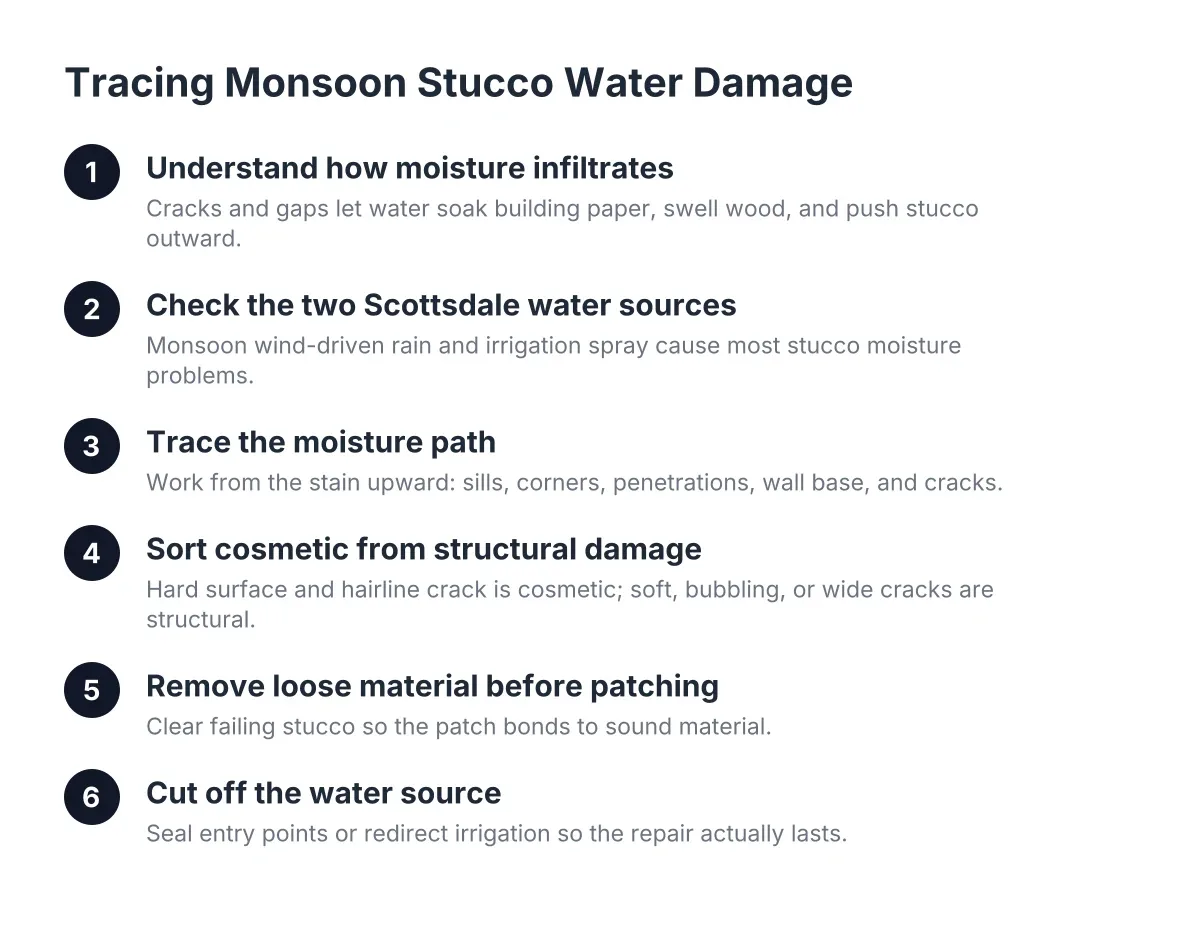
Step 1: How Monsoon Stucco Water Damage Infiltrates and Causes Deeper Problems
Moisture gets behind stucco through cracks, gaps around penetrations, and plain absorption, then damages the layers underneath. Stucco is porous; it absorbs water rather than shedding it the way vinyl siding does. A weather-resistant barrier behind the stucco, usually building paper, is what actually keeps water off the wood framing. When that barrier fails, the damage starts.
Here is the sequence that plays out in most Scottsdale homes. First, a hairline crack or an unsealed gap around a window, vent, or electrical box lets water past the surface. Next, the building paper behind the crack takes repeated soakings. Old paper turns brittle over time, and a wall that flexes in summer heat can tear brittle paper, which opens a direct path to the sheathing. Finally, the wood behind the wall absorbs water, swells, and pushes outward. That is when you see bubbling, buckling, or stucco that feels soft when you press on it.
The lesson for sellers and addition owners alike: the crack is never the whole problem. The crack is the entry point. What matters is whether the water damage has reached the underlying layers, which determines whether you need a $200 patch or a wall section replaced.
Step 2: Check the Two Scottsdale-Specific Water Sources First
Before you blame the roof or the plumbing, look at the two sources that cause most stucco moisture problems here: monsoon rain and irrigation spray. National advice tends to focus on gutters and humidity. In Scottsdale, the pattern is different, and so is the inspection.
Monsoon storms hit stucco harder than ordinary rain for three reasons:
- Wind drives rain horizontally into cracks that vertical rain never touches, especially around window corners and parapet walls.
- Months of bone-dry heat open up cracks through expansion, then the first storm of the season dumps water straight into them.
- Repeated heavy rain can pool water against the foundation, and that saturated soil can cause slight settling that cracks stucco at the corners.
Irrigation damage is slower but more relentless. A drip emitter or sprinkler head aimed at the wall soaks the same square foot of stucco every single day. Walk your exterior and look for a tide line of staining or efflorescence, the white chalky mineral deposit, on stucco within two feet of the ground near landscaping. For example, say a homeowner prepping a listing in North Scottsdale notices a gray stain low on the front courtyard wall. The roof is fine. The culprit, in that scenario, is a misaligned spray head that has been hitting the wall since the system was installed. Fix the stain without redirecting the emitter and the stain comes back before closing.
Step 3: Trace Where Moisture Infiltrates the Stucco on Your Walls
Finding the entry point means working from the stain upward and outward, because water travels behind stucco before it shows on the surface. A stain at knee height can come from a crack at the windowsill above it. Do this walk-through on a dry day, after the wall has had time to dry from any recent storm.
Check these locations in order:
- Horizontal surfaces and corners: windowsills, parapet tops, and wall corners near AC units. Mechanical vibration from a condenser, combined with poor drainage, is a common cause of corner cracking.
- Penetrations: hose bibs, light fixtures, vents, and electrical boxes. Keeping water out is the single most important goal when these are patched, and failed caulk around them is a frequent entry point.
- The base of the wall: look for staining, soft spots, or stucco that sounds hollow when tapped near grade, especially where irrigation runs.
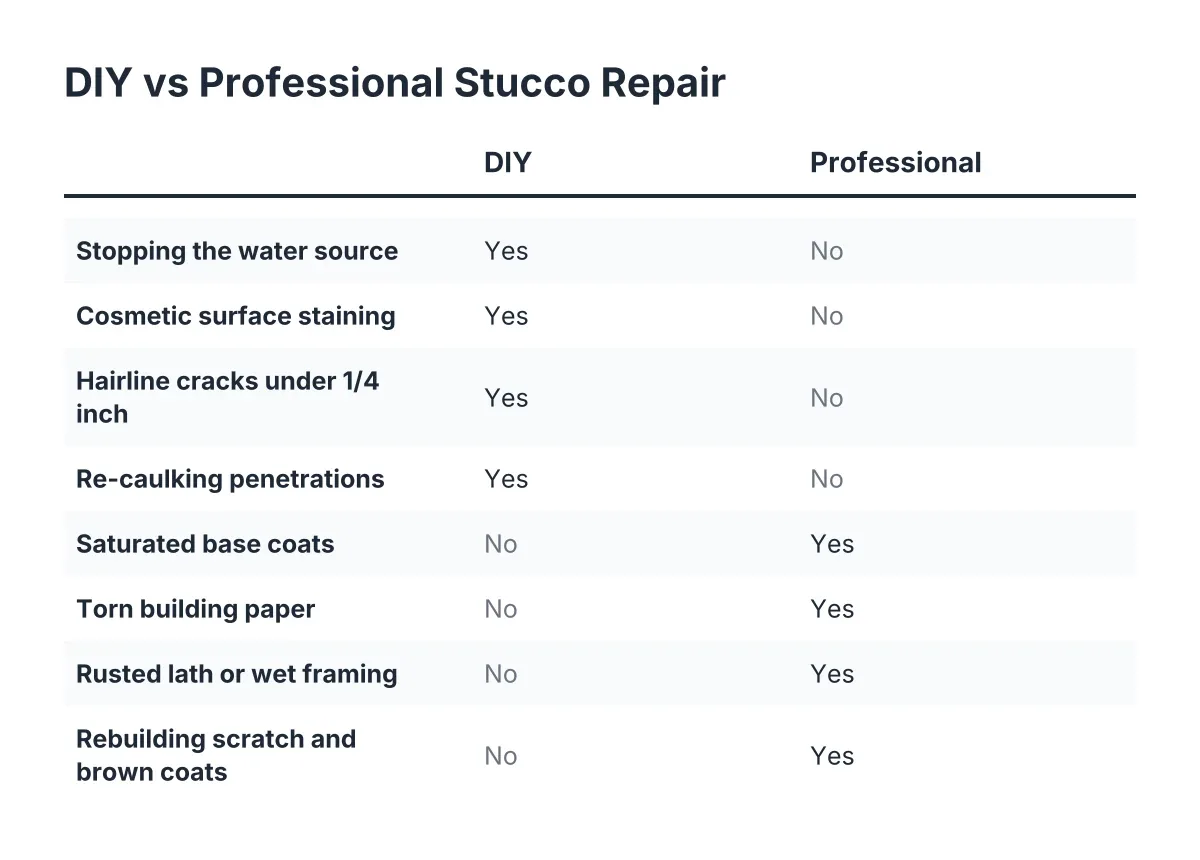
- Cracks wider than a credit card edge: hairline cracks are usually surface-level curing cracks, which are normal. Wider, deeper cracks are structural and need real repair, not paint.
Press gently on any stained area. If the stucco gives, flakes, or feels spongy, water has reached the layers behind it. That is a soft stucco wall repair, not a cosmetic touch-up, and it changes your timeline if you are working toward a listing date.
Step 4: Sort Cosmetic Stains From Structural Water Damage
The decision rule is simple: if the surface is hard and the crack is hairline, you likely have a cosmetic issue; if the stucco is soft, bubbling, or the crack is wide and deep, water has compromised the wall behind it. Everything about cost and schedule flows from this distinction.
A corner crack where stucco sits on a concrete foundation is usually minor. The harder foundation and softer stucco expand at different rates, and the material cracks at the seam between them. That is a candidate for stucco crack repair with the right flexible sealant. Structural cracks are different. They are wider and deeper, and the proper repair uses backer rod, a closed-cell foam cord that creates a foundation inside the crack before sealant goes in, according to Sika. Paint alone over a structural crack is a cover-up, and in 2026 appraisers and inspectors in the Scottsdale market know exactly what a painted-over crack looks like.
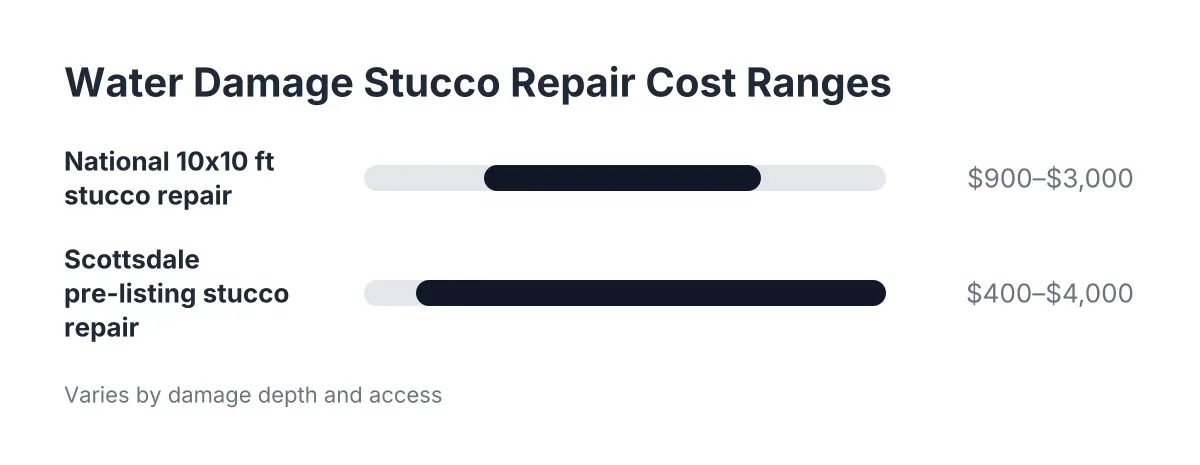
As a rough national benchmark, repairing buckled three-coat stucco in a 10×10-foot area runs $900 to $3,000, averaging about $1,700, according to Fixr.com. Catching the problem at the stain stage, before buckling, usually costs a fraction of that. This is why addressing monsoon stucco water damage early is the cheapest version of the job you will ever get.
Step 5: Remove Loose Material Before Any Patch Goes On
Every sound repair starts by removing all loose, soft, or buckling stucco, because anything left in place keeps absorbing rain and keeps expanding the wood behind it. A patch applied over compromised material fails, often within one monsoon season. If the building paper underneath is torn or brittle, it gets replaced in the repair area too; otherwise you are resealing the surface over a broken barrier.
Therefore, if you are selling, plan the sequence honestly. Suppose your realtor flags exterior wall damage three weeks before photos. A typical timeline looks like this: remove damaged material and repair the barrier in week one, patch and base-coat in week two, then finish-coat and color match in week three so the new stucco blends with the surrounding wall. Rushing the cure between coats is how patches end up visible in photos, which is exactly what you were trying to avoid.
One honest limitation: if moisture has been getting in for years, the damage can extend past what any surface inspection shows. Hidden rot or mold behind the wall needs a professional to open the wall and assess it, and no article can tell you how far yours goes. When in doubt, have someone who handles water damage and stucco repair near you open a small test section before you commit to a listing date.
Step 6: Cut Off the Water Source So the Repair Lasts
A stucco repair without fixing the water source is a countdown to the same damage in the same spot. Before the finish coat goes on, handle the cause:
- Redirect or cap any irrigation head or drip emitter that sprays the wall, and keep emitters at least a foot away from stucco.
- Regrade soil or add drainage so monsoon runoff flows away from the foundation instead of pooling against it.
- Reseal gaps around windows, vents, and fixtures with a flexible exterior sealant.
- Skip the pressure washer. High-pressure washing forces water behind the layers of stucco, and once it is back there it creates larger structural issues over time. Clean stucco with low pressure and a soft brush instead.
In addition, do a ten-minute walk-around every year before monsoon season starts. Stucco is still the dominant exterior in this region; it covered 48% of new single-family homes started in the Mountain division in 2024, according to the National Association of Home Builders. That means nearly every buyer looking at your house has seen plenty of stucco, and they notice when it is maintained.
Step 7: Match the Color and Texture, or the Repair Shows
A structurally sound patch that does not match the surrounding wall is still a red flag to buyers and a sore spot in photos. Scottsdale sun fades stucco finishes unevenly, so matching fresh material to a twenty-year-old wall takes deliberate color matching and texture matching, not a scoop of off-the-shelf mix. The same applies to addition owners: new stucco on a room addition has to blend with the original house at the seam, or the addition looks bolted on.
Expect a competent repair to feather the new texture into the old, match the finish type, and tint the color coat or paint to the faded shade of the existing wall rather than the original color. If the existing finish is heavily faded or previously patched in mismatched spots, resurfacing or repainting the full wall plane is sometimes the cleaner choice. That trade-off costs more upfront but reads as one uniform wall instead of a map of old repairs.
What This Means If You Are Listing or Building
Water finds stucco through cracks, gaps, and plain absorption, and in Scottsdale the monsoons and the irrigation system do most of the damage. Work the steps in order: understand the failure sequence, check the local water sources, trace the entry point, sort cosmetic from structural, strip the loose material, kill the water source, and match the finish. Follow that order and stucco moisture damage stays a repair line item instead of a renegotiation at inspection. Skip steps, and the wall will tell on you, usually right when the photographer shows up.
If you need stucco repair, Scottsdale Stucco Repair can help.
Related guide: Water Damage Stucco Repair — Complete Guide
Prefer to talk it through? Call (480) 637-3464 — a quick call is usually the fastest way to get a straight answer for your situation.