Why Stucco Cracks Recur on Block Walls: Substrate Root Causes and Fixes
If you have patched the same crack on a block wall twice and it opened again, the problem is not the patch. When stucco cracks recur, the substrate underneath is almost always driving it: the concrete block, the bond between block and stucco, or movement in the wall that the stucco cannot absorb. Recurring stucco cracks usually signal that the substrate—not the patch material—requires attention. This guide walks through how to diagnose the root cause and repair a cracked stucco block wall so the fix holds, whether it is a perimeter wall, a masonry fireplace, or a room addition.
This matters in Scottsdale more than most places. Stucco covered 48% of new single-family homes started in the Mountain division in 2024, according to the National Association of Home Builders, and much of it sits directly over concrete block. Block walls, entry monuments, and fireplaces move with heat, settle with soil, and shed patches that ignored the real cause. Follow the steps below in order; skipping the diagnosis steps is exactly why the last repair failed.
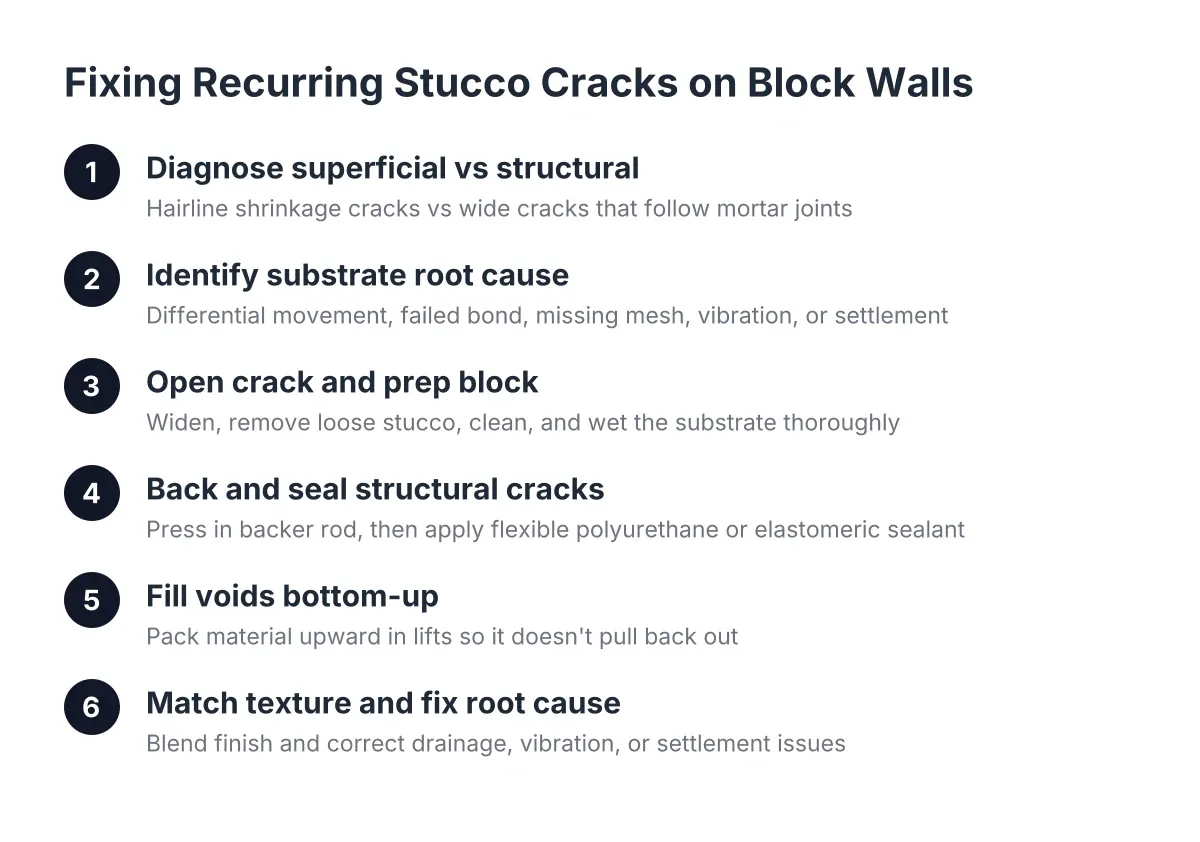
Step 1: Identify Whether the Crack Is Superficial or Structural
Start by reading the crack itself, because the repair method depends entirely on this call. A hairline crack, thinner than a credit card edge, that runs randomly across the surface is usually shrinkage in the stucco coat. That is a surface issue. A crack you can slide a coin into, one that runs in a straight line, steps along mortar joints, or repeats at corners, is telling you the substrate is moving.
Superficial cracks do not need caulk forced into a cavity. A quality elastomeric paint will flood and seal a hairline. Structural cracks are wider and deeper; they need to be opened up, backed, and sealed with flexible material before any patching happens.
On block walls specifically, look for cracks that mirror the block pattern underneath. Stair-step cracking that follows the mortar joints means the blocks themselves are shifting, and no amount of surface patching will stop the stucco from telegraphing that movement back through.
Step 2: Why Recurring Stucco Cracks Point to the Substrate
Recurring cracks have a short list of root causes, and every one of them lives below the finish coat. Before you buy a single tube of patch, figure out which of these applies:
- Differential movement. Concrete block and stucco expand and contract at different rates in Scottsdale heat. Where stucco spans a hard concrete foundation and softer block above, cracks form at the transition. A corner crack at the foundation line is usually minor for this exact reason, not a structural alarm.
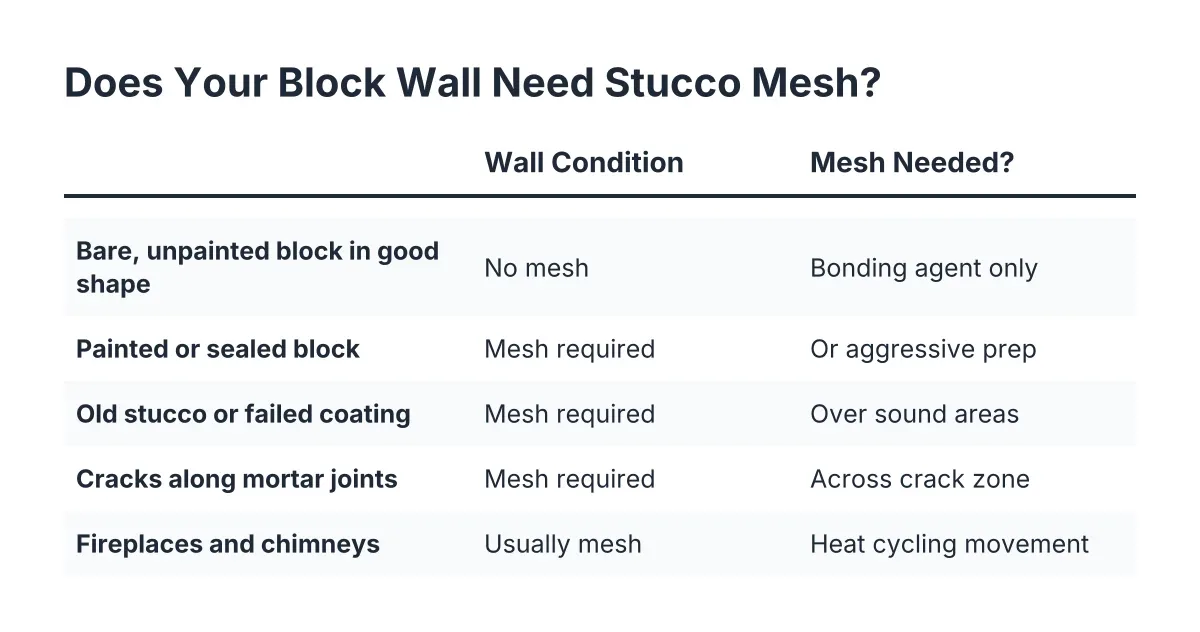
- Failed bond. If the block was dusty, dry, or painted when the stucco went on, the base coat never gripped. Tap the wall around the crack; a hollow sound means the stucco has delaminated and the crack is just where the loose sheet happens to hinge.
- Missing or wrong reinforcement. Stucco applied over block without proper mesh at stress points, like corners of a fireplace opening or around wall penetrations, will crack at those points every time.
- Vibration and water. Mechanical equipment such as an air conditioning condenser mounted near a wall corner transmits vibration into the block. Combine that with poor drainage pooling water at the base and you get corner damage that returns after every patch.
- Soil settlement. Perimeter block walls sit on shallow footings. If one section settles, the crack reopens each season no matter what fills it.
When stucco cracks recur, the substrate diagnosis is the repair. Everything after this step is execution.
Step 3: Open the Crack and Prepare the Block Surface
Next, widen the structural crack slightly with a cold chisel or grinder so it holds material, then remove all loose stucco back to sound, tightly bonded coat. On a delaminated area, keep removing until the tap test sounds solid. Half measures here guarantee the patch pops.
Brush out dust and wash the exposed block. Then, and this step gets skipped constantly, wet the substrate thoroughly before applying any cementitious material. Dry block pulls water out of fresh stucco or patch mix before it can cure, which weakens the bond and starts the recurrence cycle all over again. Recurring stucco cracks often reappear because this critical wetting step was rushed or forgotten entirely.
One warning on cleaning: do not blast the wall with a high-pressure washer. Stucco is layered, and pressure-driven water that gets behind the coats can create larger structural problems over time. A garden hose and stiff brush do the job.
Step 4: Back and Seal Structural Cracks Before Patching
For cracks wider than a hairline, fill the depth of the opening before sealing the face. Backer rod, a closed-cell foam cord, creates a backing inside the crack so the sealant has the right shape and depth, according to Sika. Press the rod into the opened crack, then apply a flexible polyurethane or elastomeric sealant over it.
This flexible joint is what breaks the recurrence cycle. Rigid cement forced into a moving crack simply cracks again along the same line. The sealant flexes with the seasonal movement of the block instead of fighting it.
For shallow surface repairs over the sealed joint, a pre-mixed product like DAP stucco patch or a Sika stucco patch works for small areas. For anything larger than a fist-sized void, mix a proper base coat; pre-mixed patch shrinks too much across large spans on block.
Step 5: Fill Voids from the Bottom Up
When you fill holes or deep voids in a block wall, work the material from the bottom of the void upward. Pushing material downward tends to pull it back out of the hole as you trowel. Bottom-up passes pack the void tight and give the next pass something to sit on.
Apply in lifts if the void is deep. Let each lift take up before adding the next. Expect small cracks to appear in a fresh base coat as it cures; that is normal shrinkage during curing, not a failed repair, and the finish coat covers it.
Step 6: Match the Texture, Color, and Long-Term Durability to Prevent Recurring Cracks
A patch that holds but looks like a scar still reads as a failed repair to an HOA board or a future buyer. Feather the finish coat past the patch edges and replicate the existing texture, whether it is a sand finish, lace, or smooth trowel. Color matching on weathered Scottsdale stucco is the hardest part; sun-faded walls rarely match fresh pigment, so plan on painting the full wall panel from corner to corner rather than spot-painting the patch.
Keep the repair damp for the first day or two of curing in dry heat. Fast drying is a substrate problem in reverse: the mix loses water before it gains strength, and hairlines show up within a week.
Step 7: Fix the Conditions That Cracked the Wall
Finally, remove the cause or the crack comes back on schedule. This is the step that separates a repair that lasts from one that recurs. Depending on your Step 2 diagnosis:
- Regrade or add drainage so water stops pooling against the wall base.
- Isolate vibrating equipment; move or pad an AC unit sitting against a stucco corner.
- Add control joints on long perimeter wall runs so movement happens at a planned line instead of a random crack.
- Address settlement with a foundation or masonry professional before recoating; stucco cannot bridge a moving footing.
Do not wait years on a structural crack. Behind stucco on framed sections, the building paper turns brittle with age, and continued wall flexing can tear it, turning a cosmetic crack into a water damage repair inside the wall.
When Recurring Substrate Cracks Call for a Professional
Some jobs on a cracked stucco block wall are past DIY scope, and knowing the line saves money. Suppose an HOA board in a 200-unit Scottsdale community finds stair-step cracking along 300 feet of shared perimeter wall during a reserve-study inspection. That pattern points to settlement or missing control joints, and a tube of sealant per crack would burn budget without stopping the recurrence. That scenario needs a written scope, a diagnosis of the wall movement, and a bid the board can vote on.
For scale, Fixr.com puts the national average cost to repair stucco at $900 to $3,000, averaging about $1,700 for a buckled three-coat section in a 10×10-foot area. Widespread delamination, settlement cracking, or repeated failures across a whole elevation usually cost more to patch piecemeal than to resurface once, correctly. The same logic applies to any stucco project on block walls: get the substrate right first, because the finish coat only ever performs as well as what it is bonded to.
A fair test for any contractor you vet: ask them why the crack keeps coming back. If the answer is a product name instead of a substrate explanation, keep looking. If stucco cracks recur after their substrate-level repair, a legitimate contractor will put the scope and the fix in writing before work starts, and that document is worth more than any patch.
If you need stucco repair, Scottsdale Stucco Repair can help.
Related guide: Stucco On Block Walls — Complete Guide
Prefer to talk it through? Call (480) 637-3464 — a quick call is usually the fastest way to get a straight answer for your situation.