Stucco Color Matching Terms Explained: A Plain-English Glossary
If you are getting quotes to fix a patch, crack, or hole in your stucco, the paperwork comes loaded with trade terms nobody explains. This stucco color matching glossary breaks down the words Scottsdale homeowners actually run into, in plain English. Use it to read a quote line by line, ask sharper questions on the phone, and spot the difference between a careful match and a shortcut. Each entry starts with a definition you can read on its own, then tells you why it matters to your wall and your wallet.
- Color Match: making new stucco blend with old
- Integral Color: pigment mixed into the stucco itself
- Pigment: the powder or liquid that creates color
- Fog Coat: a thin cement-based color spray
- Elastomeric Paint: flexible paint that stretches over cracks
- Finish Coat: the top layer you actually see
- Sample Board: a test panel of the proposed color
- Drawdown: a small flat swatch of the mixed color
- Efflorescence: white chalky salt deposits on stucco
- UV Fading: sun-caused color loss over time
- Patch Ghosting: a repair that shows as a faint outline
- Blending: feathering new material into old
- Break Point: a natural edge where color changes hide
- Cure Color: the final color after stucco fully dries
- Texture Matching: copying the old surface pattern
- Scope of Work: the written list of what gets done
- Mock-Up: a test patch applied to your actual wall
Color and Material Terms
These are the words that describe the color itself, and they come up in almost every conversation in this stucco color matching glossary.
Color Match
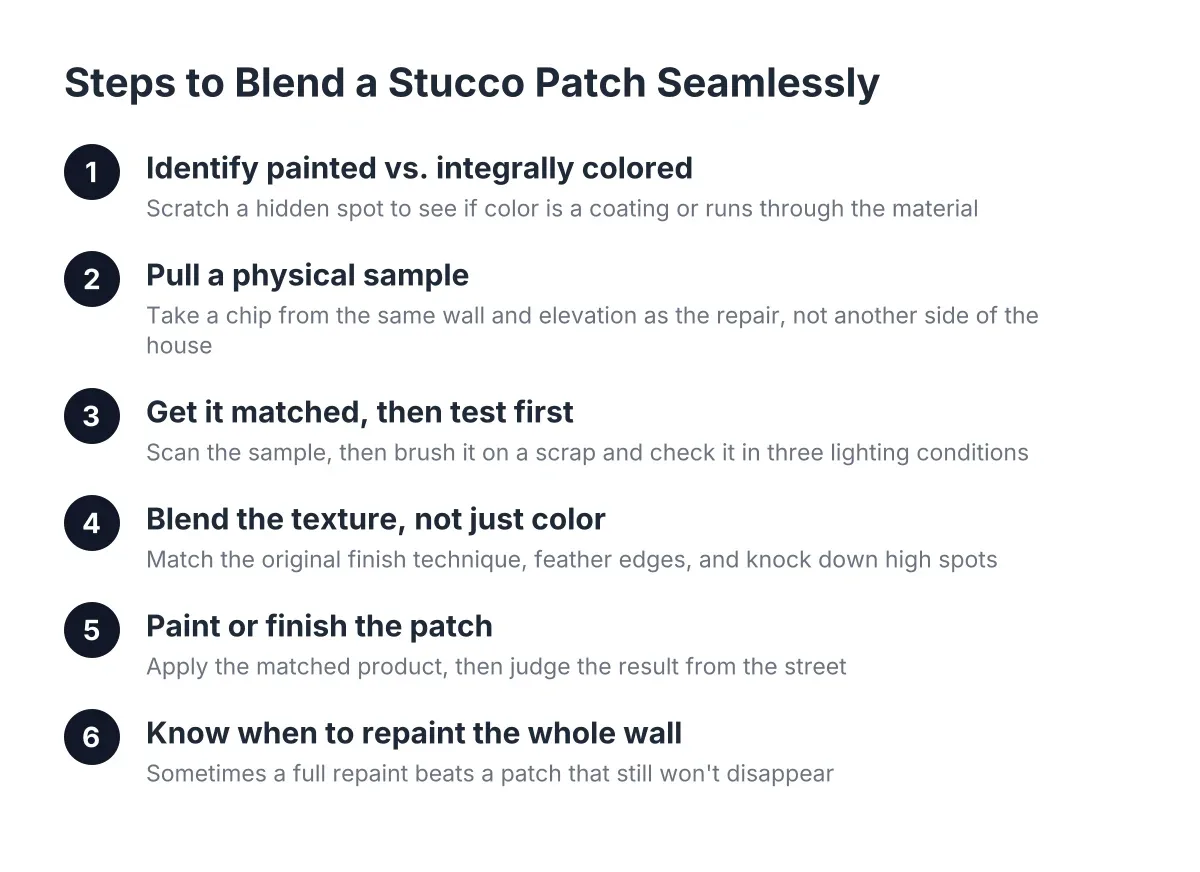
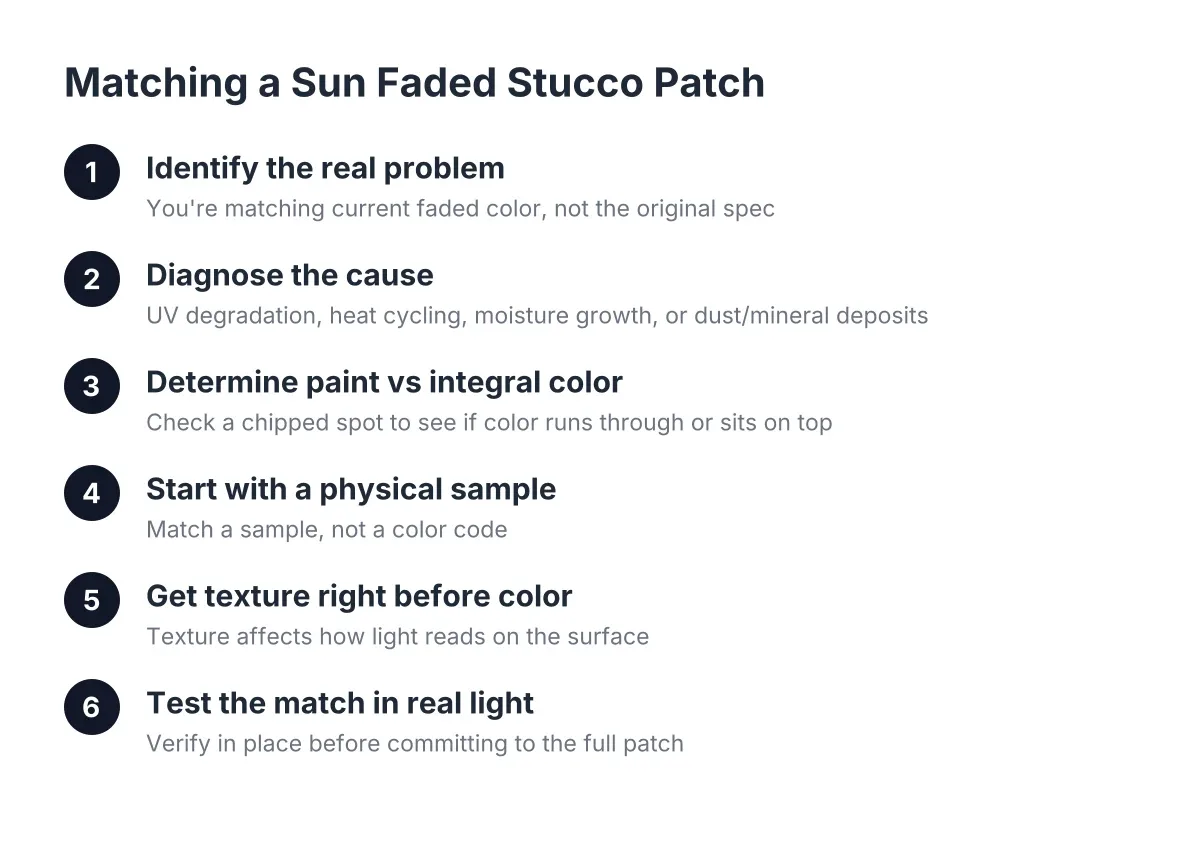
A color match is the process of mixing new stucco or coating so it blends with the existing color on your wall. It sounds simple, but sun exposure, age, and the original mix all shift a wall's color over time, so matching a 15-year-old Scottsdale wall is harder than matching a fresh one. A contractor who talks about matching to the wall as it looks today, not to the original color chip, is thinking about it the right way. If you want a sense of what this work runs, see how much stucco color matching costs.
Integral Color
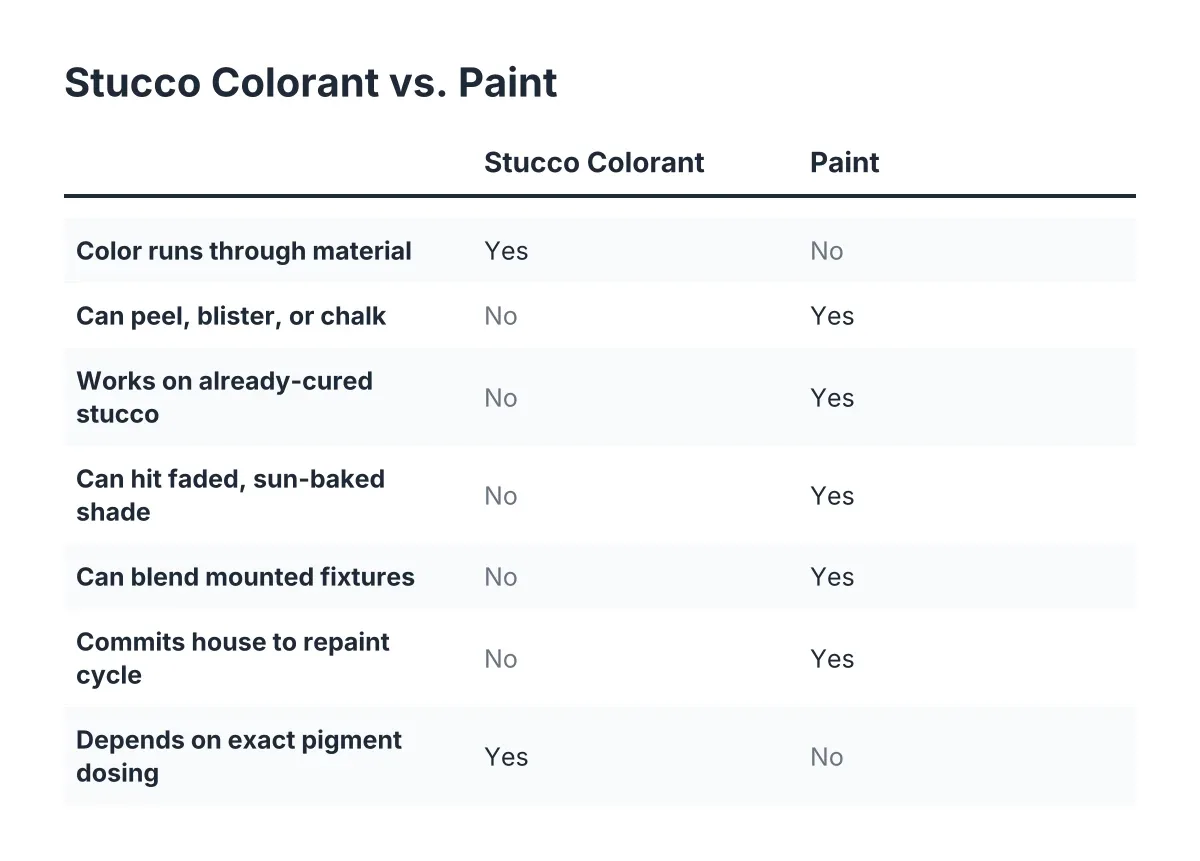
Integral color means pigment mixed directly into the stucco material before it goes on the wall, so the color runs all the way through. This is different from painted stucco, where color sits only on the surface. Integral color hides small chips and scratches better because there is no lighter layer underneath. If your home has integral color, a repair needs a tinted finish coat rather than a coat of paint to blend properly.
Pigment
A pigment is the powdered or liquid colorant added to stucco or paint to give it its color. In stucco work, mineral pigments like iron oxides handle Arizona sun better than cheaper organic tints, which fade faster. When a contractor mentions pigment load or pigment type, they are talking about how the color is built and how long it will hold. It is a fair question to ask what kind of pigment goes into your repair.
Fog Coat
A fog coat is a thin, cement-based color spray applied over existing stucco to refresh or even out its color without adding a thick new layer. It bonds with the stucco instead of sitting on top like paint, so it keeps the natural matte look. Contractors often suggest a fog coat when a patched area matches in texture but not in tone. It is a lighter, cheaper step than repainting or resurfacing a whole wall.
Elastomeric Paint
Elastomeric paint is a thick, flexible coating that stretches slightly, so it can bridge hairline cracks in stucco. It is popular on older desert homes because it seals the surface and evens out color in one pass. The tradeoff is that it changes the wall's look from matte stucco to a painted finish, and once it is on, going back is difficult. If a quote lists elastomeric, ask whether the whole wall gets coated or just the repair, because a partial coat rarely blends.
Finish Coat
A finish coat is the final, visible layer of a stucco system, and it carries both the color and the texture you see from the street. Repairs almost always involve reapplying a finish coat over the patched area. The quality of the color match lives in this layer, so a quote that includes a new finish coat over the repair is more thorough than one that only fills the hole. The stucco color matching service page explains how this fits into a full repair.
Testing and Matching Process
These terms describe how a contractor proves the color works before committing to your whole wall.
Sample Board
A sample board is a portable test panel coated with the proposed stucco color and texture so you can compare it against your wall. Holding a sample board up to the wall in direct sun and in shade shows you how the match reads in real light. A contractor who offers a sample board before mixing a full batch is protecting you from an expensive redo. Ask to see it at midday, when Scottsdale sun is harshest on color.
Drawdown
A drawdown is a small, flat swatch of the mixed color pulled across a card, used to check the tint before any material touches your house. It is a quick, low-cost checkpoint in the mixing process. Drawdowns catch tint errors early, when fixing them means adjusting a bucket instead of redoing a wall. If you hear this word, it means the contractor is verifying color at the mixing stage, which is a good sign.
Mock-Up
A mock-up is a test patch of the matched stucco applied to a small, low-visibility spot on your actual wall. It goes a step beyond a sample board because it cures on your surface, in your light, over your existing material. Stucco changes color as it dries, so a mock-up is the most honest preview you can get. Approving a mock-up before full application is a reasonable thing to ask for on any visible repair.
Cure Color
Cure color is the final color stucco reaches after it has fully dried and hardened, which can take days to weeks. Wet stucco always looks darker than it will end up, so judging a match on day one is a common homeowner mistake. A careful contractor matches to the cure color, not the wet color, and will tell you to wait before deciding the patch is off. If a fresh repair looks too dark, give it time before calling it a miss.
Blending
Blending means feathering the edge of new stucco material into the old surface so there is no hard line where the repair stops. Good blending spreads the transition over a wider area, which fools the eye. Poor blending leaves a visible border even when the color is close. When you compare quotes for stucco patching, ask each contractor how far past the damage they plan to blend.
Break Point
A break point is a natural edge on your home, like a corner, trim line, or wall joint, where a color change is invisible because the eye expects a transition there. Skilled contractors carry a repair coat to the nearest break point instead of stopping mid-wall. That can mean coating more area than the damage itself, which raises material cost slightly but makes the match disappear. If a quote covers a full wall section rather than a small square, break points are usually the reason.
Problems the Right Terms Help You Spot
Knowing these words helps you name what you are seeing on your wall and understand why a match failed or faded.
Efflorescence
Efflorescence is a white, chalky deposit that forms on stucco when water moves through the wall and leaves mineral salts on the surface. It is a color problem and a warning at the same time, because it means moisture is getting into the stucco. Painting or coating over efflorescence without fixing the water source guarantees the problem returns. If you see it, ask about water damage stucco repair before anyone talks about color.
UV Fading
UV fading is the gradual lightening of stucco color caused by sun exposure. In Scottsdale, south- and west-facing walls fade faster than shaded ones, so one house can carry several shades of the same original color. This is the main reason a match based on the builder's original color chip often fails. A contractor doing careful Stucco Color Matching will match each repair to the specific wall it sits on, not to a paint code from a file.
Patch Ghosting
Patch ghosting is when a repaired area shows as a faint outline or shade difference even though the color was mixed correctly. It usually comes from a texture mismatch, a sheen difference, or skipping the blending step. Ghosting is the most common complaint after a cheap patch job. Asking a contractor how they prevent ghosting tells you fast whether they treat color and texture as part of the repair or as an afterthought.
Texture Matching
Texture matching means recreating the surface pattern of your existing stucco, such as smooth, sand, lace, or dash, on the repaired area. Color and texture work together; a perfect color on the wrong texture still catches light differently and stands out. Most visible patch failures are texture problems wearing a color costume. A complete quote for stucco crack repair or hole repair should mention both texture matching and color matching, not just one.
Scope of Work
A scope of work is the written section of a quote that lists exactly what the contractor will do, where, and with what materials. For color work, the scope should say whether the price covers just filling the damage or also the finish coat, blending, and any fog coat needed to unify the wall. Vague scopes are where surprise charges live. If the scope does not mention how the color will be matched, ask before you sign.
Using These Terms
You now have the working vocabulary for the color side of stucco repair. With this stucco color matching glossary in hand, you can read a quote line by line, ask whether a repair includes a mock-up and a finish coat, and recognize why a patch on a sun-faded wall needs blending to a break point. The right questions cost nothing and usually get you a better wall.
If you need stucco repair, Scottsdale Stucco Repair can help.
Prefer to talk it through? Call (480) 637-3464 — a quick call is usually the fastest way to get a straight answer for your situation.