Stucco Hole Repair Terms Explained: A Plain-English Glossary
If you are getting quotes to fix holes in a wall, the paperwork can read like another language. This stucco hole repair glossary translates the terms Scottsdale homeowners run into when they research the work, compare quotes, or talk to a contractor on the phone. Each entry gives you a plain definition first, then tells you why the term matters when someone is standing in your driveway pointing at your wall. Read it once and you will follow the conversation instead of nodding along.
- Stucco: the cement-based coating on your walls
- Scratch coat: the first rough layer
- Brown coat: the middle leveling layer
- Finish coat: the visible top layer
- Lath: the mesh stucco grips onto
- Weather-resistive barrier: the water shield behind the stucco
- Patch: the repair itself
- Keying: how new stucco locks into old
- Feathering: blending patch edges into the wall
- Curing: the drying and hardening period
- Texture matching: making the patch look like the wall
- Color matching: getting the shade right
- Spalling: stucco flaking or crumbling off
- Delamination: stucco separating from the wall
- Efflorescence: white powdery stains from moisture
- Substrate: whatever sits behind the stucco
- EIFS: synthetic stucco, a different system
- Scope of work: the written list of what gets done
The Wall Itself: Stucco Hole Repair Layers and Materials
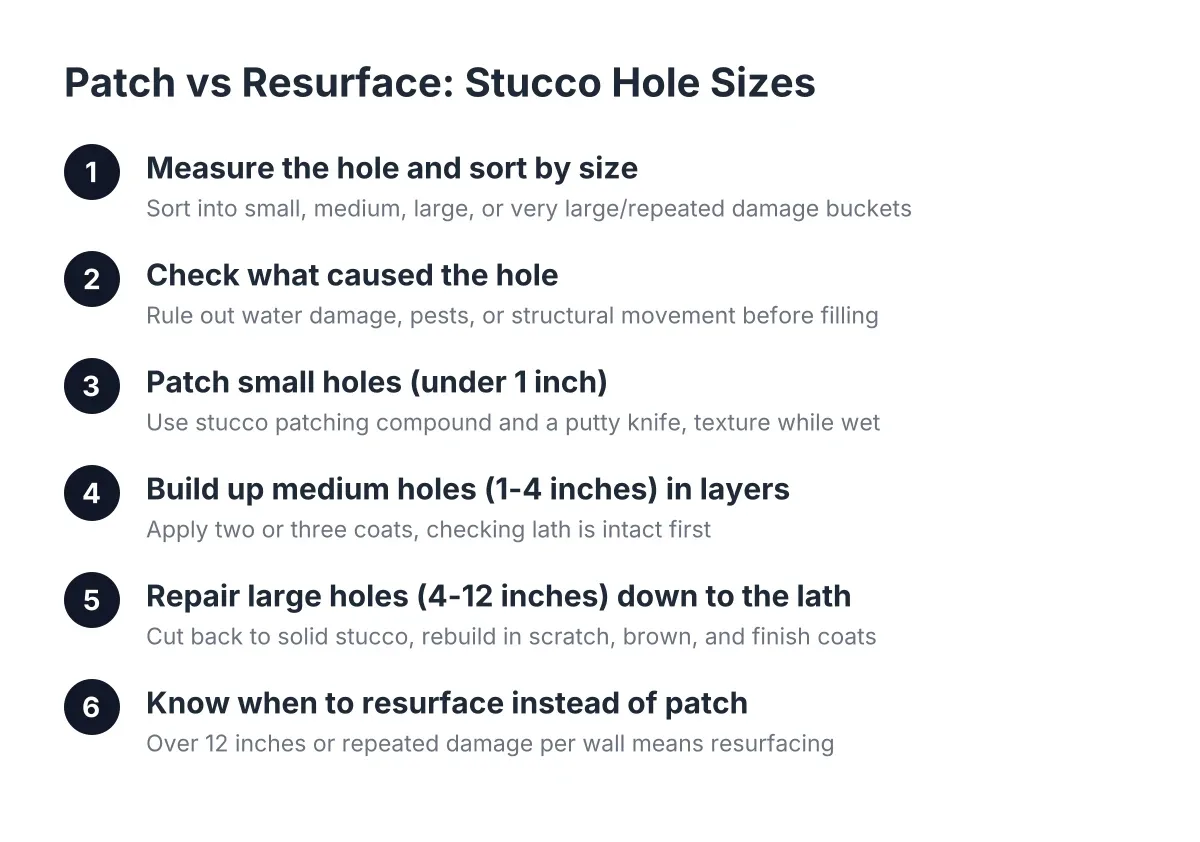
Most of the confusion in a stucco hole repair glossary starts here, because a stucco wall is not one material. It is a sandwich of layers, and which layers a hole punches through decides how big the repair is.
Stucco
Stucco is a cement-based coating, mixed from cement, sand, lime, and water, that hardens into a durable shell over your exterior walls. It is the standard wall finish across Scottsdale because it handles heat and sun well. Knowing that it is applied wet in layers, not installed as panels, explains why repairs involve mixing, troweling, and drying time rather than swapping a part.
Scratch Coat
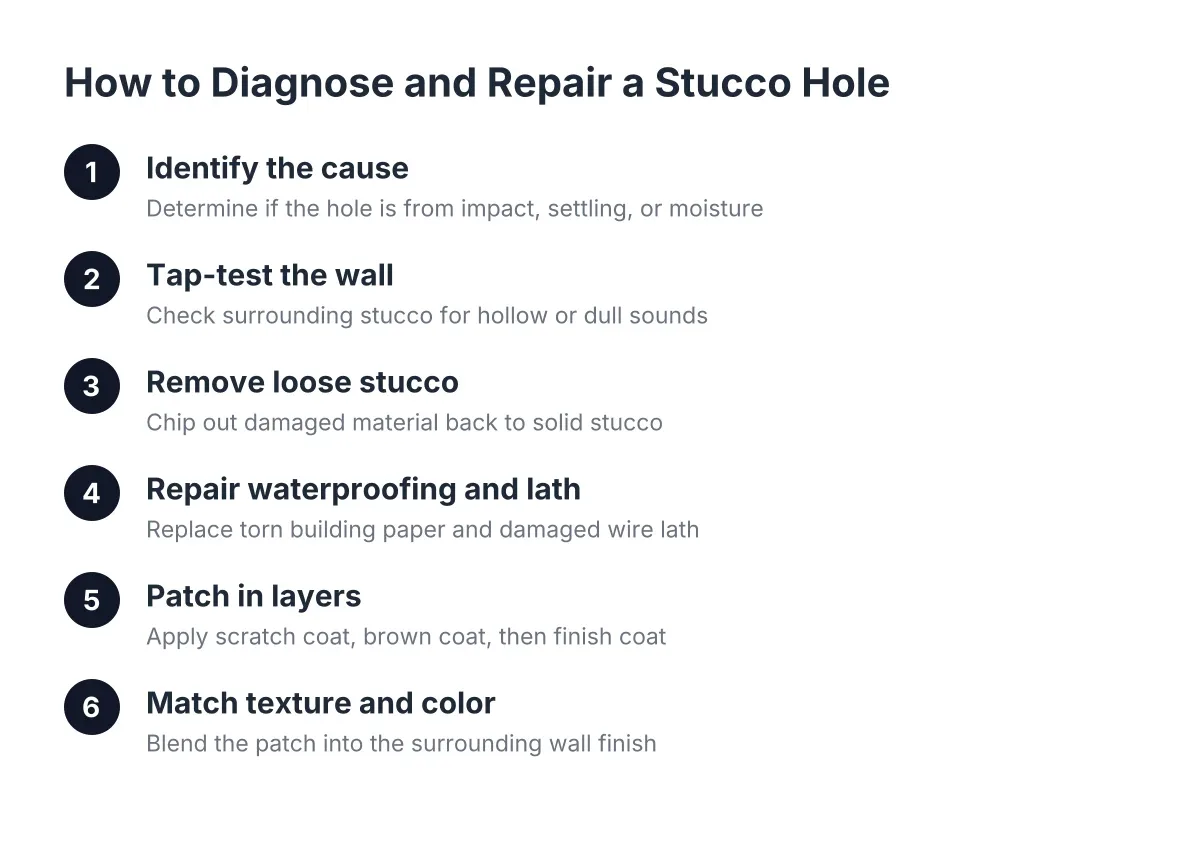
A scratch coat is the first layer of stucco, applied directly over the lath and scored with horizontal grooves while still wet. Those grooves give the next layer something to grip. If a hole goes deep enough that a contractor mentions rebuilding the scratch coat, the damage went through the full wall system, and the repair will take more steps and more drying time than a surface patch.
Brown Coat
A brown coat is the second stucco layer, applied over the scratch coat to level the wall and build thickness. It does most of the structural work in the stucco shell. When a quote lists a brown coat, the contractor is rebuilding the wall's body, not just its face, which usually means a return trip because each layer needs time to cure.
Finish Coat
A finish coat is the thin top layer of stucco that carries the color and texture you actually see. Shallow chips and small holes often stop at this layer, which makes for the simplest repairs. If your damage only reaches the finish coat, expect a quicker job than one that goes down to the lath.
Lath
Lath is the wire mesh or metal netting fastened to the wall framing that gives wet stucco something to grab and hold. Think of it as the skeleton under the skin. A hole that tears or rusts the lath means the contractor must cut back to solid material and install new mesh, which adds labor to the quote.
Weather-Resistive Barrier
A weather-resistive barrier is the layer of building paper or house wrap behind the stucco that stops water from reaching the wood framing. It is the real waterproofing; the stucco is the armor over it. If a hole breached this barrier, a good contractor will repair or overlap it before patching, because skipping it invites water damage inside the wall later.
Substrate
A substrate is whatever solid surface sits behind the stucco system, usually wood sheathing, concrete block, or framing. Contractors mention it because the repair method changes with what is back there. A soft or water-damaged substrate has to be fixed first, which is why some small-looking holes turn into bigger jobs once opened up.
The Repair Process: Stucco Hole Repair Glossary
These are the words you will hear when a contractor describes how the fix actually happens, from the first cut to the final texture pass.
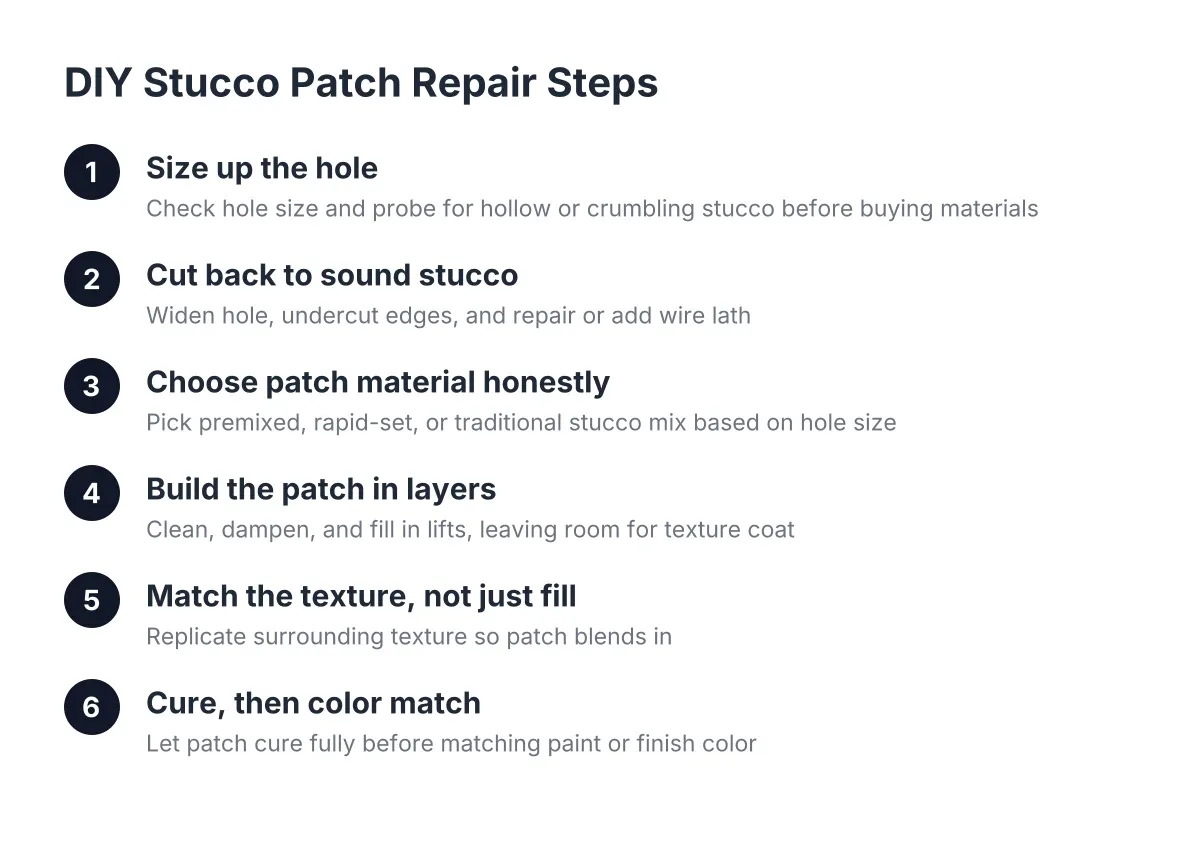
Patch
A patch is the new stucco material applied to fill a hole or damaged area and rebuild the wall surface. Stucco patching is the core of most hole repairs, whether the hole came from a doorknob, a woodpecker, or a removed fixture. The quality of a patch shows in whether you can spot it from the sidewalk a year later. The Stucco Hole Repair service page walks through what a typical patch job involves in Scottsdale.
Keying
Keying means roughing up or shaping the edges of the existing stucco so the new patch material locks into it mechanically. Without good keying, a patch can pop loose as it dries and shrinks. If a contractor talks about cutting back the hole to sound stucco and keying the edges, that is a sign they plan a repair that holds, not a smear of filler.
Feathering
Feathering means thinning the edge of a patch outward so it blends into the surrounding wall instead of ending in a visible ridge. It is a hand skill, and it is the difference between a repair you forget and a bump you notice every time you pull into the driveway. Ask any bidder how they blend patch edges; the answer tells you a lot.
Curing
Curing is the period when fresh stucco hardens and gains strength as the cement chemically sets, not just dries. Rushing it causes cracks, which is why layered repairs happen over multiple visits. In Scottsdale heat, contractors may lightly mist a patch to keep it from drying too fast. A quote that builds in cure time between coats reflects how the material actually works.
Texture Matching
Texture matching means recreating the surface pattern of your existing wall, whether smooth, sand, lace, or dash, so the patch disappears into it. A perfectly filled hole with the wrong texture still reads as a repair. Texture matching is listed as its own service for a reason: it takes practice, and it is worth asking to see how a contractor plans to match yours.
Color Matching
Color matching means blending the patch color, through tinted finish or paint, so it matches the sun-faded shade of the rest of your wall. New stucco next to fifteen years of Arizona sun rarely matches straight out of the bucket. Some walls need the whole panel or wall section painted to hide the repair, and an honest quote will say so up front rather than surprise you later.
Damage Words on Your Inspection or Quote
Spalling
Spalling is stucco flaking, chipping, or crumbling off the wall surface, usually because moisture got behind it or the original mix was weak. A hole surrounded by spalling means the damage is wider than the hole itself. Expect the contractor to remove the loose material back to solid stucco, so the patched area may end up larger than what you see today.
Delamination
Delamination means a layer of stucco has separated from the layer or lath behind it, even if the surface still looks intact. Contractors find it by tapping the wall and listening for a hollow sound. Delaminated areas near a hole should come off before patching; covering them just moves the failure date, not the failure.
Efflorescence
Efflorescence is the white, powdery mineral deposit that shows up on stucco when water moves through it and evaporates, leaving salts behind. It is not mold and it wipes off, but it is a message: water is getting in somewhere. Efflorescence near a hole or crack points toward water damage stucco repair, not just a cosmetic fill.
EIFS
EIFS, short for exterior insulation and finish system, is a synthetic stucco system built over foam board instead of traditional cement coats. It looks like stucco but repairs differently, and patching it with traditional stucco methods causes problems. If you are not sure which you have, ask; a contractor who checks before quoting is doing it right.
Scope of Work
A scope of work is the written description in a quote of exactly what the contractor will do, layer by layer and step by step. It is your best protection against a vague bid. A clear scope for stucco hole repair should name the layers being rebuilt, the texture and color matching plan, and the number of visits. If a line item confuses you, the cost guide for stucco hole repair explains what typically drives the price up or down.
Using These Terms
What this stucco hole repair glossary gives you is the ability to read a quote line by line and know what each item pays for. You can now ask whether the lath is damaged, how the edges will be keyed and feathered, and how the texture and color will be matched to your wall. Those questions take thirty seconds to ask and tell you fast whether a bidder plans a real repair or a quick smear.
If you need stucco repair, Scottsdale Stucco Repair can help.
Prefer to talk it through? Call (480) 637-3464 — a quick call is usually the fastest way to get a straight answer for your situation.