Stucco Replacement Terms Explained: A Plain-English Glossary
If you are getting quotes to fix or replace the stucco on your Scottsdale home, the paperwork can read like a foreign language. This stucco replacement glossary translates the terms contractors use into plain English so you can read a quote line by line, ask the right questions, and spot problems before they cost you money. Each entry gives you a short, standalone definition first, then explains why the term matters for your wall and your budget. Nothing here requires a construction background.
- Scratch coat: the first rough layer of stucco
- Brown coat: the middle leveling layer
- Finish coat: the visible outer layer
- Lath: the mesh stucco grips onto
- Weather-resistive barrier: the paper layer that blocks water
- Weep screed: the metal strip that drains water at the wall's base
- Control joint: a planned groove that manages cracking
- Tear-off: removing old stucco down to the frame
- Substrate: the surface behind the stucco
- Hairline crack: a thin surface crack
- Delamination: stucco separating from the wall
- Efflorescence: white, chalky staining from moisture
- Spalling: stucco crumbling or flaking off
- Patching: filling a damaged spot with new stucco
- Resurfacing: adding a fresh finish layer over sound stucco
- Texture matching: making a repair blend with the old finish
- Color matching: tinting new stucco to match the existing wall
- Scope of work: the written list of what the job includes
Stucco Replacement Glossary: Understanding Wall Layers
Most of the confusion in understanding stucco replacement terms starts with the wall itself, because stucco is not one material. It is a sandwich of layers, and every layer has a name that shows up on quotes.
Scratch Coat
A scratch coat is the first rough layer of stucco applied over the mesh on your wall. Installers rake it with grooves, or scratches, so the next layer has something to grip. If a quote mentions a scratch coat, the contractor is building the wall from the ground up rather than covering over what is there. That signals a full rebuild of the stucco system, which costs more than a surface fix but lasts longer.
Brown Coat
A brown coat is the middle layer of stucco that levels and strengthens the wall. It sits between the rough scratch coat and the finish you see. The brown coat does the structural work, so a contractor who skips it on a full rebuild is cutting a corner you will pay for later. Ask any bidder whether their price includes a true three-coat system or a shortcut.
Finish Coat
A finish coat is the thin outer layer of stucco that carries the color and texture you see from the street. It protects the layers underneath and takes the sun and weather hits first. In Scottsdale, the finish coat fades and cracks before anything else because of the heat. Sometimes only the finish coat needs work, which is a smaller job than replacement.
Lath
Lath is the wire mesh or metal grid attached to your wall that gives wet stucco something to grab. Without lath, stucco slides off or cracks free of the wall. If a contractor says your lath is rusted or loose, patching over it will not hold, and a section of wall needs to come off. Lath condition is one of the main things that separates a repair job from a full stucco replacement, so it is worth asking about directly.
Weather-Resistive Barrier
A weather-resistive barrier is the paper or wrap installed behind the stucco to keep water away from the wood framing. Stucco itself is not waterproof; this hidden layer does the real moisture defense. If your barrier is torn or was never installed right, water damage shows up inside walls long before you see it outside. A quote that includes replacing the barrier tells you the contractor plans to open the wall, not just skim over it.
Weep Screed
A weep screed is a metal strip at the bottom of a stucco wall that lets trapped water drain out. Water that gets behind stucco needs an exit, and the weep screed is that exit. A buried or blocked weep screed, often from soil or concrete poured against the house, traps moisture and rots the wall from the bottom up. If a contractor points out your weep screed is buried, take it seriously.
Control Joint
A control joint is a planned groove or metal strip built into large stucco walls to control where cracking happens. Stucco expands and shrinks with temperature, and it will crack somewhere; joints decide where. Walls without enough control joints crack randomly across the middle. On a full replacement, ask where the new joints will go so you know the crack pattern is planned, not accidental.
Damage and Warning Signs in Stucco Replacement Assessment
These are the words a contractor uses to describe what is wrong with your wall. Knowing them helps you tell a cosmetic issue from a structural one.
Hairline Crack
A hairline crack is a thin surface crack in stucco, usually narrower than a credit card edge. Most hairline cracks come from normal settling and heat cycles, and a simple crack repair handles them. Wider cracks, or cracks that follow long straight lines around windows and doors, can point to movement or moisture behind the wall. Width and pattern matter more than count.
Delamination
Delamination means the stucco has separated from the wall behind it, even if the surface still looks intact. A delaminated section sounds hollow when you knock on it. You cannot patch over delamination because there is nothing solid underneath; the loose section has to come off. Widespread delamination is one of the clearest signs that your whole exterior may need replacement instead of repair.
Efflorescence
Efflorescence is a white, chalky, or crystal-like stain on stucco left behind when water moves through the wall and evaporates. The stain itself is harmless, but it is a message: water is getting in somewhere. Painting over efflorescence hides the symptom without fixing the leak. If a contractor mentions it, expect the conversation to turn to finding the water source, not just cleaning the stain.
Spalling
Spalling is stucco that crumbles, flakes, or pops off in chunks, usually because moisture got inside and broke the material apart from within. Spalling means the damage has gone past the surface. Small spalled areas can be cut out and patched; large ones tell you the wall system has failed. If you can pull pieces off by hand, stop poking and get it looked at.
Repair, Replacement, and the Paperwork
These terms show up when contractors describe what they plan to do and what it will cost. Understanding the stucco replacement glossary terms in this section will clarify whether you need a patch or a complete teardown.
Tear-Off
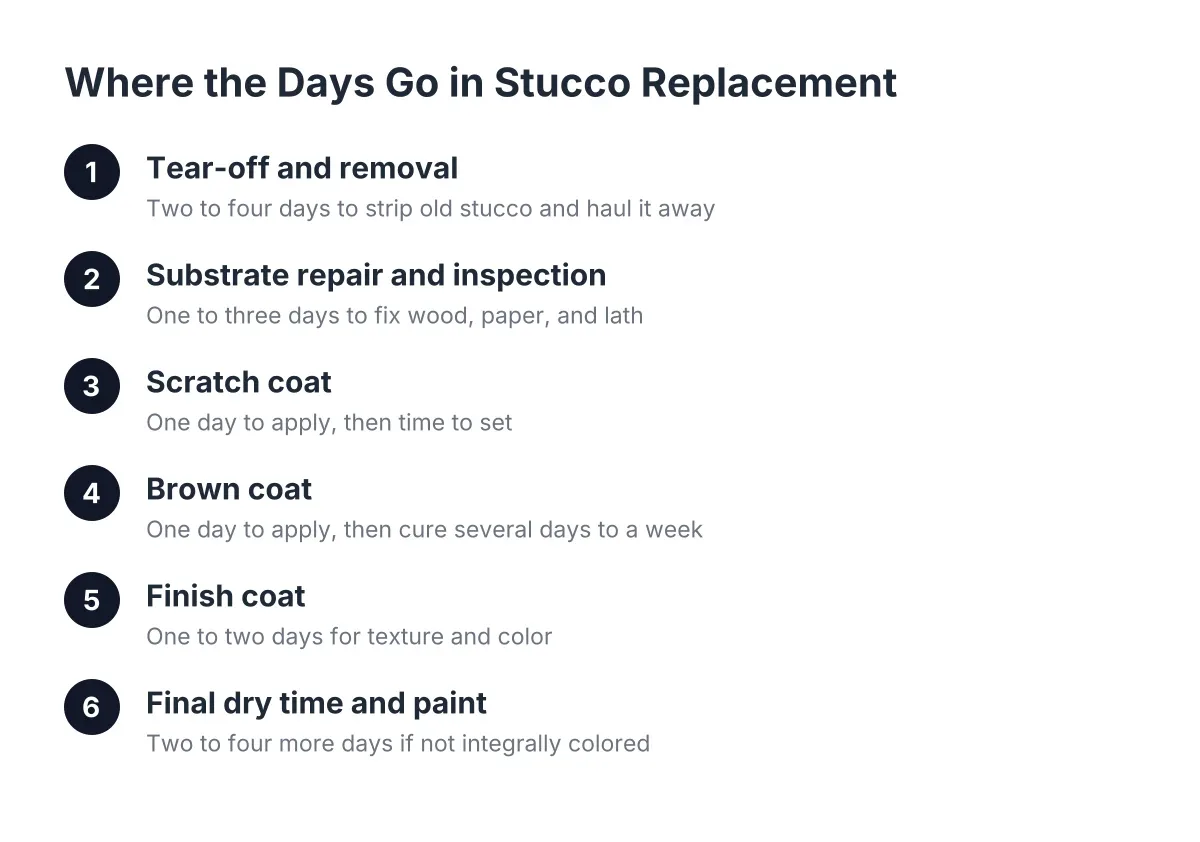
A tear-off is the removal of all existing stucco down to the bare wall frame before installing new stucco. It is the defining step of full replacement rather than repair. Tear-offs cost more and take longer because everything comes off and everything goes back on new, including the barrier and lath. If a bid does not mention tear-off but calls itself a replacement, ask what exactly is being removed. The replacement timeline article walks through how long a full tear-off project takes.
Substrate
A substrate is the surface behind the stucco that everything attaches to, usually wood sheathing or block. The substrate's condition decides how big your project gets. If tear-off reveals rotted sheathing from years of hidden water damage, that wood must be replaced before new stucco goes on. Good contractors flag this possibility in the quote so a substrate surprise does not feel like a bait and switch.
Patching
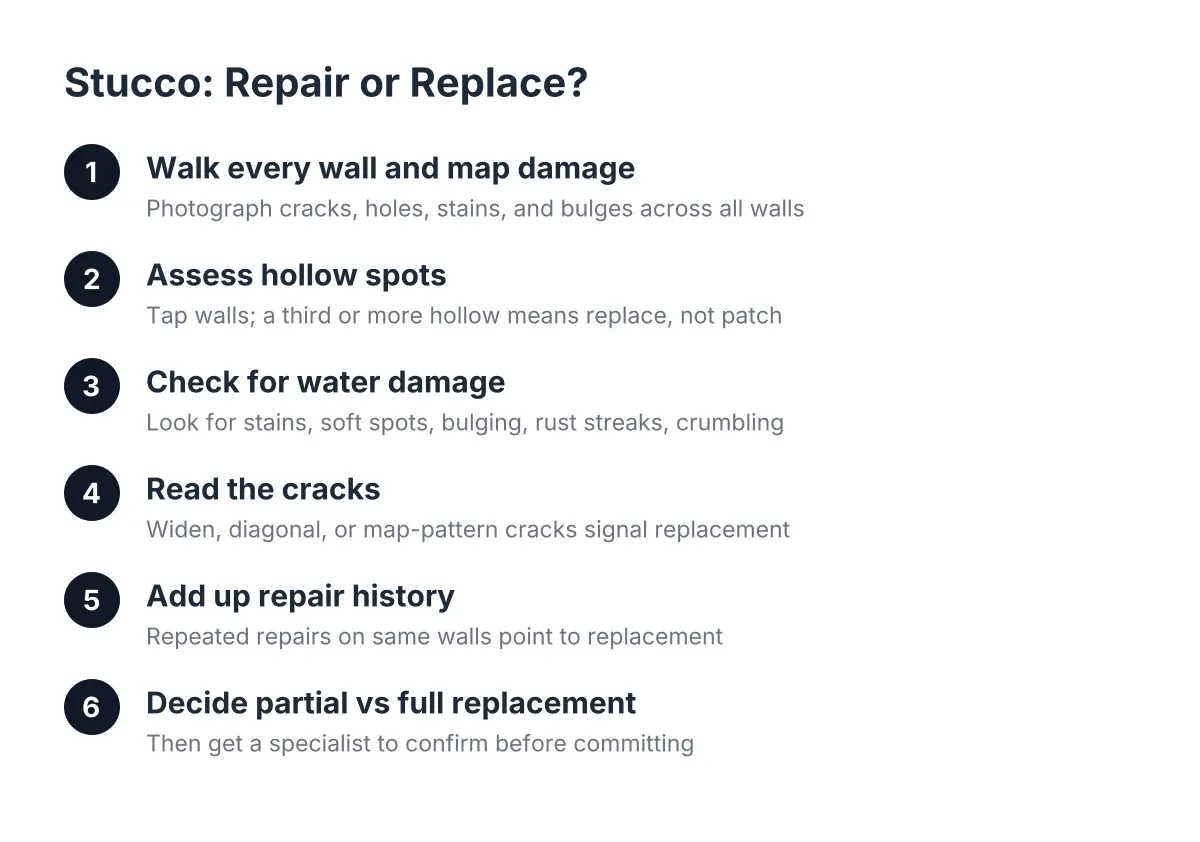
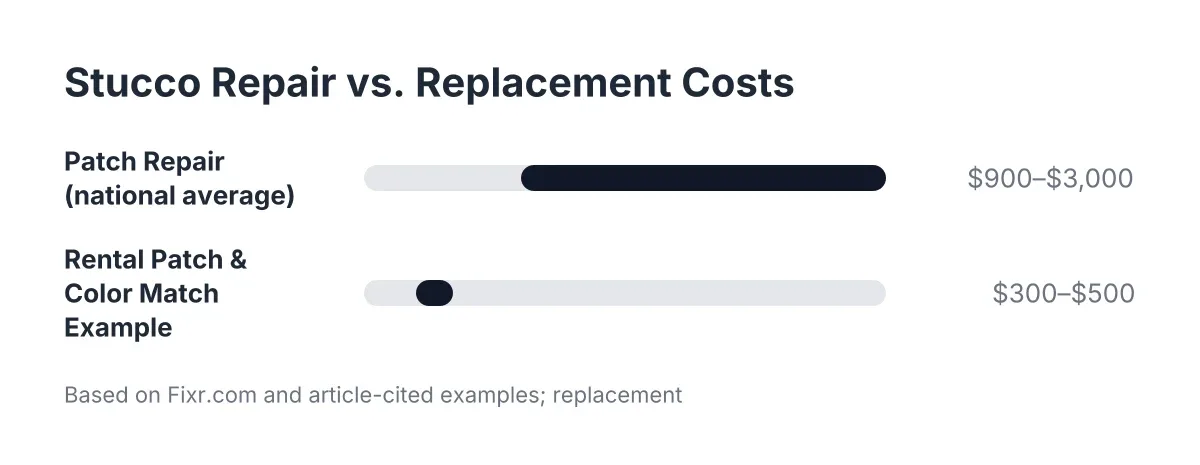
Patching is filling a damaged spot, such as a hole in a wall, with new stucco material rather than redoing the whole surface. It is the right fix for isolated damage: a hole from a removed fixture, an impact ding, or one bad section. Patching costs far less than replacement, but a patch on a failing wall is money spent twice. The decision comes down to how widespread the damage is, and this repair-versus-replace decision test helps you judge it.
Resurfacing
Resurfacing means applying a fresh finish layer over existing stucco that is still solidly attached to the wall. It renews the look of a tired but healthy wall without a tear-off. Resurfacing only works when the layers underneath are sound; skim over delaminating stucco and the new surface fails with the old. A contractor who taps and inspects the wall before recommending resurfacing is doing it right.
Texture Matching
Texture matching is shaping new stucco so a repair blends into the pattern of the surrounding wall. Stucco finishes range from smooth to heavy and swirled, and a patch with the wrong texture is visible from the curb forever. Texture matching is a hand skill, not a product you buy. Ask to see the repaired area before the finish sets, when adjustments are still possible.
Color Matching
Color matching is tinting new stucco or finish material to blend with the existing wall color, which has usually faded in the sun. Even the original color formula will look wrong next to a wall that has baked in Scottsdale sun for a decade. Good color matching accounts for the fade, not just the original tint. Some walls still need a full repaint after a large repair, so ask how close the match will be before work starts.
Scope of Work
A scope of work is the written section of a quote that lists exactly what the contractor will and will not do. It should name the layers being replaced, the areas covered, cleanup, and who handles paint. Vague scopes cause most disputes: "repair stucco as needed" tells you nothing. Compare scopes, not just totals, when bids differ, and read a cost guide so you know what drives the numbers.
Using These Terms
You now have the vocabulary to read a stucco quote line by line instead of skipping to the total. What this glossary gives you is the ability to ask sharp questions: is the lath staying, where do the control joints go, does the scope include the barrier. A contractor who answers those questions plainly is one worth keeping on the phone.
If you need stucco repair, Scottsdale Stucco Repair can help.
Prefer to talk it through? Call (480) 637-3464 — a quick call is usually the fastest way to get a straight answer for your situation.