Stucco Installation Warranty: What’s Covered, What’s Not, and How to Verify It
You picked a contractor. Now you want to know what happens if the stucco cracks in year two. That question comes down to the stucco installation warranty and the process of stucco warranty coverage verification—what's covered, what's excluded, and whether the piece of paper you get at closing actually means anything. This guide walks through the real terms behind warranty language, the difference between a workmanship warranty and a material warranty, and the specific questions to ask a Scottsdale contractor before any mud goes on the wall.
This matters more in Arizona than in most places. Stucco remained the most-used exterior wall material in the Mountain division, which includes Arizona, at 48% of new single-family homes started in 2024, according to the National Association of Home Builders. When half the new homes in your region wear stucco, warranty disputes over it are common enough that you should know the terms cold before you sign.
The Two Warranties Behind Every Stucco Installation
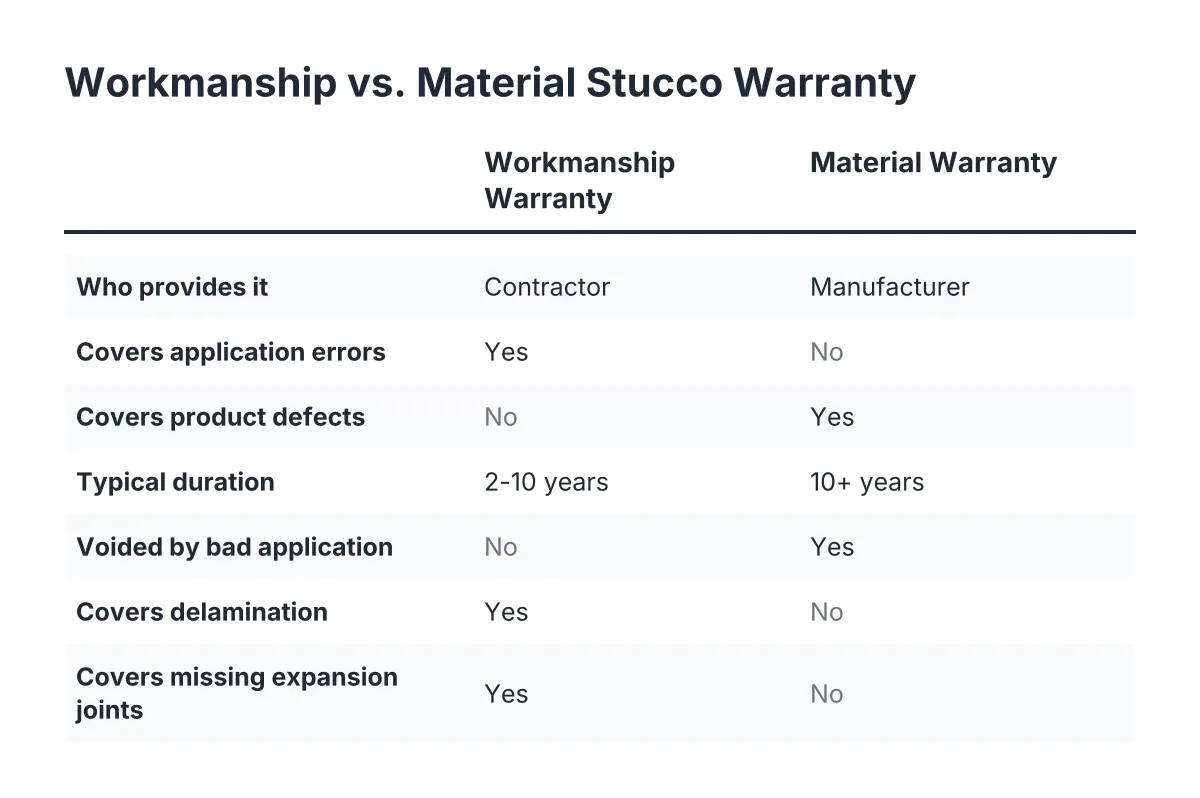
Every full stucco installation carries two separate promises, and they come from two different parties. Confusing them is the single most common mistake homeowners and landlords make when a problem shows up later.
First, there is the workmanship warranty. This comes from the contractor. It covers how the stucco was applied: whether the moisture barrier was lapped correctly, whether the lath was fastened properly, whether each coat was mixed and cured the way it should be. If the finish coat delaminates in sheets eighteen months after the job because the brown coat was never scratched for bond, that is a workmanship failure. The contractor fixes it, on their dime, if the warranty is real.
Second, there is the material warranty. This comes from the manufacturer of the stucco mix, the acrylic finish, or the synthetic system. It covers defects in the product itself, not in how it was applied. Material warranties are often long, sometimes ten years or more, which is why some companies wave them around as if they were the whole story. They are not. A manufacturer will deny a material claim in minutes if the product was applied outside its written specifications, and application is exactly what the contractor controls.
So when a contractor says "the job is warrantied for ten years," your next question is simple: which warranty, from whom, and in writing? A ten-year material warranty paired with a ninety-day workmanship warranty protects you against almost nothing that actually goes wrong on a wall.
What a Stucco Installation Warranty Actually Covers
A legitimate workmanship warranty on a new stucco installation typically covers failures traceable to the application itself. Reading the coverage list closely tells you more about a contractor than any sales pitch will.
Here is what a solid written warranty usually covers:
- Delamination and bond failure. Finish coat separating from the brown coat, or stucco pulling away from the lath. This is almost always an application problem.
- Cracking beyond normal hairlines. Wide, deep, or patterned cracking that shows up within the warranty period and points to improper curing, bad mix ratios, or missing control joints.
- Water intrusion at the installer's details. Leaks at flashing, weep screeds, and penetrations the crew installed or worked around. The moisture barrier and lath are the heart of the system; if water gets behind the stucco because the paper was torn or lapped backward, that is on the installer.
- Missing or failed expansion joints. Stucco needs room to move. If the crew skipped control joints and the wall cracked on cue, the warranty should cover the fix.
- Repairs to warranty repairs. If the contractor patches a covered defect and the patch fails, the clock should not reset to zero in their favor.
Notice what ties these together: each one is a defect in how the system was built, visible or traceable after the fact. A contractor who puts these items in writing is telling you they know where their own work can fail. That is a good sign, not a bad one.
Understanding Stucco Warranty Coverage and Verification: Durability Guarantees
A realistic durability guarantee on stucco workmanship in the Scottsdale area runs two to ten years, with many honest contractors landing between two and five. Stucco itself can last decades, but the installer's exposure is to application defects, and those surface within the first few years. Anything labeled "lifetime" deserves hard questions, not relief.
Here is why. A lifetime warranty costs nothing to print and everything to honor. If the company folds, rebrands, or stops answering the phone, the lifetime warranty died with it. A five-year written warranty from a contractor who answers a local number and has pulled permits in Scottsdale is worth more than a lifetime promise from an out-of-state outfit that treats stucco as one line item among twenty services.
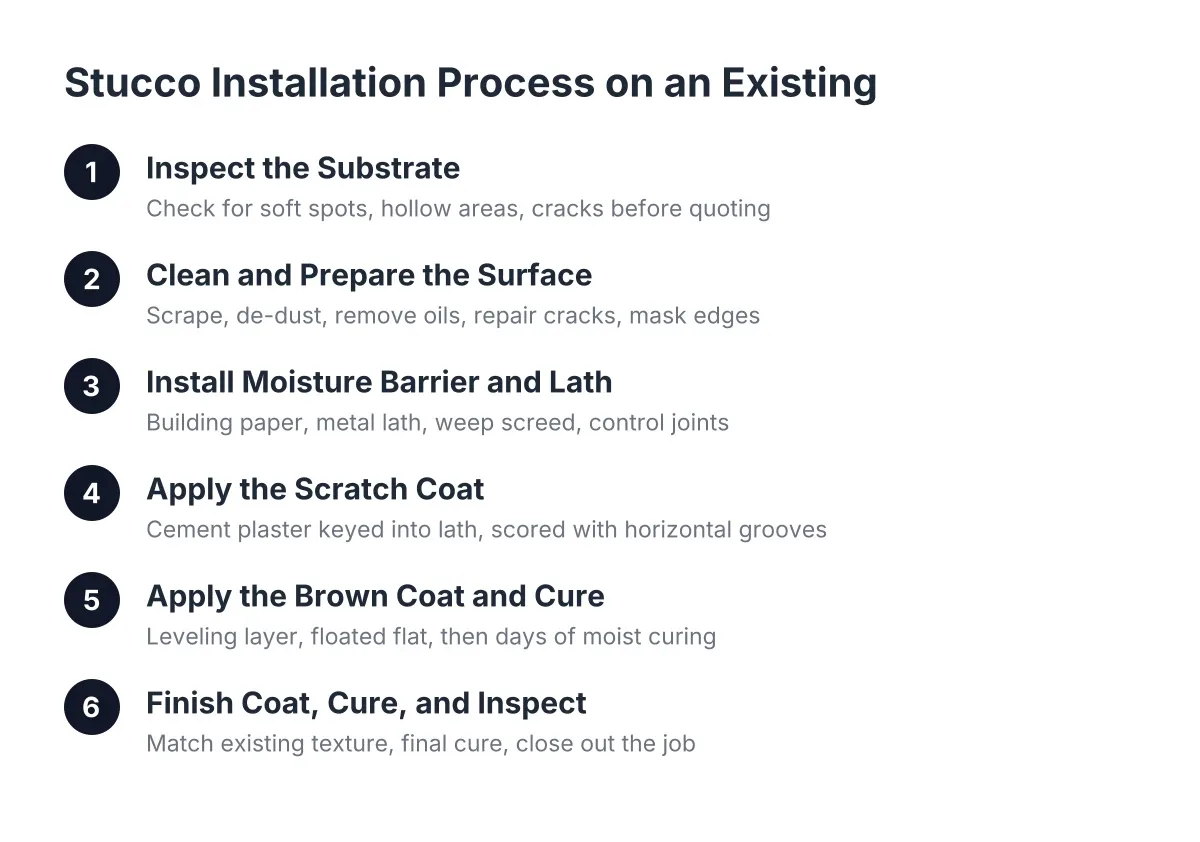
There is also a material reality underneath the paper. Traditional stucco goes on in three coats: a scratch coat keyed for bond, a brown coat for thickness and flatness, and a finish coat for color and texture. Each coat needs proper mixing, moisture, and cure time, which is hard to rush in a Scottsdale summer. One-coat systems go up faster and cost less, but the thinner assembly leaves less margin for error. Ask which system your contract specifies, because the durability guarantee should match the system. A contractor offering an identical long warranty on both systems at the same price has not thought hard about either.
What Warranties Exclude, and Why the Exclusions Are Not Scams
The exclusions section is where skeptical readers assume they are being set up. Usually they are not. Stucco is a cementitious material on a moving building in a desert with 40-degree daily temperature swings. Some behavior is normal, and no honest contractor will insure against physics.
Expect these exclusions, and do not treat them as red flags:
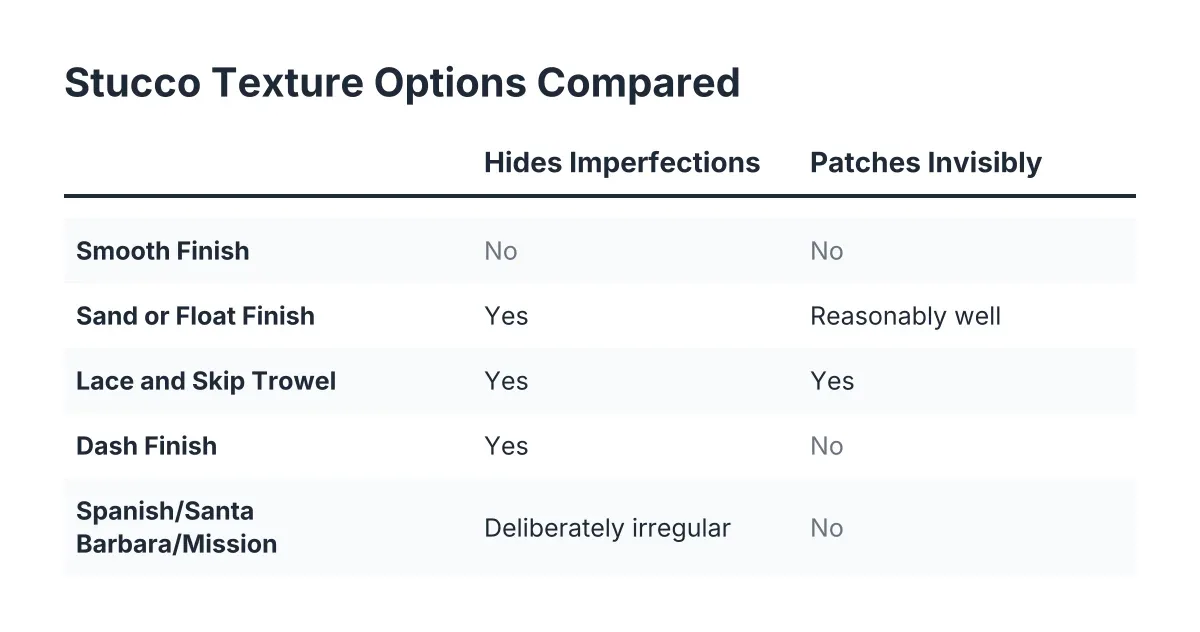
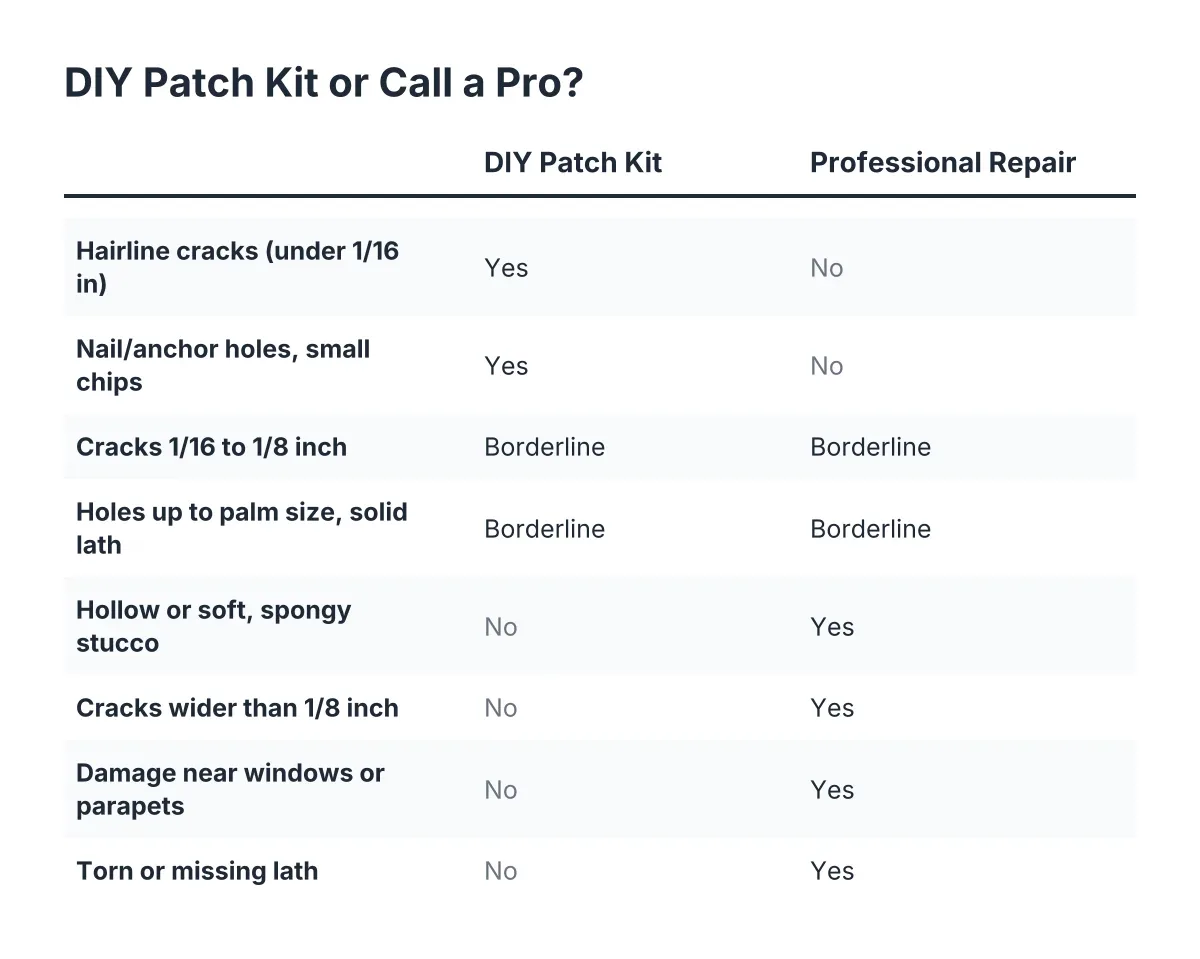
- Hairline cracking. Fine surface cracks are normal as stucco cures and the structure settles. One reason stucco stays popular is that its texture hides minor surface imperfections a smooth finish would broadcast. Hairlines in the finish coat are cosmetic, not structural.
- Settlement and structural movement. If the foundation moves and cracks the wall, that is a foundation issue, not a stucco application defect. A corner crack where stucco meets a hard concrete foundation is a familiar example; the two materials expand and contract at different rates, and the softer stucco gives first.
- Impact damage. A ladder, a trailer hitch, or a weed trimmer punching a hole in the wall is a repair job, not a warranty claim.
- Modifications by others. If a satellite installer or a plumber cuts into the wall after the install, coverage near that penetration ends. Keep records of who touched the wall and when.
- Pressure washing damage. Blasting stucco at high pressure drives water behind the layered system, and once moisture gets behind stucco it can cause larger structural problems over time. Most warranties void coverage on washed sections, and they are right to.
- Unpaid balances. Nearly every warranty is void if the contract was never paid in full. Read this clause before you withhold a final payment over a punch-list item; resolve the punch list in writing instead.
The exclusion that should bother you is vagueness, not breadth. "Normal wear and tear" with no definition, or "improper maintenance" with no maintenance requirements listed, gives the contractor room to deny anything. Ask them to define the terms in the contract. A legitimate operator will; a lead broker reselling your job to whoever bids lowest cannot.
How to Verify the Warranty Before Work Starts
A warranty is only as good as the company behind it, and you can test that before any money changes hands. If you have been burned on a past project, this checklist is where you get your control back.
Work through these steps in order:
- Get the warranty in the contract, not after it. The written scope should name the warranty period, what it covers, what it excludes, and the claim process. Before you sign, verify all the stucco warranty coverage details are spelled out in writing, so you can confirm what the actual protection is.
- Confirm the entity name matches. The name on the contract, the warranty, the license, and the insurance certificate should be the same legal entity. Mismatched names are how warranties evaporate; the company that promised the coverage technically never did the work.
- Check Arizona licensing yourself. The Arizona Registrar of Contractors maintains a public lookup. Search the business name, confirm the license is active and in the right classification, and check for complaints. Takes ten minutes. Skipping it is how a cash-only, no-contract bid ends up on your rental.
- Ask who performs warranty repairs. Their own crew, or whichever sub is cheapest that month? A contractor who subs out warranty work has little incentive to do the original job right.
- Ask what triggers a claim denial. Make them say it out loud. The honest answer sounds like the exclusion list above. The evasive answer sounds like "we stand behind everything," which means nothing is defined and everything is arguable.
- Get color and texture matching addressed in writing. If a warranty repair happens in year three, will they match the existing finish, or leave a patch that reads from the street? Stucco color matching and texture matching are skills; a warranty repair that does not include them is half a repair.
In addition, note how the contractor reacts to this process. The ones who get defensive about license verification or written terms are telling you how the warranty claim conversation would go. The ones who walk you through their own exclusions without being asked are the ones who have honored claims before.
Warranty Terms That Matter for Landlords With Multiple Properties
Suppose you own four stucco rentals around Scottsdale and the East Valley, and you are putting new stucco on an addition at one of them. Your warranty priorities differ from an owner-occupant's, and the contract should reflect that.
First, transferability. Say you sell that rental in year two of a five-year workmanship warranty. Does coverage transfer to the buyer? A transferable warranty is a selling point at closing; a non-transferable one is a surprise during the buyer's inspection. Get the transfer terms, and any transfer fee, stated in the contract.
Next, documentation. You need a clean paper trail for your files: the contract, the warranty, the insurance certificate, and a dated invoice that describes the work specifically. "Exterior work, $6,800" helps no one at tax time or in a dispute. "Three-coat stucco installation, north and west elevations, including moisture barrier, lath, control joints, and sand-float finish in matched color" is a document that protects you.
Also think about claim logistics with tenants in place. Who schedules access, how much notice does the contractor give, and how do they handle a tenant who will not answer the door? These sound like small questions until monsoon season puts water stains on a wall two weeks before a lease renewal. In that scenario, a contractor who already has your properties on file and a defined claim process saves you the scramble of starting a vendor search from zero.
Finally, keep warranty math in perspective against repair costs. The national average to repair stucco runs $900 to $3,000, averaging about $1,700 for a buckled three-coat section in a 10×10-foot area, according to Fixr.com. A workmanship failure on a rental is not a rounding error; it is a four-figure hit plus tenant disruption. The stucco warranty coverage terms you negotiate now are the insurance you cannot buy later.
Three Coat vs. One Coat, EIFS, and How the System Changes the Guarantee
The warranty conversation changes with the wall system, so pin down which one you are buying. Traditional three-coat stucco builds up over a moisture barrier and metal lath, with the edges trimmed in channel that allows for expansion and contraction. It is the heavier, slower, more forgiving system, and contractors tend to warranty it with more confidence.
One-coat systems use a fiber-reinforced base over foam board, applied thinner and faster. Properly cured fiber-reinforced stucco has useful flexibility; it moves with adjoining materials and shrugs off minor impacts better than brittle patches do. However, the thinner assembly means detailing errors at windows, penetrations, and joints show up as problems sooner. Ask how the warranty treats those details specifically.
Synthetic stucco, or EIFS, is a different animal entirely. It is a layered foam-and-coating system that manages water differently from cement stucco, and its warranty terms, maintenance requirements, and inspection expectations are stricter. If a bid says "stucco" but the spec sheet says EIFS, stop and get clarity before comparing warranties across bids; you would be comparing two different products.
One honest limitation applies to all three systems. No warranty, and no article, substitutes for an on-site look at your specific wall. Existing water damage, brittle building paper behind old stucco, or structural movement can change both the right system and the right warranty terms, and that call belongs to a licensed professional standing in front of the wall.
A Quick Answer: Stucco Installation Warranty Checklist for Coverage Verification
A stucco installation warranty worth signing is a written workmanship warranty of two to ten years from a verifiable, licensed Arizona contractor, paired with the manufacturer's material warranty, with coverage, exclusions, and the claim process defined in the contract. Lifetime promises, verbal assurances, and warranties from unverifiable entities are worth the paper they are not printed on.
Condense the whole vetting process to five questions:
- Is the workmanship warranty separate from the material warranty, and are both in writing?
- Does the warranty name the same legal entity that holds the active Arizona license?
- Are exclusions specific and defined, not vague catch-alls?
- Who performs warranty repairs, and does the repair include color and texture matching?
- Is the warranty transferable if the property sells?
Get yes-shaped answers to all five and the fear of surprise costs and vanishing contractors loses most of its grip. The paperwork will not make a bad installer good, but it makes a good installer accountable, and in 2026 in a market where stucco covers nearly half of new Mountain-division homes, accountability is the whole game.
If you need stucco repair, Scottsdale Stucco Repair can help.
Prefer to talk it through? Call (480) 637-3464 — a quick call is usually the fastest way to get a straight answer for your situation.