Hiring a Stucco Contractor Terms Explained: A Plain-English Glossary
If you own a Scottsdale home with cracked or damaged stucco, the quotes and websites you read can sound like a foreign language. This hiring a stucco contractor glossary explains the terms in plain English, so you can read a bid line by line, ask better questions on the phone, and spot the difference between a real fix and a cover-up. Every entry starts with a short definition you can absorb in seconds. Skim the index below, then jump to whatever word has been slowing you down.
- Stucco: the cement coating on your walls
- Lath: the mesh stucco grips onto
- Scratch coat: the first rough layer
- Brown coat: the leveling middle layer
- Finish coat: the visible top layer
- Hairline crack: a thin surface crack
- Stucco patching: a small-area repair
- Stucco resurfacing: a new top layer over old stucco
- Stucco replacement: tearing off and redoing stucco
- Texture matching: making a patch blend in
- Color matching: matching the wall's exact shade
- Weep screed: the drainage strip at the wall's base
- Efflorescence: white powder that signals moisture
- Delamination: layers separating from the wall
- Scope of work: the written list of what gets done
- Bid or estimate: the contractor's written price
- Licensed, bonded, and insured: the three credential basics
- Change order: a written mid-job change to price or scope
Materials and Wall Layers
Before you can judge a repair quote, it helps to know what a stucco wall is made of. These are the terms in this glossary for hiring a stucco contractor that describe the wall itself, from the frame out to the surface you see.
Stucco
Stucco is a cement-based coating, made from cement, sand, lime, and water, that is applied wet over a wall and hardens into a tough exterior shell. It is the standard exterior finish on most Scottsdale homes because it holds up in desert heat. Knowing what stucco is made of matters because it explains why it cracks: cement shrinks slightly as it cures and as temperatures swing. That is also why repairs are about matching material, not just paint.
Lath
Lath is the wire mesh or backing layer fastened to the wall frame that gives wet stucco something to grip. Without solid lath, stucco can pull away from the wall over time. If a contractor says your lath is rusted or torn, the repair goes deeper than the surface, and the price reflects that. Ask whether the quote includes replacing damaged lath or only recoating over it.
Scratch Coat
A scratch coat is the first layer of stucco, pressed into the lath and scored with grooves so the next layer can bond to it. It does the structural work of anchoring the whole system to the wall. If a hole repair skips the scratch coat and just fills the void with one thick layer, the patch is more likely to crack or fall out. A contractor who mentions rebuilding the scratch coat is describing a proper repair.
Brown Coat
A brown coat is the second layer of stucco, applied over the scratch coat to level the wall and build thickness. It creates the flat, even surface the finish coat needs. On a repair, the brown coat is where the patch gets blended flush with the surrounding wall. A wavy or bulging patch usually means the brown coat was rushed.
Finish Coat
A finish coat is the thin top layer of stucco that carries the color and texture you actually see. It is decorative and protective, but it is not thick enough to fix structural problems underneath. When a quote says "finish coat only," the contractor is refreshing the surface, not repairing the layers below. Make sure that matches what your wall needs.
Damage and Repair Terms
These are the words contractors use to describe what is wrong with your wall and how they plan to fix it.
Hairline Crack
A hairline crack is a thin surface crack in stucco, about the width of a credit card edge or less, usually caused by normal shrinkage and temperature swings. Most hairline cracks are cosmetic, and stucco crack repair for them is straightforward. Wider cracks, cracks that keep growing, or cracks in stair-step patterns near corners can point to movement in the wall behind the stucco. A good contractor will tell you which kind you have before quoting.
Stucco Patching
Stucco patching means repairing a small damaged area, like a hole or a chipped section, by cutting out the bad material and rebuilding the layers in that spot. It is the right fix for holes in a wall, impact damage, or isolated failures. The hard part of patching is not filling the hole; it is making the patch invisible, which is where texture matching and color matching come in. Ask any contractor how they blend patches, because a mismatched patch is the most common complaint after stucco repair.
Stucco Resurfacing
Stucco resurfacing means applying a new finish layer over the entire existing stucco surface instead of repairing spots one by one. It is the middle option between patching and full replacement, useful when a wall has widespread hairline cracking or a tired, faded finish but the base layers are sound. Resurfacing gives the whole wall a uniform look, so you avoid the patchwork effect of many separate repairs. It only works if the stucco underneath is still bonded tight to the wall.
Stucco Replacement
Stucco replacement means tearing off the existing stucco down to the lath or the wall frame and installing new stucco from scratch. It is the fix for walls with widespread delamination, rotted backing, or water damage that has spread behind the surface. Replacement costs more than patching or resurfacing because it is essentially a new stucco installation on that section of wall. If two contractors disagree on patch versus replace, ask each one to show you the evidence for their call.
Texture Matching
Texture matching means recreating the surface pattern of your existing stucco, such as smooth, sand, or heavy trowel finishes, so a repair blends in instead of standing out. Every home's texture is slightly different, and matching it is a hand skill, not a product you buy. A patch with the wrong texture is visible from the street even if the color is perfect. When hiring a stucco contractor, this is a fair thing to ask about, because it separates people who do stucco daily from people who do it occasionally.
Color Matching
Color matching means tinting the new finish material or paint to match your existing wall's exact shade, including how sun exposure has faded it over the years. Scottsdale sun fades stucco unevenly, so matching the original color chip often is not enough; the contractor has to match what the wall looks like today. Some repairs end with painting the full wall to guarantee a uniform look. Ask which approach your quote assumes, because it affects both cost and appearance.
Weep Screed
A weep screed is a metal strip at the bottom edge of a stucco wall that lets trapped moisture drain out. If soil, gravel, or concrete covers the weep screed, water can wick up into the wall instead of escaping. Contractors often check it first when diagnosing water damage near the base of a wall. If yours is buried, fixing that can be part of the repair scope.
Efflorescence
Efflorescence is a white, chalky deposit that appears on stucco when water moves through the wall and leaves minerals behind on the surface. The powder itself wipes off, but it is a symptom, not the problem. It tells you moisture is getting into the stucco somewhere. If a contractor spots efflorescence, expect them to look for the water source before quoting a cosmetic fix, and be wary of anyone who just paints over it.
Delamination
Delamination means the stucco layers have separated from each other or from the wall behind them, often revealed by a hollow sound when you tap the surface. Delaminated stucco cannot be fixed by coating over it, because the loose material has to come off first. It is one of the main findings that turns a patching quote into a replacement quote. A contractor who taps your walls during the estimate is checking for exactly this.
Quotes, Paperwork, and Credentials
Scope of Work
A scope of work is the written section of a quote that lists exactly what the contractor will do, where, and with what materials. It is your protection against "I thought that was included" arguments later. A good scope for stucco repair names the specific walls or areas, says how deep the repair goes, and states whether color and texture matching are included. Vague scopes like "repair stucco as needed" are a red flag worth pushing back on; this list of questions and red flags to raise with stucco contractors covers what else to ask.
Bid or Estimate
A bid or estimate is the contractor's written statement of what a job will cost, based on what they can see and measure at the time. An estimate can shift if hidden damage turns up once the wall is opened; a fixed bid holds unless the scope changes. Ask which one you are getting, and get it in writing. For a sense of what drives the numbers, see this guide to what hiring a stucco contractor costs.
Licensed, Bonded, and Insured
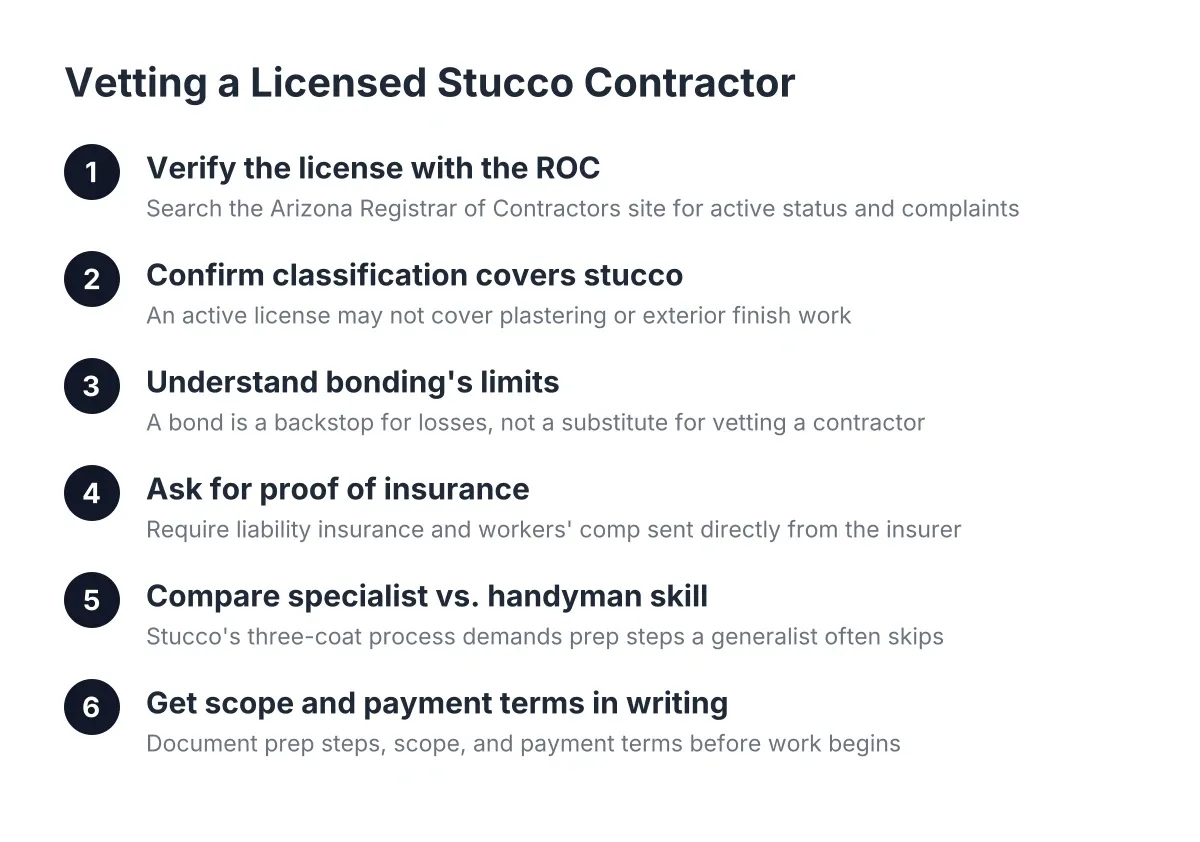
Licensed, bonded, and insured means the contractor holds a state contractor license, carries a bond that can compensate you if they fail to complete the work properly, and has insurance covering job-site injuries and property damage. Each of the three protects you differently, and you can verify all of them before signing anything. This breakdown of licensing, bonding, and insurance for stucco contractors explains what to check and how. Never take "yes" on the phone as verification.
Change Order
A change order is a written agreement that modifies the original quote's price or scope after work has started. In stucco work, change orders commonly appear when opening a wall reveals hidden water damage or rusted lath that nobody could see from outside. A legitimate change order comes with an explanation and, ideally, photos of what was found. Verbal changes with no paperwork are how repair bills grow without a trail.
Using These Terms
You now know the difference between a patch, a resurface, and a replacement, and you can tell when a quote describes a real repair versus a coat of paint over a problem. This glossary for hiring a stucco contractor is designed for reading a bid line by line, asking about lath and weep screeds without guessing, and noticing when a contractor's answers get vague. Keep it handy when the estimates start coming in.
If you need stucco repair, Scottsdale Stucco Repair can help.
Prefer to talk it through? Call (480) 637-3464 — a quick call is usually the fastest way to get a straight answer for your situation.