Stucco Installation Terms Explained: A Plain-English Glossary
If you're getting quotes for stucco work on your Scottsdale home, the paperwork can read like a foreign language. This stucco installation glossary translates the terms contractors use into plain English so you can read a quote line by line, ask the right questions, and spot a thin scope before you sign. Each entry starts with a one-sentence definition you can use on its own. No sales talk, just the vocabulary of the trade explained the way a contractor would over the phone.
- Scratch Coat: the first rough layer
- Brown Coat: the leveling middle layer
- Finish Coat: the visible top layer
- Three-Coat Stucco: the traditional full system
- One-Coat Stucco: the faster, thinner system
- Lath: the metal mesh stucco grips
- Weather-Resistive Barrier: the water shield behind everything
- Weep Screed: the drain strip at the wall's base
- Control Joint: a planned break to manage cracking
- Curing: the slow hardening of fresh stucco
- Elastomeric Coating: a flexible paint-like top layer
- Hairline Crack: a thin surface crack
- Efflorescence: white powder that signals moisture
- Stucco Patching: fixing a damaged area, not the whole wall
- Texture Matching: making the repair blend in
- Scope of Work: what the quote actually covers
- Substrate: the wall surface under the stucco
Understanding Stucco Installation Glossary Terms
Stucco is built in layers, and most of the terms in this stucco installation glossary come back to which layer a contractor is talking about. Knowing the layers tells you how deep a repair goes and why one quote costs more than another.
Scratch Coat
A scratch coat is the first layer of stucco, applied directly over the metal lath and scored with horizontal grooves while wet. Those grooves give the next layer something to grab. If a contractor says your damage goes down to the scratch coat, the repair is deeper than a surface fix, and the price should reflect that. A hole that exposes the scratch coat usually means the wall took a real hit, not just cosmetic wear.
Brown Coat
The brown coat is the second layer of stucco, applied over the scratch coat to flatten and level the wall. It carries most of the wall's thickness and strength. When a repair quote mentions rebuilding the brown coat, the contractor is restoring structure, not just appearance. Skipping this step on a deep hole is how you end up with a patch that cracks again within a year.
Finish Coat
A finish coat is the thin top layer of stucco that carries the color and texture you actually see. It is decorative and protective, but it is not structural. Many small repairs only touch the finish coat, which is why stucco patching can be a fast, affordable fix when the damage is shallow. Ask your contractor which layers a repair reaches; the answer tells you most of what the job involves.
Three-Coat and One-Coat Stucco Installation Systems
Three-coat stucco is the traditional system of scratch coat, brown coat, and finish coat applied over metal lath, usually about seven-eighths of an inch thick in total. It is the heavier, more durable approach and the one most older Scottsdale homes were built with. If you are pricing full stucco installation on a new addition or a replacement wall, ask whether the bid is for three-coat or one-coat, because the two are not interchangeable in cost or thickness. Matching the existing system matters when new work meets old walls.
One-coat stucco is a newer system that combines the scratch and brown coats into a single base layer, usually over foam board, topped with a finish coat. It goes up faster and insulates better, but the total wall is thinner than three-coat. Neither system is wrong; the point is that a quote should name which one you are getting. A bid that never says is a bid worth questioning. The stucco installation cost guide explains how the choice affects price.
Behind the Stucco: Structure and Moisture
These are the parts you never see once the wall is done. They matter most in water damage repairs, where the hidden layers, not the visible stucco, are usually the real problem.
Lath
Lath is the metal mesh or wire fastened to the wall that gives stucco something to grip. Without sound lath, stucco has nothing to hold onto and will eventually pull away or crack. If a repair quote includes replacing lath, the damage went all the way through the stucco, which is common with impact holes and long-term water damage. Rusted lath is a red flag that moisture has been sitting in the wall.
Weather-Resistive Barrier
A weather-resistive barrier is the water-blocking paper or wrap installed between the wall framing and the lath. Stucco itself is not waterproof; this barrier is what keeps rain out of your framing. When a contractor opens up a water-damaged wall, checking and repairing this barrier is the step that separates a real fix from a cosmetic one. If a water damage stucco repair quote never mentions the barrier, ask why.
Weep Screed
A weep screed is the metal strip at the bottom of a stucco wall that lets trapped moisture drain out. It sits near the foundation line and should stay visible above the soil. Dirt or landscaping piled against the weep screed traps water in the wall, and that is a common cause of stucco damage low on Scottsdale homes. It costs nothing to walk your house and check that yours is clear.
Control Joint
A control joint is a planned vertical or horizontal break in a stucco wall that gives the material room to move without cracking randomly. Stucco shrinks as it cures and moves with temperature swings, so large walls need these relief lines. On new installation, too few control joints usually means more cracks later. If your existing walls crack in the same spots repeatedly, missing or poorly placed joints may be part of the reason.
Substrate
A substrate is the surface that stucco is applied over, such as wood sheathing, concrete block, or foam board. The substrate determines how the stucco system is built and how a repair should be handled. A patch over block is a different job than a patch over wood framing with lath. A contractor who asks what your walls are built on is asking the right question.
Repairs, Finishes, and What Quotes Mean
Curing
Curing is the slow chemical hardening of fresh stucco as it retains moisture over days and weeks. Stucco that dries too fast, a real concern in Scottsdale heat, becomes weak and crack-prone. Good contractors keep fresh work damp and time jobs around extreme temperatures. If a bid promises paint or color coat the day after new stucco goes on, ask about cure time.
Elastomeric Coating
An elastomeric coating is a thick, flexible paint-like layer that can stretch over hairline cracks and shed water. It is a common finish option after crack repair or resurfacing. It hides small movement well, but it is not a substitute for fixing cracks that keep growing. Painting over active damage buries the problem; this piece on when to fix cracks before you refresh walks through the order of operations.
Hairline Crack
A hairline crack is a thin surface crack, about the width of a credit card edge or less, that usually stays in the finish coat. Most stucco walls develop a few, and they are often cosmetic. The ones to watch are cracks that widen over time, run diagonally from window corners, or show staining, since those can point to movement or water getting in. Width and pattern tell a contractor more than length does.
Efflorescence
Efflorescence is the white, chalky powder that appears on stucco when water moves through the wall and leaves minerals behind on the surface. The powder itself wipes off; the moisture that caused it does not. Treat efflorescence as a messenger, not the problem. If you see it, the useful question for a contractor is where the water is coming from, not how to clean the stain.
Stucco Patching
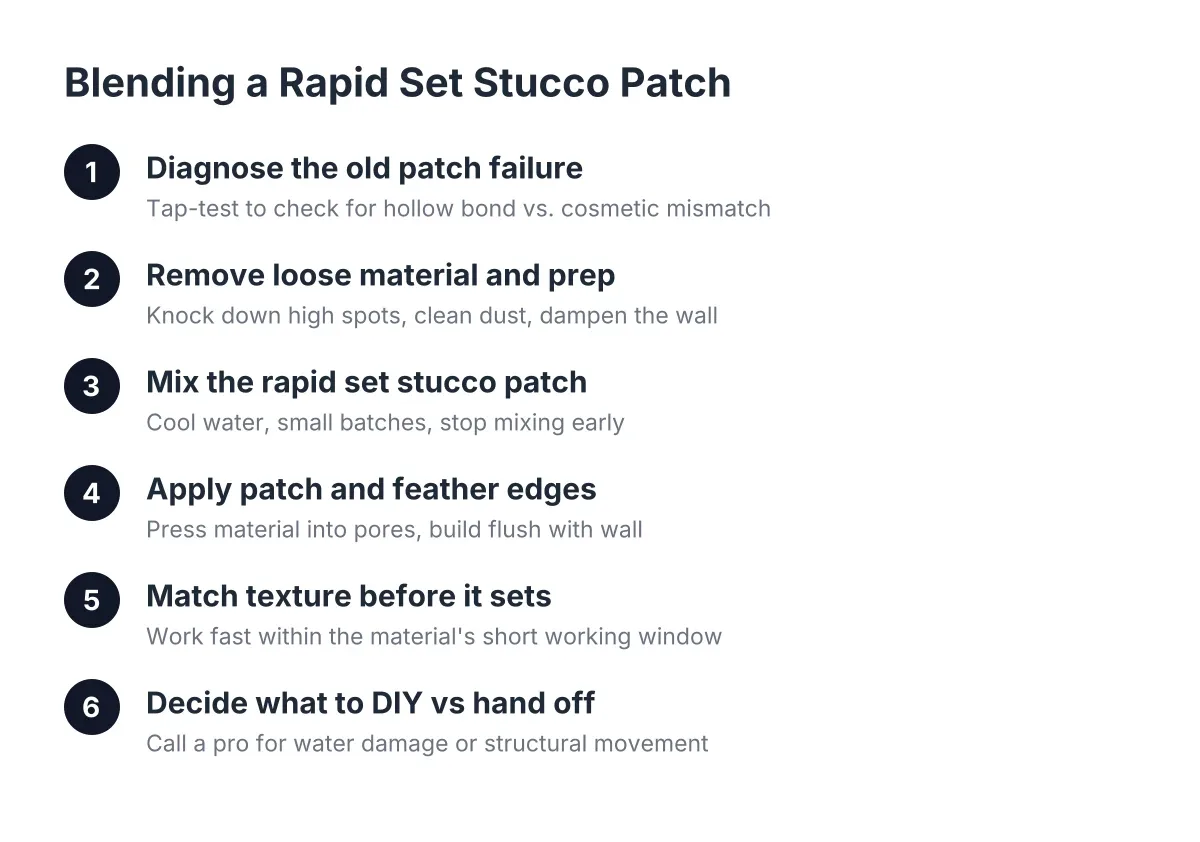
Stucco patching is repairing a damaged section of a wall, such as a hole or crumbled area, without redoing the whole surface. Done right, a patch rebuilds each damaged layer, from lath if needed up through the finish coat. Done poorly, it is a smear of material that stands out and fails early. Patching over an older repair takes extra care to blend; here is how to blend a patch over an old repair correctly.
Texture Matching
Texture matching means finishing a repair so its surface pattern blends with the surrounding wall, whether that is smooth, sand, lace, or a heavier hand-troweled look. It is the difference between a repair you forget about and a patch you see from the street. Texture matching and color matching are separate skills, and a quote that mentions both tells you the contractor cares how the wall looks after the fix, not just that the hole is filled.
Scope of Work
A scope of work is the section of a quote that spells out exactly what the contractor will do, layer by layer and area by area. It is the most useful page in any bid. A vague scope like "repair stucco as needed" leaves room for disputes; a clear one names the layers being rebuilt, the materials, and whether color and texture matching are included. Compare bids by their scopes, not their bottom-line numbers.
Using These Terms
What this stucco installation glossary gives you is the ability to read a bid the way a contractor writes it. You can now ask whether a repair reaches the brown coat, whether the water barrier gets checked, and whether texture matching is in the scope. Those questions take thirty seconds to ask and can save you from paying twice for the same wall.
If you need stucco repair, Scottsdale Stucco Repair can help.
Prefer to talk it through? Call (480) 637-3464 — a quick call is usually the fastest way to get a straight answer for your situation.