
Stucco Resurfacing — Complete Guide
Stucco resurfacing gives your home a fresh exterior without the cost and disruption of tearing everything off and starting over. If your walls look faded, chalky, or covered in hairline cracks but the stucco underneath is still solid, you may not need full replacement or even extensive stucco repair. Instead, a new coating applied over your existing surface can restore color, texture, and curb appeal for a fraction of the effort. This guide explains what resurfacing is, how it compares to replacement on cost and results, and what the process looks like from prep to finish. By the end, you will know whether this lighter-touch option fits your Scottsdale home.
What You'll Find in This Guide
- How Long Does Stucco Resurfacing Take? A Step-by-Step Timeline for Sellers
- Best Stucco Resurfacing Materials: Acrylic, Cement, and Polymer Compared
- How Much Does Stucco Resurfacing Cost?
- Stucco Resurfacing Terms Explained: A Plain-English Glossary
- Stucco Resurfacing in Scottsdale, AZ
- Stucco Resurfacing Cost Factors in Scottsdale: Labor, Materials, and Size
- Stucco Resurfacing vs Full Replacement: Which One Actually Saves You Money?
- Stucco Resurfacing Step by Step: The Repair Option Most Contractors Skip
Prefer to have a pro handle it? Stucco Resurfacing is one call away.
What Stucco Resurfacing Is and When Your Walls Qualify
Stucco resurfacing applies a new finish layer, called a skim coat, over existing stucco. The old surface remains as the base while fresh material fills hairline cracks, evens patches, and restores uniform color and texture.
This option works when problems are cosmetic: faded color, chalky residue, hairline cracking, mismatched patches, and worn texture. If the underlying stucco remains bonded to the wall and intact, resurfacing avoids unnecessary removal and rebuilding.
However, resurfacing has limits. Wide returning cracks, soft or bulging sections, and moisture stains indicate deeper issues. A skim coat hides symptoms temporarily but doesn't fix the cause. Targeted repair or water damage work must come first. The step-by-step breakdown of patching before resurfacing explains this sequence and why skipping it causes callbacks.
To assess your walls: press suspect areas for hollow sounds and check crack width. Hairlines thinner than a credit card edge signal normal settling; wider cracks deserve inspection. Look around windows, parapets, and hose bibs for staining. If most of your wall passes these checks, resurfacing is likely viable.
This matters especially in Arizona, where stucco represents 48% of new single-family homes per the National Association of Home Builders' Mountain division data for 2024. With so many stucco homes aging in intense sun, knowing this middle option exists can save you from unnecessary full replacements. The Scottsdale resurfacing service page covers what a local wall assessment involves.
Resurfacing vs Replacement: Where Stucco Repair Money Actually Goes
Most homeowners hear two quotes: a small patch job or a full tear-off. Resurfacing sits between them, and understanding why it costs what it costs helps you judge every estimate that lands in your inbox.
Replacement is expensive because of what gets destroyed, not just what gets built. Crews strip the old stucco down to the lath or sheathing, haul away the debris, rebuild the base layers, and then apply the finish. You pay for demolition, disposal, and reconstruction before anyone touches the part you actually see. Resurfacing skips all of that. Because the existing stucco serves as the base, the labor concentrates on prep and the new finish coat. That is the core reason the resurfacing vs replacement comparison so often tips toward resurfacing when walls are structurally sound.
What Drives Your Resurfacing Cost
Three factors move the number more than anything else. First is square footage, since coating material and labor scale directly with wall area. Second is the condition of the existing surface. Walls that need crack filling, patching, or localized stucco repair before coating take more prep time, and prep is where labor hours accumulate. Third is the material you choose, since acrylic and polymer-modified finishes carry different price points than traditional cement.
For context on the smaller end of the spectrum, Fixr.com reports the national average cost to repair stucco runs $900 to $3,000, averaging around $1,700 for a buckled three-coat section in a 10×10-foot area. That figure covers repair, not resurfacing, but it illustrates the point: even isolated fixes carry real labor costs, so a whole-wall tear-off multiplies quickly. The resurfacing cost guide explains how these variables interact, and the Scottsdale-specific cost factors article looks at how local labor and desert conditions shape quotes here.
One caution as you compare bids: a dramatically low resurfacing quote sometimes means the contractor plans to skip prep and coat over active problems. Ask every bidder what surface repairs their price includes. A quote that itemizes crack treatment and patching before the finish coat tells you the contractor plans to do the job in the right order.
The Resurfacing Process, Materials, and What Timeline to Expect
A good resurfacing job follows a predictable sequence, and knowing it helps you spot corner-cutting before it happens.
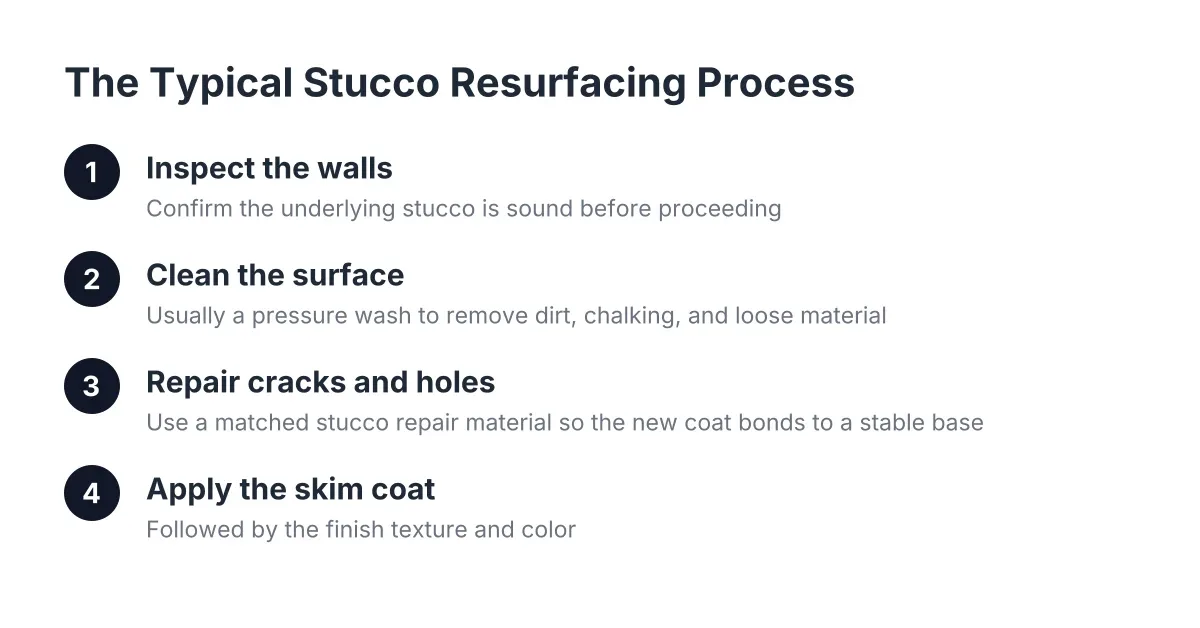
Everything starts with assessment and prep. The crew inspects the walls, marks areas that need repair, and handles those first. Cracks get routed and filled, holes get patched, and any loose material comes off. Next comes cleaning, usually pressure washing, to remove dirt, chalk, and anything that would stop the new coat from bonding. Only then does the finish work begin: a bonding agent or base coat where needed, followed by the skim coat itself, textured and colored to the final look. Because weather affects curing, Scottsdale's dry climate generally works in your favor, though extreme summer heat can require timing adjustments.
Choosing Between Acrylic, Cement, and Polymer Finishes
Material choice shapes both the result and the longevity. Traditional cement finishes breathe well and take integral color. Acrylic finishes offer flexibility that resists hairline cracking and holds color strongly under intense UV exposure. Polymer-modified blends aim for the middle ground. Each behaves differently in desert conditions, so the comparison of acrylic, cement, and polymer resurfacing materials is worth reading before you lock in a quote. Additionally, texture matching matters: the new finish should blend with any untouched sections so the house reads as one surface, not a patchwork.
How Long the Work Takes
Timeline depends on wall area, repair scope, and cure times between coats. In practice, resurfacing finishes far faster than replacement because there is no demolition phase and no base-layer rebuild. If you are working against a deadline, such as a listing date, the seller-focused timeline walkthrough maps the stages from first walkthrough to photo-ready walls.
Finally, expect some unfamiliar vocabulary on your estimates: skim coat, elastomeric, fog coat, brown coat, scratch coat. Rather than nodding along, keep the plain-English resurfacing glossary open while you read quotes. Understanding the terms puts you in control of the conversation, and contractors quote more carefully when they know you follow the details.
Ready to Get Started?
We handle stucco resurfacing, stucco repair, and related exterior wall work for homeowners in Scottsdale and the immediate surrounding area. If your walls look tired but the stucco underneath still feels solid, resurfacing may be the option nobody has quoted you yet. Call or send a request, describe what you are seeing, and we will help you figure out whether resurfacing, repair, or replacement fits your home.