Stucco Resurfacing Terms Explained: A Plain-English Glossary
If you're getting quotes for stucco work in Scottsdale and half the words on the estimate look foreign, this page is for you. This stucco resurfacing glossary translates the terms contractors use into plain English, so you can read a quote line by line, ask better questions, and spot problems before they cost you money. Every entry starts with a definition you can understand on its own, followed by why it matters to you as a homeowner. No sales talk, just the vocabulary of the trade.
- Resurfacing: a new finish over existing stucco
- Brown Coat: the middle structural layer
- Finish Coat: the visible outer layer
- Scratch Coat: the first rough base layer
- Lath: the mesh stucco grips onto
- Hairline Crack: a thin surface crack
- Spalling: stucco flaking or breaking off
- Delamination: layers separating from each other
- Efflorescence: white powdery salt deposits
- Bonding Agent: glue that helps new stucco stick
- Fog Coat: a thin cement-based color spray
- Elastomeric Coating: a flexible paint-like coating
- Texture Matching: making a patch blend in
- Color Matching: matching the existing wall color
- Weep Screed: the drainage strip at the wall's base
- Substrate: whatever sits behind the stucco
- Scope of Work: the written list of what gets done
- Mobilization: setup costs before work starts
The Layers of a Stucco Wall
Most of the confusion in a stucco resurfacing glossary starts here, because contractors talk about walls in layers. Once you know the layers, the rest of the vocabulary falls into place.
Stucco Resurfacing Fundamentals: Layers Explained
Resurfacing means applying a new finish layer over your existing stucco instead of tearing it all off and starting over. It works when the wall underneath is still solid but the surface looks cracked, faded, or worn. If a contractor recommends resurfacing, they are telling you the structure is fine and only the skin needs work. That usually costs less than replacement, and you can see how resurfacing compares to full replacement before you decide. Stucco resurfacing only makes sense after cracks and holes are patched first, which is why a good quote lists repair work as its own line.
Scratch Coat
A scratch coat is the first layer of stucco applied to a wall, scored with horizontal grooves while wet. Those grooves give the next layer something to grip. You will see this term on installation and replacement quotes, not usually on resurfacing quotes, because resurfacing goes over existing stucco. If a resurfacing estimate includes a scratch coat, ask why; it may mean part of the wall needs rebuilding from the base.
Brown Coat
A brown coat is the thick middle layer of a traditional stucco wall, applied over the scratch coat to flatten and strengthen the surface. It does most of the structural work in the wall's outer skin. When a contractor says damage goes "down to the brown coat," they mean the problem is deeper than cosmetic. That moves the job from a simple recoat toward patching or partial replacement, which affects the price.
Finish Coat
A finish coat is the thin outer layer of stucco that carries the color and texture you see. It protects the layers underneath and takes the daily beating from sun and weather. Resurfacing is mostly about replacing or covering this layer. When a quote says "new finish coat," the contractor plans to give the whole wall a fresh face rather than spot-fixing.
Lath
Lath is the wire mesh or metal grid attached to a wall so wet stucco has something to hold onto. Think of it as the skeleton under the skin. If lath is rusted or torn, stucco above it will keep failing no matter how many times you patch. A quote that includes "new lath" means the contractor found damage behind the surface, which raises the scope of the job.
Substrate
A substrate is whatever material sits behind the stucco, such as wood sheathing, concrete block, or foam board. The substrate's condition decides whether resurfacing is even an option. If water has rotted a wood substrate, no surface fix will hold. A contractor who checks the substrate before quoting is doing the job right; one who quotes resurfacing without looking is guessing.
Damage and Warning Signs
These are the words a contractor uses to describe what is wrong with your wall. Knowing them helps you understand whether you are facing a cosmetic fix or exterior wall damage that runs deeper.
Hairline Crack
A hairline crack is a thin surface crack in stucco, about the width of a credit card edge or less. In Scottsdale's heat, small cracks from normal expansion and contraction are common and usually not structural. Hairline cracks are the classic candidate for crack repair followed by resurfacing. Wider cracks, or cracks that follow a stair-step pattern along block joints, deserve a closer look before anyone quotes a fix.
Spalling
Spalling means stucco flaking, chipping, or breaking away from the wall in chunks. It usually signals that water got behind the surface and is pushing the material apart. Spalling is a bigger deal than a hairline crack because the damage is active, not settled. If a contractor mentions spalling, expect the quote to include patching those areas before any new finish goes on.
Delamination
Delamination means the layers of a stucco wall separating from each other, so the surface sounds hollow when you tap it. A delaminated section can look fine from the street and still be one storm away from falling off. Contractors check for it by tapping the wall and listening. Resurfacing over delaminated stucco fails fast, so a careful contractor will cut out and patch those spots first.
Efflorescence
Efflorescence is the white, powdery deposit that shows up on stucco when water moves through the wall and leaves salt behind as it dries. The powder itself wipes off, but it is a message: moisture is getting into the wall somewhere. If you see efflorescence, ask the contractor to find the water source before quoting cosmetic work. Covering it up without fixing the leak means paying twice.
Repair and Finish Terms
These terms describe the actual work, from prep to the final look.
Bonding Agent
A bonding agent is a liquid applied to old stucco so new material sticks to it properly. Without it, a fresh coat can peel away from a slick or dusty old surface. It is a small line item that says a lot: a contractor who specifies a bonding agent is prepping the wall, not just slapping material on. If your resurfacing quote skips prep entirely, ask how they plan to make the new coat hold.
Fog Coat
A fog coat is a thin, cement-based color spray applied over stucco to refresh or change its color without adding a full new layer. It soaks into the surface instead of sitting on top like paint, so the wall keeps its natural texture and ability to breathe. A fog coat suits walls that are structurally sound but faded. It will not hide cracks or texture differences, so it comes after repair work, not instead of it.
Elastomeric Coating
An elastomeric coating is a thick, flexible, paint-like layer that stretches to bridge small cracks in stucco. It handles hairline cracking well and adds a water-resistant skin. The tradeoff is that it can trap moisture inside a wall that already has a water problem, so it belongs on dry, sound stucco only. If a contractor proposes elastomeric coating over water damage, that is a shortcut worth questioning.
Texture Matching
Texture matching means finishing a patch or new section so its surface pattern blends with the surrounding wall. Stucco textures range from smooth to heavy lace, and a patch with the wrong texture stands out from the curb forever. This is skilled hand work, and it is a fair thing to ask about when comparing quotes. A patch that matches in texture but not color still shows, which is why the two go together.
Color Matching
Color matching means blending new stucco or coating to the exact shade of your existing wall, accounting for years of sun fading. Scottsdale sun fades stucco unevenly, so matching the original color chip often produces a patch that looks too fresh. Good contractors match the wall as it is today, not as it was installed. On larger jobs, resurfacing the whole wall sidesteps the problem by giving everything one uniform color.
Weep Screed
A weep screed is the metal strip at the bottom of a stucco wall that lets trapped moisture drain out. It sits near the foundation line and is easy to overlook. A blocked or buried weep screed, often from soil or landscaping piled against the wall, traps water and causes damage from the bottom up. If a contractor inspects your weep screed before quoting, that is a sign they know where Scottsdale stucco problems start.
Pricing and Paperwork Terms
Scope of Work
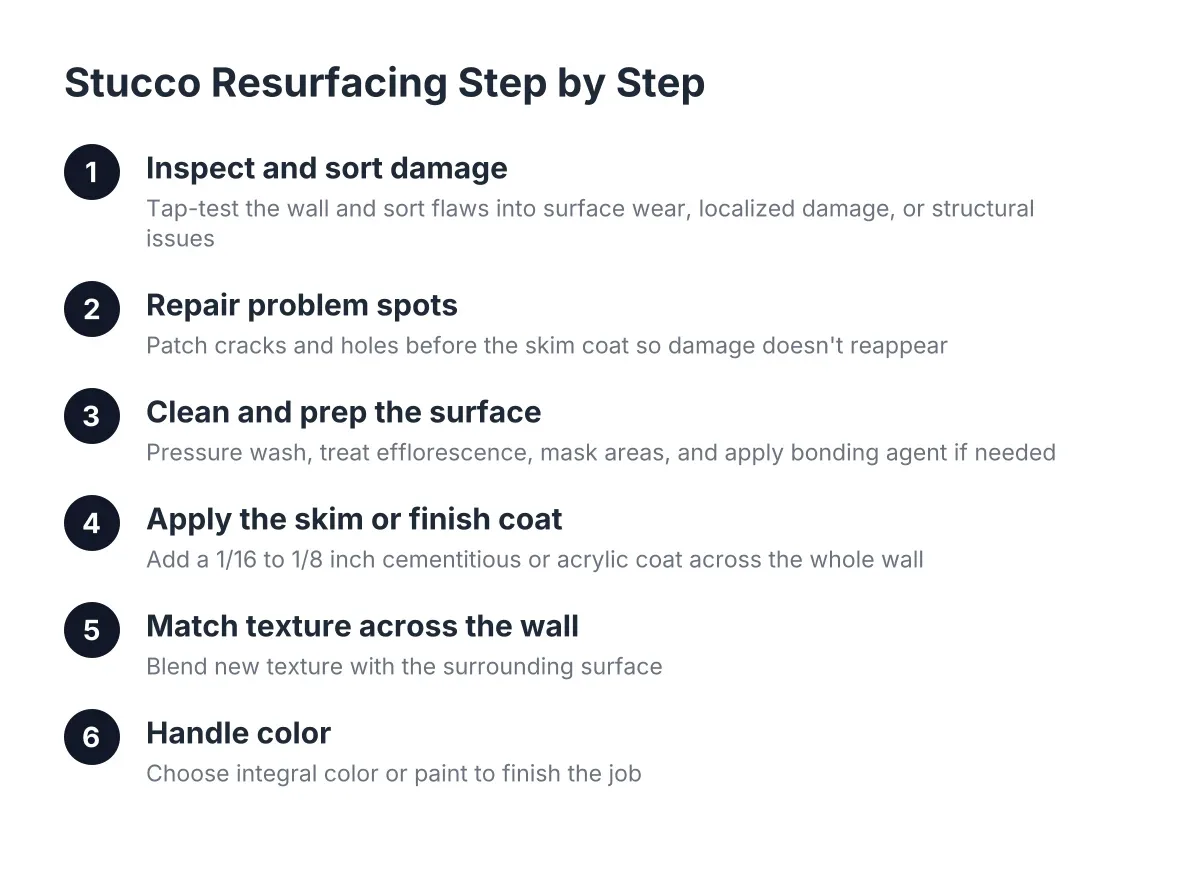
A scope of work is the written section of a quote that lists exactly what the contractor will do, wall by wall and step by step. It is the difference between "resurface house" and a list you can hold someone to. Compare scopes, not just totals, when quotes differ; a cheaper number often means steps left out. The step-by-step breakdown of a resurfacing job shows what a complete scope should cover, including the patch work that comes first.
Mobilization
Mobilization means the cost of getting a crew, equipment, and materials to your property and set up before actual work starts. It explains why small jobs cost more per square foot than large ones: the setup cost is the same either way. When you see mobilization on a quote, it is a normal line item, not padding. Size, labor, and materials drive the rest of the number, and these cost factors break down how each one moves a Scottsdale quote.
Using These Terms in Your Stucco Resurfacing Glossary
You now have the working vocabulary to read a stucco quote line by line instead of just looking at the total. What this stucco resurfacing glossary gives you is leverage of the honest kind: the ability to ask why a scratch coat is on a resurfacing estimate, or whether the weep screed was checked before anyone talked price. When a contractor hears those questions, the conversation gets straighter, and so does the quote.
If you need stucco repair, Scottsdale Stucco Repair can help.
Prefer to talk it through? Call (480) 637-3464 — a quick call is usually the fastest way to get a straight answer for your situation.